


From Challenges to Triumph: Yamaha G3 Boats’ RFID Journey
When Yamaha G3 Boats faced challenges with visibility, efficiency, and tracking in their production process, they turned to Barcodes, Inc to implement an RFID solution. This strategic move aimed to increase production capacity and streamline operations, ultimately paving the way for significant growth and improved productivity. Their success was recognized with the ‘Best Manufacturing Implementation of RFID’ award at the 2024 RFID Journal Live, demonstrating the impact of advanced technology in overcoming operational bottlenecks.

About Yamaha
Yamaha G3 Boats is renowned for producing high-quality aluminum fishing boats and recreational pontoon boats. With a strong commitment to craftsmanship and innovation, they’ve earned a reputation for delivering durable and reliable vessels. Their product range caters to both avid anglers and recreational boaters, offering top-notch performance and comfort on the water. Yamaha G3 Boats is also known for their continuous improvement initiatives, consistently integrating advanced technologies to enhance both manufacturing processes and product offerings.
Barcodes, Inc Advantage
To tackle the challenges of visibility, efficiency, and tracking in their manufacturing process, Yamaha turned to Barcodes, Inc’s cutting-edge RFID systems, which delivered an ideal solution. By deploying RFID technology, Yamaha was able to:
- Enhance Visibility: Barcodes, Inc’s RFID technology provides real-time visibility into the production line. RFID tags attached to each boat and key components allow Yamaha to track their location and status at every stage of production. This real-time data enables the company to quickly identify and resolve issues, ensuring smoother production processes.
- Improve Efficiency: With comprehensive tracking capabilities, RFID technology optimizes workflow on the shop floor. Identifying bottlenecks and streamlining operations allows Yamaha to meet production schedules more accurately and efficiently. Additionally, automated data entry and ERP system integration further boost operational efficiency.
- Accurate Tracking: RFID tags enable precise tracking of each boat throughout the manufacturing process. This accuracy minimizes errors and improves resource allocation. Real-time tracking of every component and work order ensures production stays on schedule, leading to improved throughput.
Looking Ahead
Yamaha G3 Boats continues to expand its RFID capabilities with future phases planned. By partnering with Barcodes, Inc, Yamaha remains poised to meet market demands and maintain their competitive edge.
The success of Yamaha G3’s RFID implementation is a milestone for Barcodes, Inc, and we look forward to continuing this partnership to achieve even greater accomplishments. Congratulations to everyone involved in this project!
From Farm to Fork: Ensuring Food Safety with Effective Labeling
Food safety is a top priority for everyone involved in the food supply chain, from farmers and manufacturers to distributors, retailers, and ultimately, consumers. Contaminated food can cause serious illness, and preventing these outbreaks requires a multi-pronged approach. One critical element in this strategy is effective food safety labeling. The best food label printers are designed to meet the specific requirements of the food industry, offering advanced features that enhance food safety practices. Read further to learn the importance technology plays in ensuring accurate and efficient labeling practices.
Why Food Safety Labeling Matters
Food safety labeling plays a crucial role in safeguarding consumers from potential hazards. It allows for accurate tracking of food products throughout the supply chain, facilitating swift and targeted action in case of recalls or contamination concerns. Clear and consistent labeling also empowers consumers to make informed choices about the food they eat.
Here are some specific ways food safety labeling contributes to a safer food system:
- Traceability: Labels with essential information like batch numbers, expiration dates, and processing facilities enable tracing in the event of recalls.
- Allergen Awareness: Clear and accurate allergen labeling on food packaging allows consumers with allergies to make safe choices.
- Ingredient Transparency: Detailed ingredient lists on labels help customers with specific dietary needs or preferences make informed choices.
- Best-Before Dates: Best-before dates advise consumers when food maintains its optimal quality and safety.
- Instructions and Warnings: Labels can include instructions for proper handling, storage, and preparation of food.

Technology’s Role in Food Safety Labeling Accuracy and Efficiency
Label printer technology plays a vital role in ensuring the accuracy and efficiency of food safety. As North America’s leading provider of barcode and product labeling, mobile computing, and RFID solutions, Barcodes Inc. partners with the most trusted brands in the food service and grocery industry that offer unique food labeling features.
- Digital Printing Solutions: Advanced digital printing technologies facilitate on-demand printing of labels, allowing for real-time updates and increased flexibility. This reduces waste and ensures the most recent information is included on labels.
- Variable Data Printing: This technology allows for printing unique information like lot codes and expiration dates on each individual label, enhancing traceability and facilitating targeted recalls if needed.
- Label Management Software: Centralized software solutions streamline the creation, approval, and printing of food safety labels, fostering consistency and reducing errors.
- RFID (Radio Frequency Identification) Technology: RFID tags embedded in food packaging offer enhanced traceability as they can track food products throughout the supply chain in real-time.
SATO: Empowering Businesses with Food Safety Labeling Solutions
Not all label printers are created equal. SATO food safety label printers are a top-shelf choice in the food and grocery industry for their durability, resistance to moisture and temperature fluctuations, and crisp, clear label printing. Here are a few reasons SATO printers remain a top choice for food manufacturers and retailers:
Improved Efficiency: High-speed printing and easy integration with existing systems streamline labeling processes, reducing bottlenecks and improving overall productivity.
Enhanced Traceability: Accurate and legible labels facilitate effective tracking of food products throughout the supply chain, ensuring compliance with regulatory requirements.
Durability and Reliability: SATO printers are built to withstand tough conditions, ensuring uninterrupted operation in food production environments.
Versatility: The printers can accommodate a wide range of label materials and printing applications, meeting the diverse needs of the food industry.
SATO is the innovator behind DateRight™ Rotation Labeling, a solution to streamline food storage and rotation in food service outlets. The label incorporates seven color indicators that represent the days of the week, allowing for easy visual identification of expiring products and promoting FIFO (First-In, First-Out) inventory management.
Let’s explore two popular food label printer models by SATO, the CL4NX Plus and CT4-LX printers.
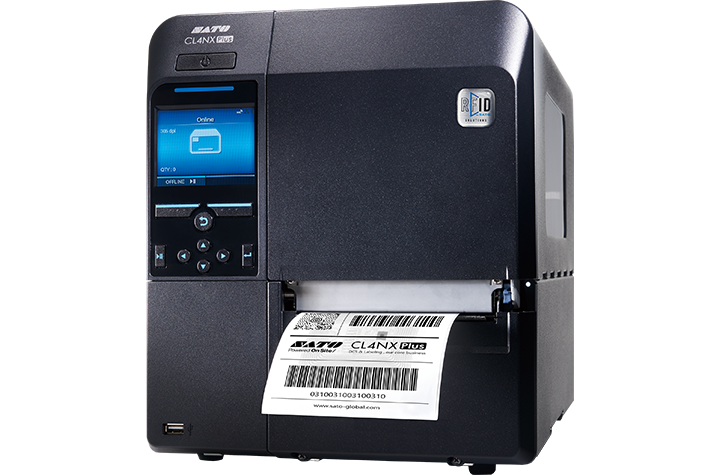
SATO CL4NX Plus RFID Label Printer:
High-Speed Printing: The CL4NX Plus delivers rapid printing speeds up to 10 ips, reducing labeling bottlenecks and improving overall production efficiency.
UHF RFID Module: Print text and barcodes on UHF tags/labels and encode data in their embedded chips at the same time. The CL4NX Plus is even capable of checking RFID chips prior to encoding to verify their readiness to use and to prevent failures.
Flexible Media Handling: The printer can accommodate a wide range of label materials, including those with special coatings or adhesives, ensuring compatibility with various food packaging applications.
Advanced Connectivity Options: The CL4NX Plus offers seamless integration with existing systems, enabling efficient data transfer and label printing.
Learn more about the SATO CL4NX Plus.
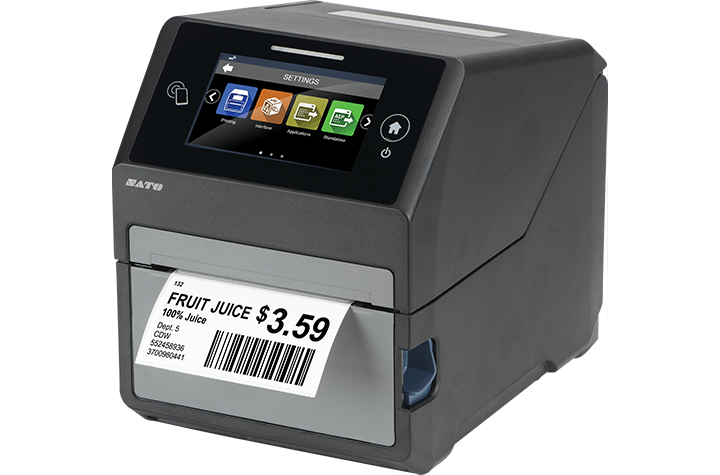
SATO CT4-LX Label Printer:
- Compact and Portable: The CT4-LX is a 4-inch compact and portable printer, making it ideal for mobile labeling applications in food production facilities.
- Patented Label Waste Prevention: SATO’s patented label waste prevention feature helps minimize label waste, contributing to cost savings and environmental sustainability.
- High-Resolution Printing: The printer delivers clear and legible labels, ensuring accurate product information and traceability.
- Wireless Connectivity: The CT4-LX offers wireless connectivity options, enabling mobile workers to print labels from remote locations.
Learn more about the SATO CT4-LX.
By incorporating high-quality food label printers like the SATO CL4NX Plus RFID and CT4-LX printers into their operations, businesses can enhance food safety labeling practices, improve efficiency, and ensure compliance with regulatory standards. Barcodes, Inc. is a leader in supply chain solutions, offering high-quality thermal printers and compatible labels specifically designed for unique industries. For help finding the right labeling solutions for your business, contact Barcodes Inc. today.
The How and Why of RAIN RFID Cryptographic Authentication
The problem of counterfeit products is global, and it’s growing. Knockoff handbags, athletic shoes, wristwatches, and pharmaceuticals cost businesses and consumers billions of dollars every year globally.
Now, there’s a new way brands can fight fakes: RAIN RFID cryptographic authentication.
The Impinj Authenticityâ„¢ solution engine brings enterprise-scale product authentication to new and existing RAIN RFID deployments.
What is Product Authentication?
At its heart, authenticating something is largely straightforward: You want to conclusively establish the item as genuine and determine its owner or origin. Doing that can get complex.
Product authentication solutions built on the Impinj platform employ secure cryptography, using a challenge-response protocol to determine with a high degree of certainty whether an item is genuine.
RAIN RFID from Impinj
An item tagged with RAIN RFID has certain information associated with it—data such as the manufacturer name, model number, serial number, date of manufacture, purchase date, customer name, and more. That item-specific data can be stored in a product cloud.
When that item is read at any point in the supply chain by a RAIN RFID reader, an Impinj-based authentication solution cross-checks and confirms the information stored in the product cloud and verifies the tag’s authenticity using the Impinj Authentication Service.
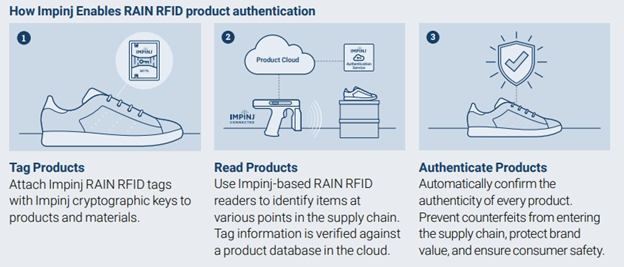
Impinj Authenticity uses cryptographic authentication, a feature of the new RFID tag chips, to swiftly and automatically verify tagged products as genuine.
Implement RAIN RFID with a Trusted Partner
For an in-depth explanation of how Impinj Authenticity works, contact Barcodes, Inc. to learn more about RAIN RFID.
RFID Webinar: Improve Returnable Container Tracking with RFID
Webinar
Improve Returnable Container Tracking with RFID
Thursday April 20th 1:00-1:45pm Central
PRESENTED BY:
Christopher Vassilos – Senior Solutions Architect, Barcodes Group
Michael Daily – Senior Solutions Engineer, Impinj
RFID-Based Container Tracking
Upon delivery, it’s common for reusable containers to not be returned to the sender, with annual shrinkage rates often exceeding 10%. Keeping track of your Returnable Transport Items (RTIs) can be challenging, especially when logging their location depends on manual processes like scanning.
In this webinar, discover the benefits of RFID-based container tracking:
- Reduce the number of misplaced pallets, kegs, and boxes. Less new delivery assets need to be purchased, and shipments are not interrupted due to lack of totes.
- Track each asset as it leaves and returns to the warehouse, allowing you to determine its exact location immediately and whether they have yet to return.
- Calculate the flow of returnable assets to fully understand your shipping capacity for the present and future.
- Improve utilization of workers since it takes way less time to scan RFID tags than barcodes, due to its fully automatable reading without line-of-sight requirements.
Watch the Full RFID Webinar Recording
Improve Returnable Container Tracking with RFID
Returnable Transfer Items (RTIs), or returnable containers are critical assets for almost all manufacturing and logistics organizations. RTIs transport stock and commodities from one site to another. However, keeping track of your RTIs is a different story. Well-known manufacturers and logistics expert still often rely on manual methods, such as traditional scanning, spreadsheet, or pen and paper.
This leads to a major issue: inventory shrinkage.

Mismanagement of returnable containers owing to theft, unrecorded damage, or simply the inability of consumers to return empty pallets, kegs, and boxes costs a fortune.
How are Your Returnable Transfer Items Being Tracked Currently?
Barcode labels used to tag the cargo of a container during shipment are often non-permanent. Traditional barcode scanners and labels identify the contents of the container, but seldom provide reverse logistics tracking for the containers themselves.
Using permanent barcode labels as the foundation for a container monitoring system is not feasible. I know that might be strange to hear from a company called Barcodes, Inc. But scanning labels at various stages of the supply chain sometimes necessitates extra human effort, which is even more difficult when empty containers pile up.
One solution is to establish a tracking system utilizing modern asset tracking technology.
Reducing Yearly Inventory Shrinkage with RFID
“15% of all pallets in circulation vanish” or “20% of all packaging/equipment is lost owing to consumers retaining them for their own use or third parties removing them for their own use.”
SLS RFID 2016 Study
Inventory shrinkage is a major issue in the management of returnable transfer items (RTIs), which include all types of shipping containers, packaging, pallets, kegs, and boxes.
Shrinkage due to theft, unreported damage, or just consumers failing to return empty containers is a serious concern in this field.
Estimated annual shrinkage rates are anywhere from 3 to 9%. If you’re constantly replacing lost or stolen RTIs, the impact on profitability is a huge problem.
For organizations to decrease RTI shrinkage, RFID is appealing due to completely automated scanning without line-of-sight, as well as mass tag reading. The key advantage of RFID-based container monitoring systems is an improvement in container return rates. New containers are purchased in smaller batches and less frequently.
What Data Can Be Tracked with RFID Tags?
Integrating the RFiD Discovery system with your ERP system enables company-wide visibility of your RTIs, ensuring that essential assets are accessible at the relevant locations to fulfill any transportation request.
Exactly what the RFID ultimately tracks depends on your unique tracking requirements. Here are some examples of the depth of data you can store in a small RFID tag:
- Container Name
- Size
- Location
- Weight
- Item Quantity
- Container Properties
User memory on tags stores data. The serial number field can be pre-programmed or user-assigned.
The air-interface protocol standards for passive HF and UHF tags, such as UHF EPC Gen 2, define basic functions like read-write and which memory banks or blocks can be written to. Reader manufacturers include these low-level commands with higher-level subroutines in their software development kits for application developers.
How to Use RFID to Tag RTIs
RFID labels are long-lasting and more durable than traditional labels. RFID tags attach exceptionally well to returnable cargo and resist machine washing operations as well as harsh elements for much longer.
Any RTI equipped with an RFID tag can be detected by a small number of strategically located readers. The location data is delivered back to the central RFID Discovery database, where it may be evaluated.
This database allows you to discover how many RTIs have been sent to a specific supplier or customer, so you know which trade partner to approach when requesting a return.
When shipping containers are in range of an RFID reader, the information on the tags can be automatically acquired using a wide variety of methods:
- Fixed reader installed at a warehouse entrance or loading dock
- A mobile reader installed on a forklift
- Handheld reader brought inside a business partner’s facility for rapid inventory
What are the Main Advantages of Using RFID for Returnable Asset Tracking?
There are several advantages of using RFID to track returnable assets.
1. Recoup Billions of Dollars in RTI-Related Losses

Reusable assets are returned to the sender after delivery, usually full of new goods and not empty. Entire industries are dedicated to capitalizing on reverse logistics and maximizing the value of containers.
So why do we pay far less attention to reusable assets compared to sold commodities and container space? In order to get a bird’s eye view of costly shrinkage areas, your immediate shipping capacity, and overall supply chain health, it’s critical to assess the flow of returnable assets as well.
If RTIs arrive in the incorrect place or are lost, the transfer of products becomes difficult or impossible, thereby causing delivery delays. And massive container replacement costs.
These misplaced assets represent billions of dollars in losses, since new delivery assets must be acquired. We will say again: RFID saves billions of dollars.
2. Track Every Asset Location With a Detailed Evidence Trail
While we like to imagine most people are honest and good by nature, the reality is that customers and suppliers are not going to eager to assist when the subject of locating your missing valuables is brought up. Tough luck.
Instead of playing the blame game, utilizing an RFID system to track each asset as it leaves and returns to the warehouse allows you to instantly establish its specific location, and whether it has yet to return.
This goes for both goods sold as well as the RTIs carrying them. Put another way, your returnables are much more likely to return.
3. Increase Visibility of Container Locations, Available Stock, and Overall Condition
Though shipping should be a precise science, we know that’s not always the case.
Businesses depend on RTIs everyday, but lack visibility over the availability, location, and quality of their RTIs.
When organizations incorporate careful pallet monitoring, tote box tracking, and stillage tracking, it’s much easier to manage a large pool of RTIs without bleeding money. Additionally, there is no longer a need to keep just-in-case containers on the sidelines, because of increased visibility into the “who, what, where, and how many?” questions.
4. Improve Labor Utilization at Every Level of the Supply Chain
Scanning RFID tags takes substantially less time than scanning barcodes. Similarly, RFID is a more appealing identifying solution for reusable assets since users do not need to manufacture new barcodes or print new labels.
Logistics and operational leaders can simply re-encode the same RFID tags again and again without increasing headcount or allocating redundant processes to busy workers.
Lastly, RTLS on RFID can significantly reduce the amount of time workers spend searching for specific inventory. In a field such as healthcare, nurses estimate they spend at least an hour per shift finding equipment. That really adds up when looking at overall labor utilization.
Evaluating and Deploying an Effective RTI Tracking System
Tracking RTIs with RFID helps prevent your assets getting lost or stolen, reduces disputes between trading partners, enables rapid inventory cycle counting, and quickly identifies shortages. Your organization could be saving billions of dollars.
Barcodes, Inc. is your trusted RFID partner and integrator. Contact us when you are ready to elevate your RTI management and discover the magic of RFID tracking. It’s easier to deploy with a partner you can trust.
How to Select, Print, and Encode RFID Tags (Webinar)
About This Webinar:
How to Select, Print, and Encode RFID Tags
Wednesday, August 3rd, 2:00 PM – 2:30 PM ET
Presented By:
Chris Brown – RFID Subject Matter Expert at TSC Printronix Auto ID
Carlo Emanuele – Vice President and General Manager, Consumables at Barcodes Group
About the RFID Tag Webinar
IDTechEx forecast that 41.2 billion RAIN RFID tags will be sold in 2024, up from 15 billion just three years ago.
To enable you to track your assets with unprecedented accuracy, using the right tag will determine the success of an RFID implementation from the very beginning.
But how do you determine the encoding scheme to use at your organization, and the most appropriate tag or label to support this?
During this webinar, the following questions are answered:
- Why do you need to be concerned about encoding “good data†to RFID tags?
- How do you select an RFID tag that finds the optimal balance between size and read range?
- What role can a partner play in assisting with pre-printed/pre-encoded labels or providing solutions for your on-demand printing?
Watch the RFID Label Webinar
For an assessment of how RFID can improve your inventory accuracy and shipment verification process, please reach out to us at [email protected] or visit www.barcodesinc.com/solutions/learn-more-about-rfid/.
How RFID Cycle Counting Can Increase Speed at Lower Costs (Webinar)
About This Webinar:
RFID Cycle Counting: Increase Inventory Collection Speed at Lower Costs
Thursday, June 30th, 2:00 PM – 2:30 PM ET
Presented By:
Matt Smith – SLS
Christopher Vassilos – Barcodes
Why RFID for Cycle Counting is Transformative
Most businesses today conduct inventory counts as part of their operations. Traditional means of collecting this data include tallying products on a count sheet or scanning barcodes off product labeling, both of which are time consuming and prone to error.
Using RFID technology for cycle counting reduces labor cost and automates the workflow. The result is greater accuracy, improved asset utilization, as well as reducing lost or out of inventory situations.
During this webinar, you will be shown the following:
- A demonstration of cycle counting using RFID technology in action
- An overview of the components of the SLS Mobile Solution
- Various scenarios of deployment, including the use of robotics
Watch the RFID Cycle Counting Webinar Recording
We hope to see you there! For an assessment of your company’s ROI potential with RFID, please reach out to us at [email protected] or visit Barcodes and SLS RFID Solutions.
The Walmart Mandate: Tipping Point for RFID Adoption? (Webinar)
Webinar:
The Walmart Mandate: Tipping Point for RFID Adoption?
Thursday, May 12th, 2:00 P.M. – 2:30 P.M. ET
Presented By:
Todd Muscato – Barcodes Group
Ashley Burkle – Impinj
Ensure Your RFID Labels and Tags are Compliant Before September Deadline
After success using RFID for apparel, Walmart is expanding its RFID mandate to scores of additional products. Could it be a tipping point for RFID adoption in U.S. retail?
With heightened omnichannel demands and continued supply chain disruptions, retailers with inventory accuracy and visibility are thriving. How do you thrive instead of just survive with RFID in retail?
In this webinar, Barcodes and Impinj discuss the following:
- How RFID is helping big brand retailers adapt and thrive
- What retailers and their suppliers need to get started on their RFID journey
- How Barcodes can help with RFID solutions, including devices, software, tags, and support
Watch the Retail RFID Webinar Recording
Learn more about Barcodes’ Walmart RFID solutions, and contact us if you would like to have an exploratory discussion.
How RFID Increases Shipment Accuracy (Webinar)

Webinar:
How RFID Increases Shipment Accuracy
Thursday, March 24, 2022
Presented By:
Jeff Hudson – Barcodes Group
Matt Seltz – Zebra Technologies
Reduce Shipping Chargebacks with Integrated RFID Portal Solutions from Zebra and Barcodes
When your inventory is hard to identify or locate in the warehouse, it leads to incomplete, inaccurate, or delayed shipments. The annual cost of chargebacks due to mistakes in shipping is estimated to be $36B.
Reading RFID tags as they pass through portals or chokepoints is quickly becoming the most efficient and effective means of automating inventory and asset tracking.
Easy to implement and support, Zebra’s new Integrated RFID Portals easily validate shipments as they are loaded on or unloaded from trucks.
During this webinar, we discuss the following ways in which RFID increases shipment accuracy:
- Why RFID drastically reduces the need for human intervention and manual scanning
- What steps companies take to reach a 25% efficiency increase with RFID
- How Zebra’s new Integrated RFID Portals monitor inventory, control costs, and optimize workflows
Watch the Webinar Recording
RFID is a key technology platform that we would love to discuss in more depth with you. In a landscape with lingering supply chain delays and rising labor costs, RFID is one of the most cost effective, scalable, and reliable solutions available today. Learn more about Barcodes’ RFID solutions, and contact us if you would like to have an exploratory discussion.
5 Ways Traceability Can Improve Your Manufacturing Plant

Traceability and visibility are crucial measures for your manufacturing operation and production line. Proper traceability and visibility increase efficiency in the production line by catching defects before they leave the plant, thus reducing recall costs and effects. Without complete visibility, traceability systems will fail to report inaccuracies.
In fact, 69% of companies do not have total visibility over their supply chains, which leads many scrambling to prove everything is up to code during audits and inspections. When defects are identified in a product, organizations need to sort through mounds of data to track and trace raw materials. Otherwise, they may be facing a mass recall. These errors can cost your business millions of dollars, but the good news is that they are avoidable.
Effective tracking and locationing technologies empower manufacturing facilities to deliver fast, accurate, and quality service that secures efficiency for the whole supply chain. See how in our video:
Ensure Proper Tracing and Accurate Visibility with Barcodes, Inc.
Proper tracing and accurate visibility are key components to the well-being of manufacturing plants. Barcodes, Inc. ensures that your manufacturing plant is up to date with integrated solutions. Here are some ways proper tracing and visibility can impact your business.
- Streamline cause analysis – Having access to the data on your products enables manufacturers to dig deep and find the root cause of problems. Identify and solve problems faster to minimize impact.
- Consistent improvement – Once you are able to see how parts and products move through lines, it’s easier to see where improvement is needed. Knowing where and when bottlenecks and delays occur makes real-time optimization possible.
- Enhance your value stream – Since traceability and visibility monitors how your products move through your manufacturing process, it also helps with value stream mapping. Equipped with detailed product genealogy records, manufacturers gain supply chain visibility, which provides your operation the ability to see the bigger picture.
- Quality and engagement – Part traceability along the entire production line can also help find key points where quality check-ups should be added. It also increases accountability and engagement on the shop floor.
- Simple real-time tracking – Easy-to-use technologies such as Zebra’s locationing hardware simplify on-the-fly tracking of your high demand inventory, by digitally connecting data to your centralized management system. This means workers spend less time looking through files and reports for faster and more accurate audits.
Download our brochure to see more ways effective tracking enhances the production floor.
Contact us today to learn more about RFID technology designed to maximize traceability and visibility in your manufacturing plant.