


Printers for Transportation and Logistics Workflows
Transportation and logistics companies are navigating a challenging road. E-commerce continues to increase demand for fast, cost-effective delivery, while driver shortages, rising operating costs, supply chain disruptions, and evolving safety and compliance requirements put additional pressure on fleets and logistics operations.
For carriers, distributors, and delivery organizations, doing more with fewer resources requires more than simply adding vehicles or workers. It requires greater visibility, streamlined workflows, and technology that helps drivers and warehouse teams complete essential tasks quickly and accurately.
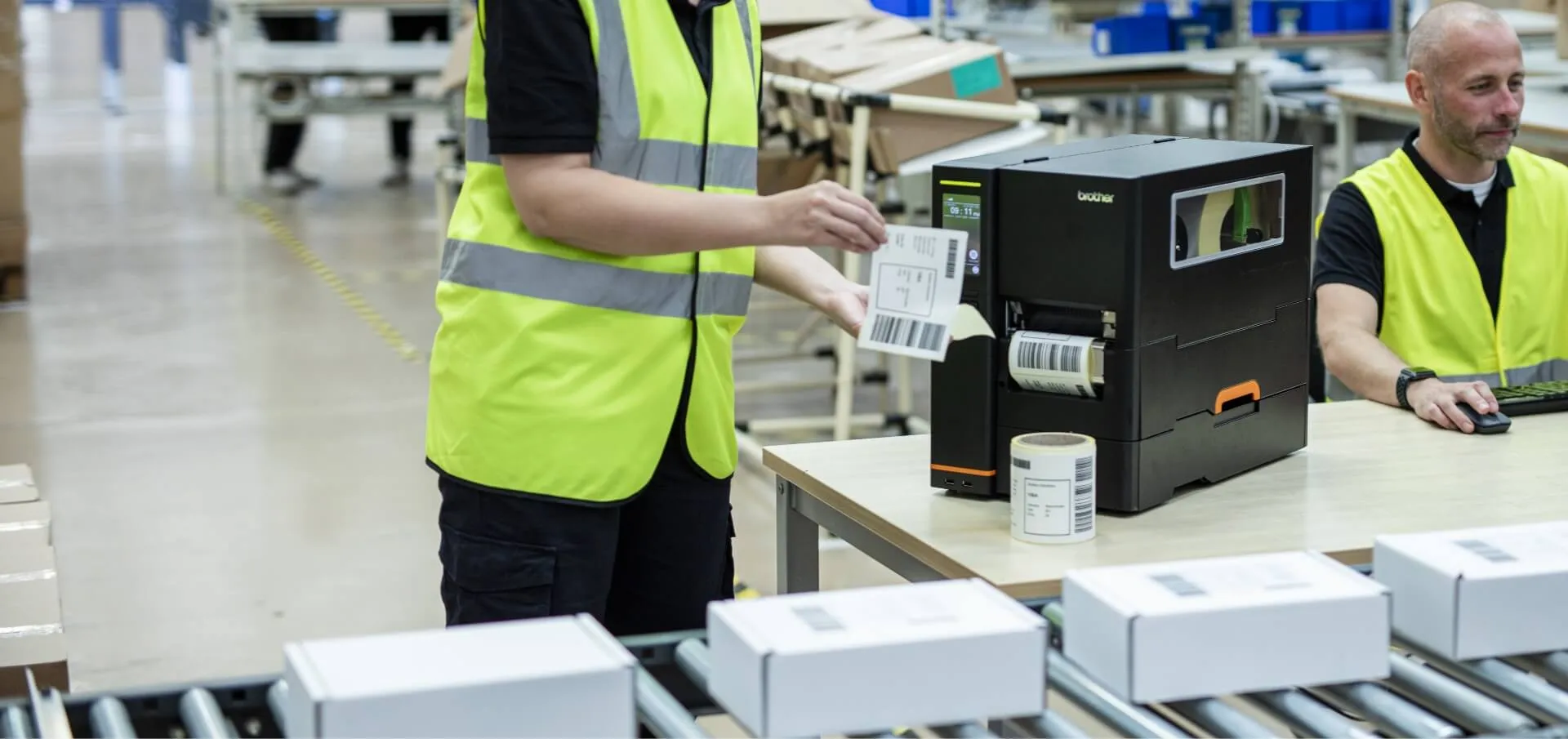
A delivery driver needs a receipt at the customer site; a warehouse associate needs a scannable shipping label at the dock. Printing in the wrong place can slow both handoffs. Brother offers different printers for each job: a mobile printer for field labels and receipts, a portable printer for full-page documents in a vehicle, and desktop or industrial printers for warehouse labeling. The right choice depends on output size, print volume, label life, and the devices that send the print job.
Addressing the Transportation and Logistics Labor Challenge
The driver shortage remains a significant concern for the transportation industry. Retirements, turnover, and growing fulfillment demands are putting pressure on companies to get more productivity from every driver and vehicle.
At the same time, drivers face physically and emotionally demanding jobs. Technology that eliminates unnecessary administrative work can help make their jobs easier while allowing them to spend more time focused on the road and the delivery itself.
Benefits of Mobile and Industrial Thermal Printers
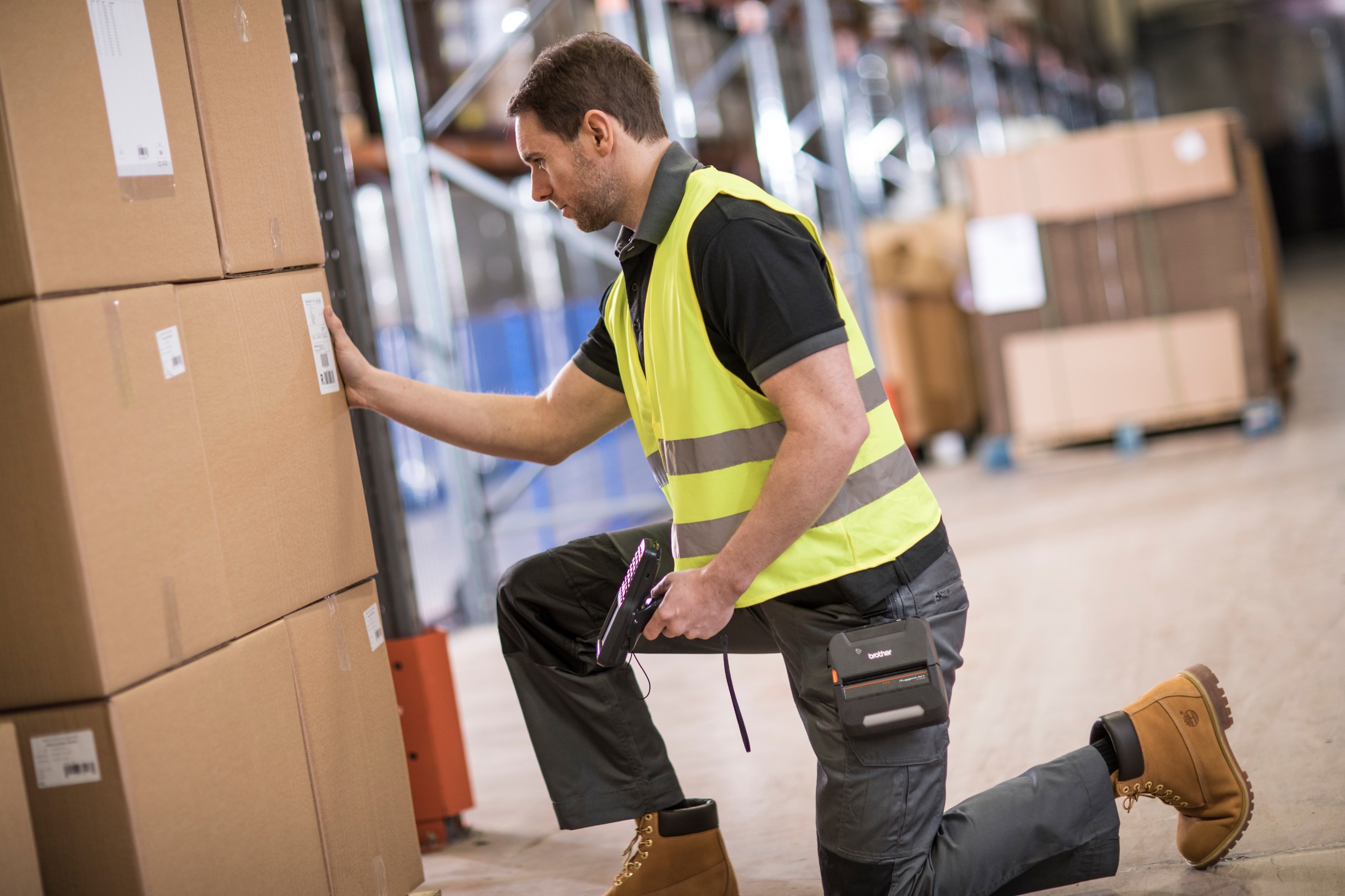
Mobile printers from pickup to delivery
- Visibility: When connected to transportation systems, mobile printers produce labels and receipts from current shipment records at each handoff, giving drivers and customers a physical reference.
- Fewer errors and delays: Print return labels, proof-of-delivery receipts, and delivery paperwork at the stop, reducing manual transcription and trips to a fixed workstation.
- Compliance and safety: Make manifests, bills of lading, incident forms, and appropriate warning labels available on the road. Verify the printed format against applicable requirements.
Desktop and industrial printers in the warehouse
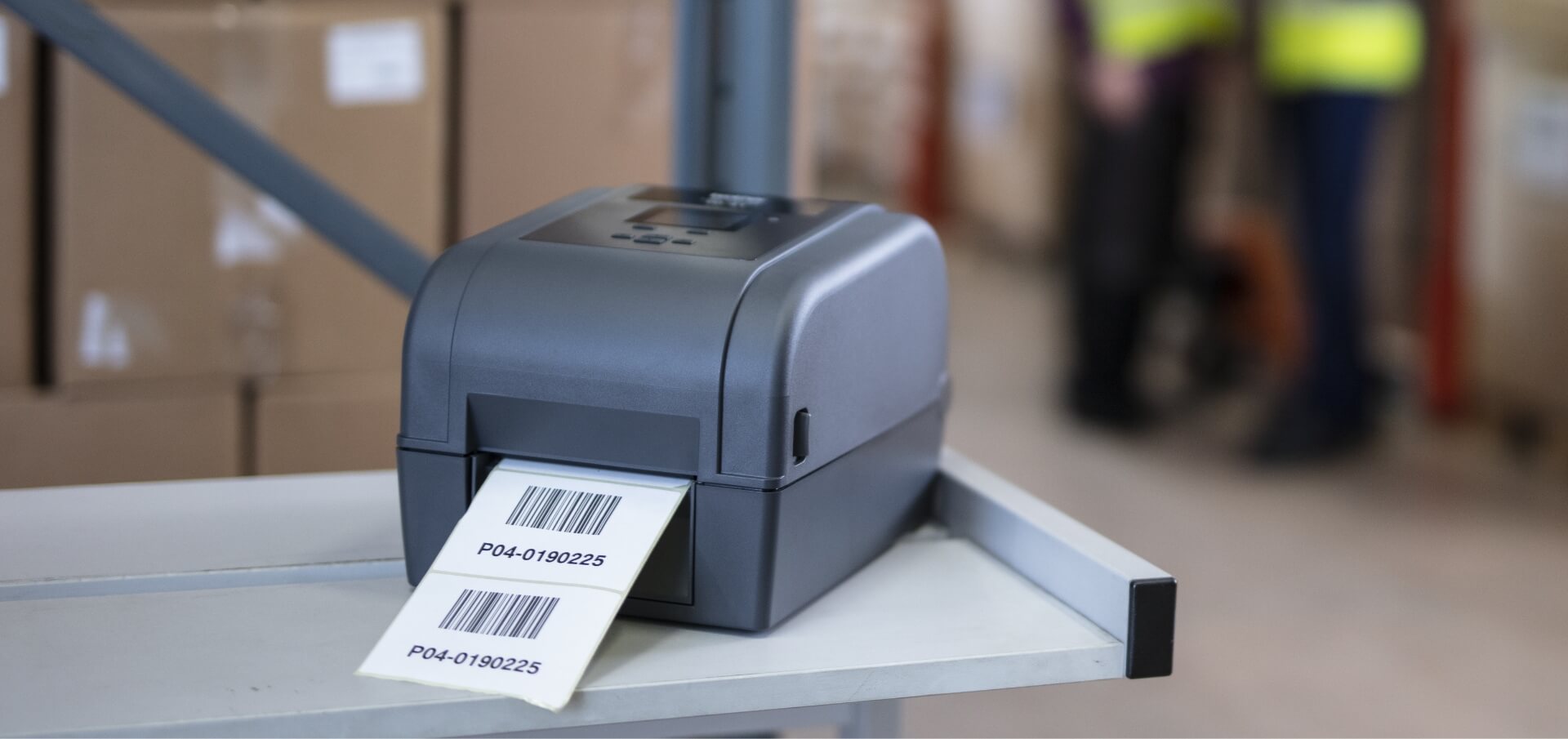
- At warehouse and distribution stations: Print high-volume shipping, inventory, and barcode labels near packing benches and docks so associates can identify goods as work progresses.
- For high-volume demand: Industrial printers support continuous label production on busy lines; compact desktop units provide on-demand output at smaller or distributed stations.
Which Brother Printer Fits Your Logistics Workflow?
Start with the document or label you need to produce, then match the printer to where and how often it will be used.
| Brother series | Best fit | Output and method | Main buying consideration |
| RuggedJet 4 | Mobile pickup, delivery, route dsd work | Labels, receipts; direct thermal | Portable and rugged; optional wireless and mounting options by model |
| PocketJet 8 | In-cab full-page mobile paperwork | Up to 8.5-inch-wide documents; direct thermal | Full-page output; optional power, battery, and paper bundle |
| TD 4 | Packing stations, smaller docks | Four-inch-class labels; direct thermal or thermal transfer by model | Choose the right print method and connections |
| Brother Titan Industrial Printer | Busy shipping lines, distribution centers | Industrial high-volume labels; direct thermal or thermal transfer dual printing ability | Built for sustained volume; allow space for media and ribbons |
A fleet may need more than one format. For example, a driver can print a proof of delivery receipt at dropoff, while a shipping station prints fresh carton labels and an in-cab unit handles full-page customer paperwork. Map those handoffs before choosing hardware for every location.
Brother Printer Reviews for Fleets and Warehouses
RuggedJet 4 for labels and receipts at the point of work
The Brother RuggedJet 4 is the practical choice when drivers need a label or receipt at a pickup or delivery stop. A driver could scan a returned parcel and print its identifier before leaving the customer site. Its direct thermal design avoids ink and ribbons, and its rugged housing suits route work. Selected models offer Bluetooth, Wi-Fi, and NFC pairing; check the specific configuration against your handhelds and vehicle mounts. Our assessment: it brings four-inch-class label printing to the field, but its thermal media and compact format do not replace full-page paperwork or longer-life warehouse labels. Test battery life and rugged design on a typical route.
PocketJet 8 for full-page documents in the cab
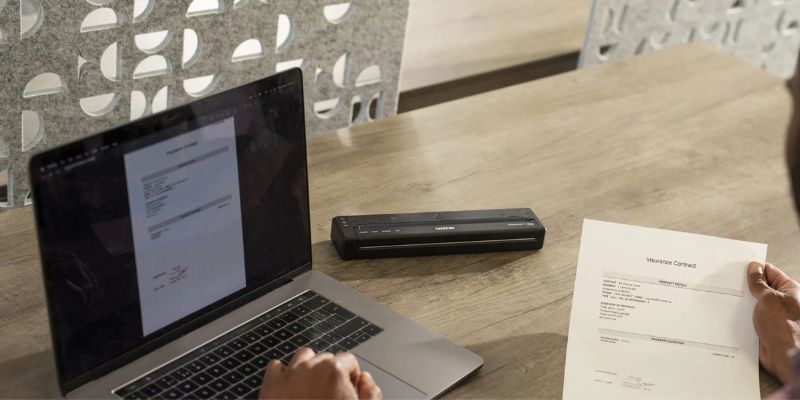
The Brother PocketJet 8 serves a different purpose: full-page invoices, delivery records, manifests, or other documents up to 8.5 inches wide. The slim portable printer uses thermal paper, so drivers do not carry ink cartridges. USB-C is available across the line, with Bluetooth and Wi-Fi on selected models. Our assessment: it is a strong in-vehicle option where a full-page physical document is necessary. Review the bundle carefully; some printer-only SKUs require a separate battery or vehicle power accessory. Confirm your document template and paper format before installing it in a cab.
TD 4 for desktop shipping and inventory labels
The Brother TD 4 series puts label printing at a packing bench or smaller shipping station. Choose a direct thermal model for routine, short-use shipping labels, or a thermal transfer model when compatible media and ribbons are needed for longer-lived identification. Network, wireless, cutter, and peeler options vary by SKU. Our assessment: TD 4 is a flexible middle ground when labels should print near the operator, though buyers must specify the exact print method rather than assume every TD 4 has ribbon capability. It suits distributed stations that do not need an industrial printer at each bench.
Titan for higher-volume industrial labeling
The Brother Titan Industrial Printer series is intended for busy distribution and shipping lines. Titan thermal transfer printer models can use ribbons with suitable label stock for durable barcodes, and representative models also support direct thermal printing. The TJ-4021TN, for example, offers 203 dpi and up to 10 inches per second; 300 dpi options prioritize finer detail. Ethernet is standard on that model, with optional accessories such as a peeler or cutter. Our assessment: Titan is the stronger fit for sustained label production and varied media, while a TD 4 may be simpler for a lighter-duty station.
Frequently Asked Questions
Can a Brother mobile printer print from a driver handheld?
Yes, when the selected printer, handheld, app, and connection are compatible. Verify Bluetooth or Wi-Fi support on the exact RuggedJet and PocketJet configuration and test your production workflow before deployment.
Does PocketJet 8 require ink or a battery?
It does not need ink or toner; it uses compatible thermal media. A battery is optional on some configurations, so check whether your order includes one or instead uses vehicle or external power.
Does printing a receipt update the transportation management system?
No. A printer creates the physical output; the application and its integration must record the transaction and synchronize delivery data. Test both steps together.
What labels work for cold or outdoor conditions?
Choose media and adhesive rated for the surface, temperature, moisture, and expected lifespan. For longer-lived labels, evaluate thermal transfer stock and ribbon, then test barcode readability in the actual environment.
How should we compare total printing cost?
Calculate printer and accessory costs alongside media, ribbons, batteries, maintenance, and staff time. Use expected volume and a short pilot to compare cost per usable label or document.
Ready to equip the route and the dock? Compare the four Brother printer series above, then bring your print volumes, media needs, devices, and sample labels to Barcodes, Inc. We can help identify the configuration that fits each handoff in your transportation and logistics operation.
Build a More Efficient Transportation Operation
The transportation and logistics industry face growing pressures. Mobile and industrial printing solutions can offer relief by reducing administrative work, improving documentation accuracy, supporting compliance, and helping drivers and warehouse employees complete tasks without unnecessary trips back to a fixed workstation.
Brother offers printing solutions across the transportation and logistics workflow—from RuggedJet mobile printers for portable labels and receipts, to PocketJet mobile printers for full-page documents, TD 4 desktop thermal printers for everyday warehouse labeling, and Titan industrial printers for high-volume label production.
Ask Barcodes, Inc. how to bring reliable printing capabilities closer to where work actually happens.
Rugged Handheld Barcode and RFID Scanners Compared
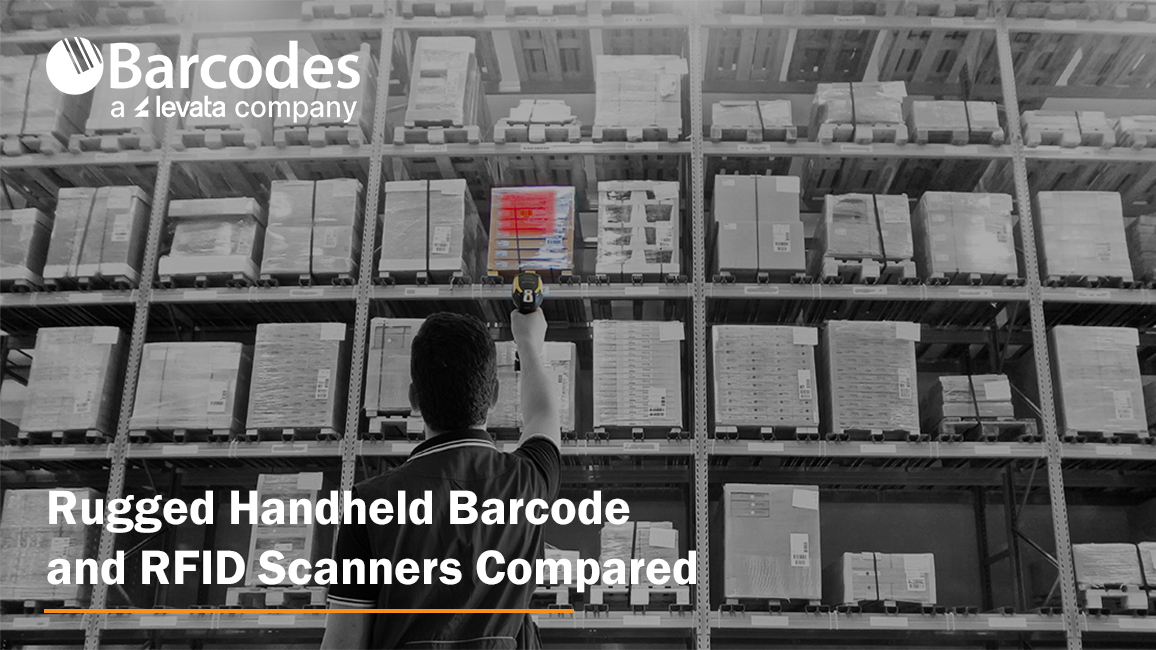
Choosing the right handheld scanner starts with the workflow. A barcode scanner is often the most cost-effective choice for item-by-item data capture. An RFID scanner can deliver greater value when workers need to identify multiple tagged items or read data without direct line of sight.
Warehouses, factories, transportation hubs, retailers and healthcare facilities also need devices that withstand drops, dust, moisture and continuous use. The Datalogic PowerScan 9600 and PowerScan 9600 RFID provide options for rugged barcode scanning or hybrid barcode-and-RFID capture.
Why Invest in a Rugged Handheld Scanner?
A general-purpose scanner may cost less initially, but failures can interrupt receiving, production, picking and shipping. Downtime, repairs, replacements and manual data entry can quickly outweigh the upfront savings.
When buying an industrial scanner, compare verified drop resistance, IP ratings, trigger durability, operating temperatures and charging design. These factors indicate whether a device can remain available through demanding shifts—not simply whether it carries a “rugged” label.
Barcode Scanner vs. RFID Scanner
The right choice of technology depends on what employees must identify and how quickly they need to capture it.
| Buying consideration | Barcode handheld scanner | RFID scanner |
| Capture method | Reads printed 1D or 2D barcodes | Reads radio-frequency tags; hybrid models may also scan barcodes |
| Line of sight | Usually required | Not required for RFID |
| Items captured | Typically one targeted code at a time | Can capture multiple tags simultaneously |
| Cost | Lower-cost labels and simpler implementation | Higher tag and deployment costs |
| Best uses | Picking, receiving, checkout and parcel processing | Inventory counts, asset searches and shipment verification |
| Key advantage | Precise item-level scanning | Faster bulk and non-line-of-sight identification |
RFID is most valuable when it reduces time spent counting inventory, locating assets or verifying groups of products. Results depend on tag selection, placement, surrounding materials, software and process design.
Organizations can also use both technologies. A hybrid scanner supports existing barcodes while adding RFID to selected products, assets or workflows.
Where Are Rugged Barcode and RFID Scanners Used?
Manufacturing
Manufacturers use rugged handheld scanners for work-in-process tracking, component verification, material picking, quality control and finished-goods identification. Extended-range barcode scanning can help workers capture labels at different distances, while direct-part-mark reading supports components marked through laser etching, dot peening or other methods.
An RFID scanner can accelerate component identification and track tools, reusable containers or materials when barcodes are obstructed or difficult to reach.
Warehousing and Transportation
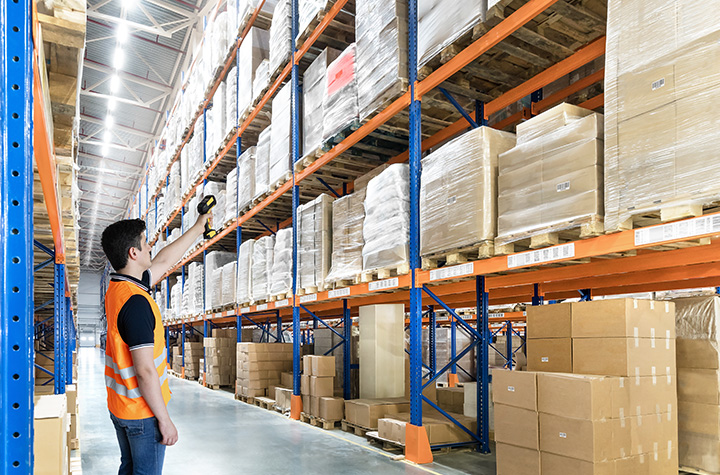
Warehouse and logistics teams rely on scanners for receiving, put-away, picking, packing, shipping and parcel processing. Auto-range barcode models allow workers to scan nearby picklists and labels positioned on elevated racks with one device.
RFID can improve cycle counting, tagged-item searches and shipment verification by capturing multiple tags without requiring employees to aim at each label.
Retail
Retailers can use handheld scanners for inventory management, price verification, checkout, returns and backroom operations. Rugged construction is particularly valuable in high-volume, warehouse-style and home-improvement stores.
RFID supports faster inventory counts, product searches and loss-prevention processes. A hybrid scanner lets employees process conventional barcodes while using RFID where merchandise has been tagged.
Healthcare
Healthcare organizations use barcode scanners to identify supplies, medications, equipment and laboratory items. RFID can support faster counts and help locate tagged medical assets, instruments and consumables. Any healthcare deployment should also evaluate cleaning protocols, tag placement and integration with clinical or inventory systems.
Datalogic PowerScan 9600 Product Comparison
| Feature | PowerScan 9600 | PowerScan 9600 RFID |
| Best fit | Rugged barcode workflows | Hybrid barcode and UHF RFID workflows |
| Data capture | 1D/2D barcodes; DPM or images on select models | 1D/2D barcodes and UHF RFID; images and OCR on select models |
| Mobility | Corded, Bluetooth or Datalogic STAR cordless | Cordless |
| Configurations | Standard Range, High Performance, Document Capture, Auto Range and DPX | Standard Range and Document Capture |
| Charging | Inductive charging on cordless models | Inductive charging |
| Primary advantage | Broad optical and connectivity choices | Barcode and RFID in one device |
| Main consideration | No RFID capability | Requires RFID tags, software and workflow planning |
Datalogic PowerScan 9600 Review
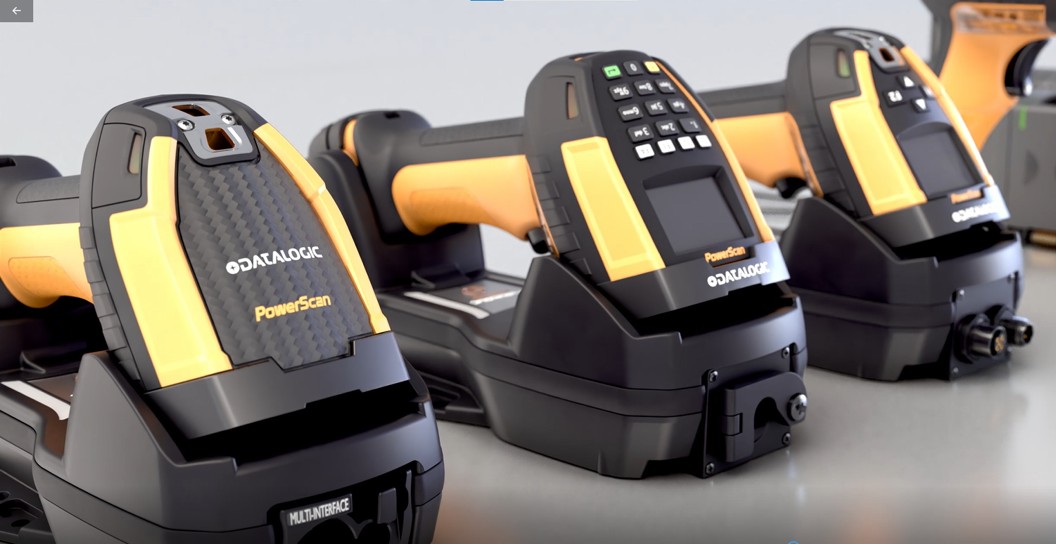
The rugged Datalogic PowerScan 9600 suits businesses that primarily use barcodes but need more durability, range or connectivity than a general-purpose scanner provides.
Datalogic rates the handheld scanner at IP65 and IP67 and for drops from 2.5 meters onto concrete. Its trigger is tested for up to 10 million activations. Standard Range, High Performance, Document Capture, Auto Range and DPX configurations support applications ranging from conventional barcode reading to elevated rack labels and direct part marks.
Buyers can choose corded PD9600, STAR cordless PM9600 or Bluetooth PBT9600 models. Modular interfaces include USB, USB-C, RS-232, Ethernet, EtherNet/IP and PROFINET. Cordless models use inductive charging, eliminating exposed contacts that can become dirty or damaged.
Best for: Barcode-intensive warehouse, manufacturing and logistics applications requiring ruggedness and configuration flexibility.
Buyer’s tip: Businesses planning or currently using RFID should compare the RFID version.
Datalogic PowerScan 9600 RFID Review
The Datalogic PowerScan 9600 RFID combines UHF RFID read-and-write capability with 1D and 2D barcode scanning in one rugged cordless device.
Its configurable RFID range reaches approximately one meter, supporting tagged-item searches, inventory verification and asset tracking. The Standard Range model handles barcode and RFID capture. The Document Capture model adds dual cameras, color image capture, OCR, an OLED display and a 16-key keypad.
Best for: Organizations adopting UHF RFID while retaining barcode-based processes.
Buyer’s tip: Remember compatible RFID tags and software
Which PowerScan 9600 Should You Buy?
Choose the standard PowerScan 9600 when barcodes remain the primary identifier, corded operation is required or the workflow needs Auto Range or DPX scanning.
Choose the PowerScan 9600 RFID when employees must read UHF tags, barcode and RFID tasks overlap or faster inventory counts and asset searches can generate measurable savings.
Frequently Asked Questions
It requires compatible UHF RFID tags for RFID functions. The correct tag depends on the item, material, read range and environment. It can still scan standard barcodes without RFID tags.
The scanner is designed for UHF RFID. NFC and high-frequency RFID use different technologies, so buyers should verify tag standards and regional frequency requirements.
Metal and liquids can reflect or absorb UHF signals. Specialized tags, careful placement and testing may be necessary around machinery, tools, beverages or medical supplies.
Test real labels and tags, read distances, damaged codes, peak volumes, wireless conditions, employee usability and integration with the intended host application.
Yes, especially when downtime could delay production or shipments.
One platform for today’s needs and tomorrow’s technology
The right data-capture technology should make work faster, more accurate and more reliable—not add unnecessary complexity. The biggest advantage of the PowerScan 9600 family is its ability to support different stages of an organization’s data-capture strategy.
For businesses that primarily rely on barcodes, the PowerScan 9600 provides an ultra-rugged platform with high-performance scanning, flexible connectivity, cordless mobility and wireless charging.
For businesses ready to incorporate RFID, the PowerScan 9600 RFID Series adds UHF RFID capabilities without requiring workers to carry a completely separate handheld device. That hybrid capability can make it easier to introduce RFID into existing workflows while continuing to support traditional barcodes.
Contact Barcodes, Inc.to learn more and get help finding the right handheld scanning solution for your needs.
A Familiar Device Takes on Data Capture Frontline Work
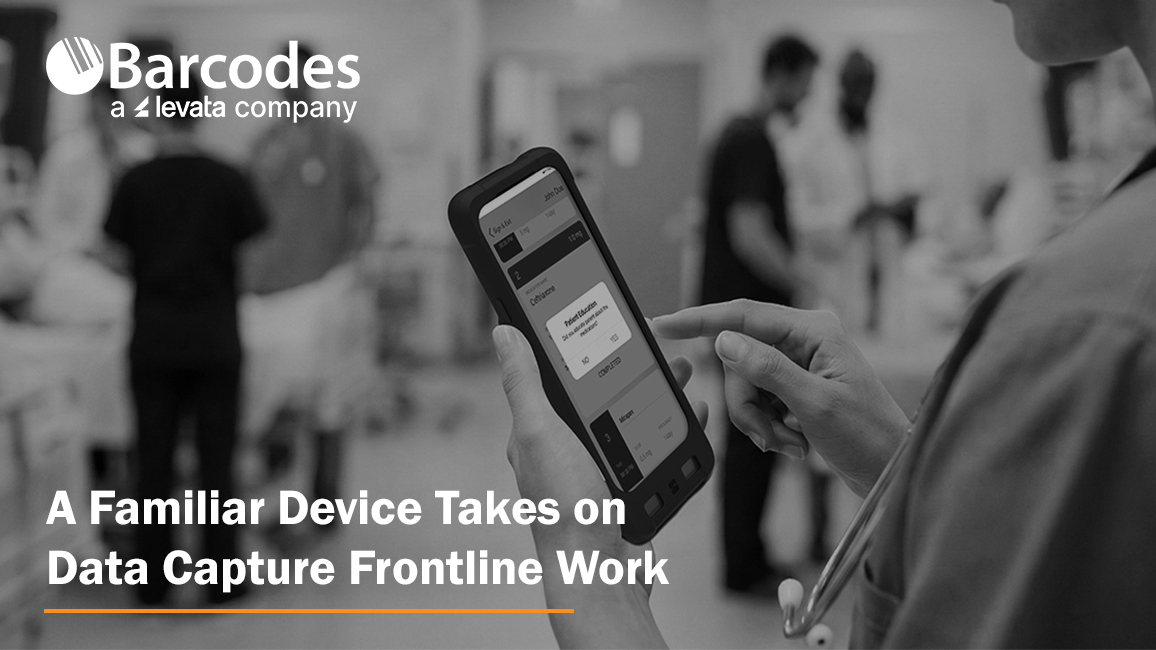
Frontline workers increasingly depend on mobile technology to scan inventory, communicate with teammates, access applications, capture information, complete forms and respond to customers. But supporting all those tasks can create a device problem of its own.
A worker may need a smartphone for communication, a device for enterprise barcode scanning, and access to additional tools for specialized workflows. More devices can mean more hardware to purchase, carry, charge, manage and support.
For many organizations, a more flexible approach is emerging: use a smartphone barcode scanner to perform more of the work—while potentially lowering total cost of ownership compared with deploying separate purpose-built devices.
The new IPCMobile Linea® Pro G (LPG) S1 brings purpose-built enterprise barcode scanning and data capture to the Google Pixel™ 10a. Designed in partnership with Google Pixel for Business, the LPG S1 is a form-fitted smart case that transforms the Pixel 10a into a versatile, enterprise-grade mobile device—with optional 1D/2D barcode scanning, programmable buttons, push-to-talk capabilities and swappable, extended battery power. The LPG S1 is also available for the Google Pixel 9a.
Why Familiar Form Factors Matter for Enterprise Mobility
Familiar smartphone interfaces can reduce training and accelerate adoption while giving employees one multifunctional device for scanning, communication and business applications. Standardizing on a common platform can also simplify device management and support. With purpose-built enterprise accessories, organizations can gain the scanning performance, battery life and durability frontline operations require without abandoning a familiar form factor.
The LPG S1 gives organizations a way to take the familiar Google Pixel experience and add the functionality frontline workers need. Rather than relying solely on the smartphone’s touchscreen or camera, the smart case adds dedicated hardware controls and optional scanning capabilities designed for fast-moving business environments.
The modular approach can also help organizations tailor devices to specific workflows. Accessories, battery options and scanning configurations can be selected based on how each team works, while custom branding options can help organizations create a consistent, company-specific device experience.
Industry Applications for Smartphones Scanners
The new LPG S1 can help organizations equip mobile workers across:
- Retail: Real-time inventory visibility, mobile orders and customer engagement
- Hospitality: Mobile check-in, service requests and maintenance ticketing
- Public Sector: Field inspections, code enforcement and public safety
- Healthcare: Faster data capture from intake through discharge
- Supply Chain & Logistics: Inventory tracking, warehouse workflows and proof-of-delivery
- Travel: Ramp and baggage operations, gate changes and mobile check-in validation
- Postal: Package tracking, postage verification and route optimization
What Is the IPCMobile Linea Pro G S1?
The IPCMobile Linea Pro G S1 is a purpose-built enterprise smart case available for the Google Pixel 10a and Pixel 9a. Rather than relying solely on a smartphone camera and touchscreen for business data capture, it adds dedicated controls and optional scanning technology designed for repetitive, fast-moving frontline workflows.
This makes the device more than simply a smartphone with a barcode scanner attached. Depending on how it is configured, the Pixel and LPG S1 combination can become a scanner, communication tool, data-entry device, AI-enabled capture tool and mobile workstation in one familiar form factor.
Four programmable buttons can be configured to trigger specific actions and send information directly to the application currently open on the Pixel.
Depending on the workflow, employees can use dedicated buttons to:
- Push to Scan 1D and 2D barcodes
- Push to Talk for team communications
- Push to Capture forms and information
- Push to Dictate information into workflows
- Push to Translate using speech recognition
- Push to Verify identification or other information
- Push to Recognize objects using AI
- Push to Emergency for rapid-response workflows
- Push to AI for supported AI functions
- Push to Workflow to initiate customized actions
This physical push-button functionality can be especially useful when employees repeatedly perform the same tasks throughout a shift and need a faster, more predictable alternative to navigating touchscreen menus.
Through the AIWedge app, the LPG S1 can go beyond traditional barcode scanning. Users can inspect camera frames, recognize speech and objects, verify information, automate item counts and build customized workflows using AI-powered capabilities.
Enterprise Scanning Without Giving Up the Smartphone
For organizations that want to leverage Google Pixel devices while adding purpose-built data capture, the LPG S1 offers a compelling alternative to traditional rugged handheld computers. By combining a smartphone employees already know with purpose-built scanning and data-capture capabilities, organizations may be able to consolidate devices and reduce the total cost of ownership associated with purchasing and supporting separate smartphones and scanners.
Its optional integrated 1D/2D scan engine can read a wide range of barcodes—including dirty, torn, low-contrast and damaged labels and tags. An optional extended-range engine supports scans from up to 30 feet away.
The Pixel’s native NFC capabilities can also be used to read access and loyalty cards and tags, expanding the device’s capabilities beyond barcode scanning.
Power for Multiple Shifts
Frontline teams can’t always stop to recharge or swap devices during the workday. The LPG S1 features a swappable smart battery available in 2,500mAh and extended 5,000mAh capacities. With the extended battery, the system provides up to 10,000mAh of total power, helping support continuous use across multiple shifts.
A range of charging accessories helps further reduce downtime during high-volume scanning and other demanding workflows. Additional accessories and configuration options allow organizations to adapt the LPG S1 to specific operational needs rather than deploying a one-size-fits-all device.
Built for Frontline Environments
The LPG S1 adds rugged protection to the Pixel platform, with an IP65 rating for dust and moisture protection and a 1.2-meter drop-to-concrete rating per MIL-STD-810G. It is also designed to withstand strong disinfectants and operate in harsh climates.
Despite its rugged capabilities, the LPG S1 is designed to remain lightweight and slim enough for employees to carry throughout the workday.
Explore a More Flexible Approach to Enterprise Scanning
The IPCMobile Linea Pro G S1 for Google Pixel 10a bridges the gap between familiar smartphones and purpose-built enterprise data capture. Organizations can gain professional scanning, programmable controls, rugged protection, extended battery capabilities and AI-enabled workflows without abandoning a smartphone platform employees already understand. With configurable scanning, battery and accessory options—and the potential to consolidate devices and lower total cost of ownership—the LPG S1 gives organizations a flexible way to equip frontline workers for today’s workflows while allowing room to adapt as those needs evolve. Custom branding options can also help organizations extend their identity directly to the devices employees use every day.
Could the smartphone your workforce already knows become the enterprise data capture device they need?
Explore the IPCMobile Linea Pro G S1 now.
Need help from an expert? Contact Barcodes, Inc. today.
Flexible Industrial Label Printing for Barcode, RFID and Compliance Labeling
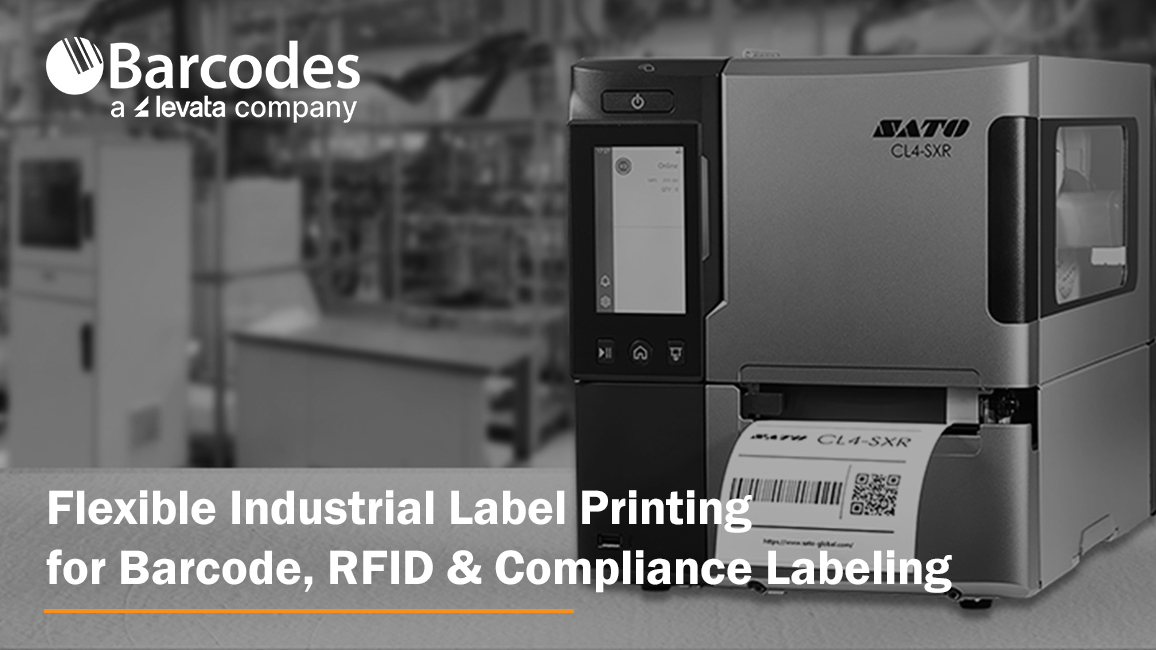
Labeling requirements rarely stay confined to one application. A manufacturing facility may need durable barcode labels for work-in-process tracking, RFID labels for automated inventory visibility and compliance labels for finished goods. A warehouse may print shipping labels, pallet labels, location labels and RFID tags—sometimes from the same printing station. Healthcare organizations must support patient identification, specimen tracking, asset management and regulatory labeling while maintaining accuracy in demanding environments.
Managing these varied requirements with separate printers can add unnecessary cost and complexity. Organizations increasingly need flexible industrial label printers that can produce a wide variety of high-quality labels, support multiple media types and integrate with barcode, RFID and compliance workflows.
The right printer should do more than produce a readable label. It should deliver consistent output at production speeds, accommodate changing label formats, connect to existing systems and withstand continuous use in challenging operational environments.
Let’s learn more about industrial label printing, and how front-runners like the SATO CL4-SXR and CL6-SXR.
What Features are Most Important for an Industrial Label Printer?
A flexible industrial label printer can adapt to different applications without forcing an organization to invest in a separate device for every label size, material or identification technology.
Important capabilities include:
- Support for multiple label widths, materials, ribbons and adhesive types
- High-resolution printing for text, graphics, barcodes and regulatory information
- Accurate media positioning for small or precisely formatted labels
- RFID encoding and verification options
- Reliable performance during long or high-volume print runs
- Connectivity with critical operating systems used for warehouse, manufacturing and healthcare
- Easy maintenance that limits disruption to critical workflows
- Remote management for printers deployed across multiple locations
Print width is another important consideration. Four-inch industrial printers accommodate many standard barcode, product, shipping and RFID labels. Six-inch printers provide additional space for pallet labels, chemical labels, automotive documentation, healthcare forms and other applications that require larger formats or more information.
Flexible Printing for Barcode, RFID and Compliance Labels
Industrial label printers must produce crisp, precisely positioned barcode labels that scan reliably at speed. Consistent print quality helps prevent rescanning, relabeling and data-entry errors across product identification, inventory, shipping, asset tracking and healthcare workflows.
For RFID applications, printers must accurately print, encode and verify each tag. Supporting both barcode and RFID labels gives organizations the flexibility to improve inventory visibility, shipment verification, traceability and asset tracking without maintaining separate printing platforms.
Compliance labels add requirements for legible text, symbols, barcodes and safety information. Precise printing and flexible media handling help businesses meet industry, regulatory and customer standards for applications ranging from product and chemical labeling to medical devices, food traceability and retailer-mandated shipping labels.
Label Printing in Demanding Operational Environments
Manufacturing, warehouse and healthcare environments have distinct labeling requirements, but all depend on reliable performance:
- Manufacturing: Printers must withstand dust, temperature changes and continuous workloads while producing readable labels for production, inspection, traceability and distribution.
- Warehousing: Printers must support high-volume receiving, picking, packing and shipping without interruptions that create backlogs or delay fulfillment.
- Healthcare: Printers must deliver accuracy and reliability across specimen, medication, medical device, supply, equipment and patient-identification workflows.
Beyond print speed, organizations should evaluate print accuracy, environmental adaptability, media compatibility, ease of maintenance and integration with existing systems.
SATO CL4-SXR and CL6-SXR: Top Choices for Flexible Industrial Labeling
For organizations seeking an industrial printer platform that can support varied barcode, RFID and compliance applications, the SATO CL4-SXR and SATO CL6-SXR are compelling options.
The third generation of SATO’s CL industrial printer platform combines high-speed printing, precise media handling, connected management and RFID capabilities. The CL4-SXR offers a four-inch print width for widely used label formats, while the CL6-SXR expands the print width to six inches for larger labels and information-intensive applications.
Together, the two models give organizations the flexibility to standardize around a common printer family while addressing different label dimensions and workflow requirements.
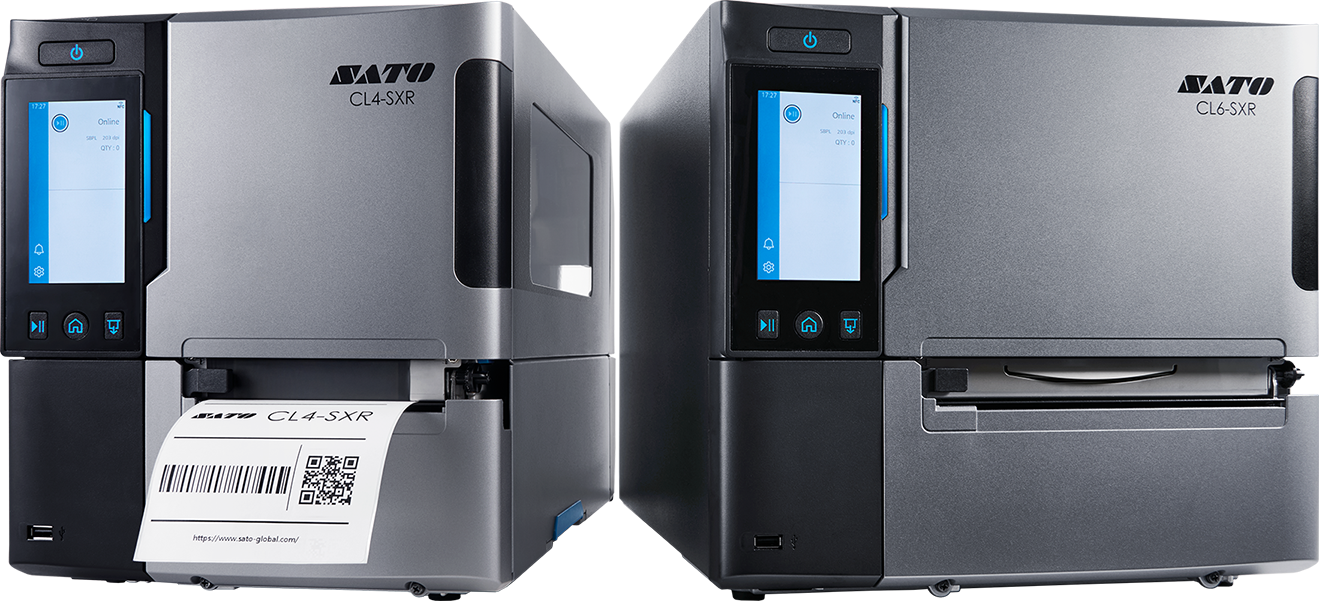
SATO CL4-SXR vs. CL6-SXR: At-a-Glance Comparison
| Feature | SATO CL4-SXR | SATO CL6-SXR |
|---|---|---|
| Print Width | 4-inch format | 6-inch format |
| Max Print Speed | Up to 18 inches per second at 203 dpi | Up to 14 inches per second |
| Print Accuracy | Up to +/- 0.3 mm | Up to +/- 0.3 mm |
| Best Suited For | Barcode, RFID, product and shipping labels | Larger labels requiring more space for data, graphics or compliance information |
| RFID Support | HR and UHF RFID | UHF RFID |
| RFID Capabilities | Print, encode and verify | Print, encode and verify |
| Media Handling | Supports thin, small, irregularly shaped and strongly adhesive labels | Supports varied media, ribbons and wider label formats |
| Print-quality Controls | GAP2 label-positioning sensor with temperature and humidity sensing | GAP2 label-positioning sensor with temperature and humidity sensing |
Shared Operational Advantages
- Accurate output: Precise positioning supports small labels, closely spaced layouts, barcodes, text and RFID inlays.
- Consistent print quality: Environmental sensing automatically adjusts thermal-head output as temperature and humidity change.
- Flexible media options: A redesigned peel-off mechanism and adaptable media configurations accommodate applications ranging from paper shipping labels to specialized product, compliance and asset labels.
- RFID quality control: Integrated verification identifies defective RFID tags before they enter production, warehouse or shipping workflows.
- One adaptable platform: Support for conventional and RFID labels helps organizations address current barcode requirements while preparing for expanded RFID adoption.
Connected, Serviceable and Resource-Efficient Printing
The SATO CL4-SXR and CL6-SXR combine connected management, proactive maintenance and waste-reduction features to support more efficient operations:
- Streamlined integration: SATO Application Enabled Printing allows applications to run directly on the printer, potentially eliminating the need for a separate computer in certain workflows.
- Flexible connectivity: Gigabit Ethernet, Bluetooth and optional Wi-Fi 6E support deployment across production lines, warehouse zones, healthcare departments and multiple facilities.
- Remote management: Remote desktop functionality simplifies access to printers installed in unattended or difficult-to-reach locations.
- Predictive maintenance: SATO Online Services uses AI-assisted monitoring to anticipate service needs, including thermal printhead replacement, before failures disrupt operations.
- Simplified servicing: Tool-free thermal head and platen roller replacement helps reduce maintenance time and restore printing more quickly.
- Less material waste: Printing can begin with the first label on a newly loaded roll, while recycled resin represents 34% of CL4-SXR components and 36% of CL6-SXR components.
A Versatile Platform for Evolving Labeling Requirements
The ideal industrial label printer should support what an organization prints today while providing the flexibility to accommodate new label formats, materials, identification technologies and compliance demands.
Whether the requirement involves barcode labels, RFID tags, compliance labels or a combination of all three, the SATO SXR series provides a flexible industrial printing platform designed for demanding operations. These capabilities make them top choices for manufacturing, warehouse, logistics and healthcare organizations that depend on high-quality labels to keep products, assets, inventory and information moving accurately.
Learn more about the SATO CL4-SXR and CL6-SXR and find the right configuration for your labeling applications.
How to Print Professional Color Labels, Stickers and ID Badge Labels In-House
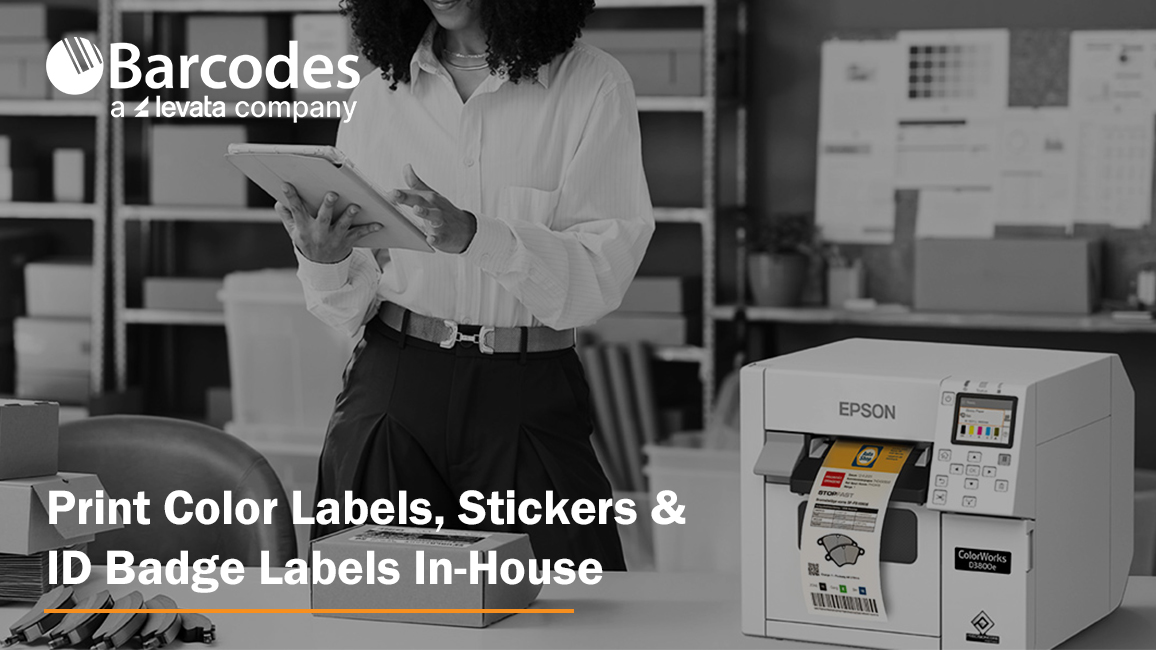
Professional color label printers elevate product packaging, make products easier to identify, and create affordable ID badges for employee or visitor credentials. But ordering preprinted labels from an outside supplier or investing in an industrial badge printer is not always practical, especially when quantities are small, information changes frequently or labels are needed immediately.
An in-house color label printer gives businesses more control over when, how and how many labels they produce. Instead of maintaining inventories of preprinted designs, organizations can print the labels they need on demand.
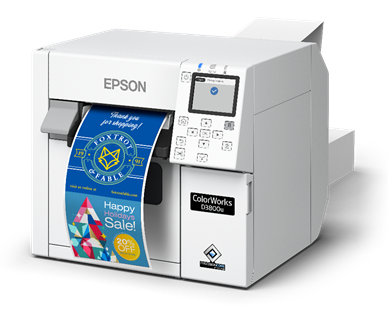
Compact, versatile and easy to operate, the Epson CW-D3800 Color Label Printer provides an affordable solution for low-volume, on-demand color label printing. From visitor badges and product labels to shelf tags and seasonal packaging, it makes it easy to produce professional color labels when you need them.
What Is a Color Label Printer?
A color label printer is a specialized printer that produces full-color text, images, barcodes and graphics directly onto label media. Unlike a traditional thermal label printer, which typically prints in one color, a color inkjet label printer can reproduce logos, product photography, color-coded information and branded designs.
Color label printers can be used to produce:
- Product and private-label packaging labels
- Custom stickers and promotional labels
- Food, beverage and ingredient labels
- Shelf and price tags
- Seasonal packaging labels
- Employee identification labels
- Visitor badge labels
- Event and temporary credential badges
- Color-coded inventory and organizational labels
The ability to print these materials internally helps businesses create labels in the exact quantities they need—even if that means only a few dozen at a time.
Why Print Professional Color Labels In-House?
Outsourcing may be cost-effective for large quantities of one unchanging label design. However, it can become less efficient when a business needs smaller batches, temporary ID badges, frequent design updates or fast turnaround.
Bringing color label printing in-house can provide several advantages.
Print Only What You Need
Instead of meeting an outside printer’s minimum order quantity, businesses can print a single label, a small test batch or several hundred labels. This is particularly useful for small-batch products, limited releases, test markets and seasonal promotions.
Make Label Changes Quickly
Product information, ingredients, pricing, branding and promotional messages can change. An in-house sticker printer allows a business to revise the label file and begin printing the updated version without waiting for a new external order.
Reduce Preprinted Label Inventory
Preordering large quantities can leave businesses with obsolete labels when packaging, product details or branding change. On-demand printing reduces the need to store multiple versions of preprinted labels and can help limit waste.
Respond Faster
Labels can be produced when a new product is ready, a visitor arrives or a promotional opportunity emerges. This helps eliminate outside production and shipping delays.
Maintain Brand Consistency
A professional color label printer can reproduce logos, brand colors, graphics and product details in a consistent format. Templates can also help different users follow established brand and labeling standards.
What Should You Look for in a Color Label or Sticker Printer?
The right printer depends on the labels being created and the environment in which they will be used. Before selecting a device, consider the following questions.
How Many Labels Will You Print?
A compact desktop printer may be the best choice for low-volume or intermittent printing. Higher-volume operations may need faster speeds, larger ink capacity and equipment designed for continuous use.
What Label Sizes Do You Need?
Make sure the printer accommodates the narrowest and widest media required. Also consider whether it supports both roll and fanfold media if your applications use multiple formats.
What Level of Image Quality Is Required?
Product packaging and branded stickers may require more color detail than basic operational labels. The CW-D3800 prints at resolutions up to 600 dpi by 1200 dpi, supporting detailed graphics, rich blacks and vibrant color.
Will the Labels Be Exposed to Harsh Conditions?
Ink and media should be selected for the expected environment. A label used on indoor retail packaging has different durability requirements than one exposed to chemicals, sunlight, refrigeration or moisture.
The CW-D3800’s dye ink is well suited to applications where vibrant presentation is important. Organizations with demanding durability requirements should evaluate whether pigment ink, specialty media or another printing technology is more appropriate.
Does the Printer Fit Your Existing Workflow?
Review operating-system compatibility, connectivity, label design software and printer-language support. The CW-D3800 supports Windows, iOS and Linux, as well as ESC/Label emulation and ZPL II capabilities, helping it integrate with a variety of labeling environments.
Who Will Operate It?
For decentralized printing at a reception desk, retail counter or small production area, ease of use matters. Look for intuitive controls, straightforward media changes and maintenance features that do not require specialized operators.
Featured Product: Epson ColorWorks CW-D3800 Color Label Printer
The CW-D3800 Color Label Printer delivers high-quality color labels without high-volume requirements.
The CW-D3800 uses Epson Genuine Dye Ink to produce vibrant colors, rich blacks and exceptional detail at resolutions up to 600 dpi x 1200 dpi. This makes it an ideal color label printer for businesses that want professional-looking labels without the need for large print runs or preprinted inventory.
Flexible Media for a Variety of Applications
The compact CW-D3800 supports both roll and fanfold media from 1 to 4.25 inches wide, allowing businesses to print a wide range of label sizes and formats.
With one compact printer capable of handling different media formats, businesses can use the CW-D3800 for multiple labeling needs instead of investing in separate solutions. Application uses include: visitor badges and ID badges, product labels, package stickers, shelf price stickers, event wristbands, and more.
Optional Wi-Fi connectivity provides even more flexibility, allowing users to print from mobile devices through the Epson ColorWorks Print 2.0 app.
An Ideal Color Badge Printer for Visitor Management
One of the CW-D3800’s key applications is visitor badge printing. Color visitor badges provide an easy visual way to distinguish visitors and can support identification and security procedures in schools, healthcare facilities, corporate offices and government environments.
The ability to print badges on demand is especially valuable when visitor information changes throughout the day. Rather than relying on preprinted badges or labels, organizations can create customized, professional-looking visitor badges as needed.
Designed for Easy, Reliable Operation
The CW-D3800 combines straightforward operation with Epson technology designed for long-term reliability. Its PrecisionCore Heat-Free permanent printhead is engineered to last the life of the printer, helping provide consistent print quality while minimizing downtime and maintenance.
A color LCD screen, fast media and ink loading, and automatic Nozzle Verification Technology further simplify operation. The printer supports Windows, iOS and Linux, along with ESC/Label emulation and ZPL II capabilities, helping it integrate into existing labeling workflows.
Epson also offers its Label Boost software suite, including Label Boost Designer for creating and printing labels and badges. For businesses with basic color labeling requirements, the software provides an easy way to get started with in-house label production.
For businesses looking for an affordable color label printer for low-volume applications, the Epson ColorWorks CW-D3800 offers a practical combination of quality, flexibility and ease of use.
Whether you’re printing visitor badges, custom product labels, seasonal packaging or shelf tags, the CW-D3800 gives you the ability to print professional color labels on demand and in the quantities you need.
[Learn more about the Epson ColorWorks CW-D3800 or contact Levata to find the right color labeling solution for your application.]
Bring Professional Color Label Printing In-House
Businesses do not always need thousands of identical labels. They may need 50 labels for a new product, 100 stickers for a seasonal promotion or personalized visitor badges throughout the day.
By producing labels and temporary badges internally, businesses can shorten turnaround times, reduce preprinted inventory and respond more quickly to new products, visitors and promotional opportunities.
Whether you need a product label printer, a custom sticker printer or an on-demand solution for visitor ID badge labels, the Epson ColorWorks CW-D3800 provides the flexibility to handle these changing requirements with one compact color label printer.
Barcodes, Inc. can help you evaluate the color label printing solution for your products, packaging and identification needs.
Choosing the Best Ultra-Rugged Mobile Computers for Industrial Data Capture
Warehouse operations don’t always happen on smooth concrete floors under ideal conditions. Distribution centers, manufacturing plants, loading docks, ports, and outdoor yards demand ultra-rugged mobile computers for industrial data capture. These specialized handheld computers can withstand constant impacts, extreme conditions, and thousands of scans every shift.
When downtime is catastrophic to operations, organizations need more than a rugged mobile computer—they need a device leveled-up for the most demanding environments.
Ultra-Rugged Handheld Mobile Computers: Built for the Toughest Jobs
Warehouse workers rely on their mobile computers throughout the day. Repeated drops, harsh temperatures, dust, moisture, and constant handling quickly expose the limitations of standard devices.
While consumer-grade and lightly rugged mobile devices may offer a lower upfront purchase price, they often create hidden operational costs that far outweigh the initial savings.
With ultra-rugged handheld mobile computers, you’ll improve operation performance across your organization:
- Increase Workforce Productivity: Workers spend more time completing tasks and less time dealing with equipment issues.
- Improve Data Accuracy: Enterprise scanning minimizes errors that can impact inventory, shipping, production, and customer satisfaction.
- Reduce Operational Downtime: Reliable devices keep workflows moving without interruptions caused by broken hardware or lost connectivity.
- Lower Total Cost of Ownership: Lower lifetime costs through longer service life, fewer repairs, and reduced replacement cycles.
- Simplify IT Management: Less time spent repairing, replacing, and supporting devices allows IT teams to focus on innovation instead of maintenance.
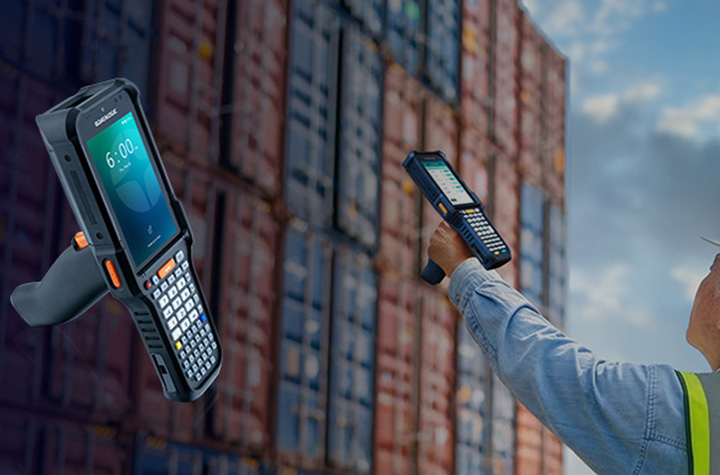
The Datalogic Falcon X60/X65: Built for the Toughest Industrial Workflows
The Datalogic Falcon™ X60/X65 is engineered specifically for warehouses, manufacturing facilities, transportation and logistics operations, and other industrial settings where standard mobile devices simply can’t keep up. The Falcon X60/X65 combines ultra-rugged durability, industry-leading scanning technology, and enterprise-class performance into Datalogic’s flagship mobile computer.
| Capability | How It Improves Operations | Ideal For |
| Ultra-rugged construction |
| Warehousing, manufacturing, transportation & logistics, ports, construction, utilities, and outdoor field operations. |
| Long-range barcode scanning |
| High-bay warehousing, distribution centers, inventory management, pallet storage, and cross-docking. |
| TrueAim™ dual-level trigger + Green Spot™ good-read |
| Mixed-distance warehouse workflows, shipping, receiving, replenishment, inventory counting, transportation hubs, and other high-noise industrial environments. |
| High-performance Qualcomm Dragonwing™ QCM4490 processor |
| High-volume operations requiring continuous mobile computing and enterprise application performance. |
| Up to 53 large, backlit physical keys |
| Warehouse receiving, inventory adjustments, manufacturing production reporting, transportation terminals, and cold storage operations. |
| Customizable programmable function key |
| Repetitive warehouse workflows, inspection processes, inventory management, and task-driven operations. |
| Wi-Fi 6E connectivity |
| Large distribution centers, manufacturing facilities, retail distribution hubs, and enterprise warehouses. |
| Cross-compatible accessories + ergonomic pistol grip |
| Fleet refreshes, phased device upgrades, and enterprise-wide mobility standardization. |
| Datalogic Mobility Suite & Datalogic Connect™ management tools |
| Enterprise IT, managed mobility programs, multi-site warehouse operations, manufacturing networks, and transportation fleets. |
Built for Work That Can’t Slow Down
In demanding industrial environments, every scan, every transaction, and every minute of uptime directly impacts productivity, accuracy, and customer satisfaction. Choosing an ultra-rugged mobile computer isn’t simply about purchasing a tougher device—it’s about investing in technology that keeps operations moving when conditions are at their toughest. The Datalogic Falcon X60/X65 delivers the durability, performance, and enterprise-class data capture needed to support today’s fast-paced warehouse, manufacturing, transportation, and field operations.
Looking for a mobile computer that’s optimized for all-day warehouse productivity rather than maximum ruggedness? Read our companion article on the Datalogic Skorpio X40/X45to see how its ergonomic design, compact form factor, and balanced performance make it an excellent choice for everyday warehouse operations.
Turning Inventory Visibility into Operational Performance

Organizations across warehousing, retail, healthcare, manufacturing, and logistics are turning to RFID data capture to improve inventory accuracy, asset visibility, and operational efficiency. While the benefits of real-time data are well established, achieving them isn’t always straightforward.
The biggest challenges organizations face typically fall into three areas:
Challenge 1: Managing diverse RFID applications across different asset types, environments, and workflows.
Goal: Support varied tagging requirements while avoiding deployment delays or added complexity for IT teams.
Challenge 2: Maintain fast, accurate data capture in high-volume operations where manual inventory processes create delays and errors.
Goal: Avoid manual inventory counts, missed reads, and data entry errors that consume labor, slow workflows, contribute to stockouts and fulfillment delays, and reduce customer satisfaction.
Challenge 3: Integrate RFID into existing business systems such as ERP and WMS without adding unnecessary complexity, cost, or disruption.
Goal: Optimize data accuracy, operational visibility, and return on RFID investments.
Addressing these challenges starts with selecting technology that’s designed to work across a wide range of RFID data capture applications—not just as a standalone reader, but as part of a complete RFID ecosystem. The more seamlessly hardware, tags, labels, printers, and business systems work together, the easier it becomes to deploy, scale, and maximize the value of RFID.
The TSC S10 UHF RFID Mobile Reader combines high-performance RFID capabilities with enterprise-grade durability and connectivity, helping organizations simplify deployments while improving inventory accuracy and operational visibility.
What Makes the TSC S10 RFID a Powerful Mobile RFID Solution
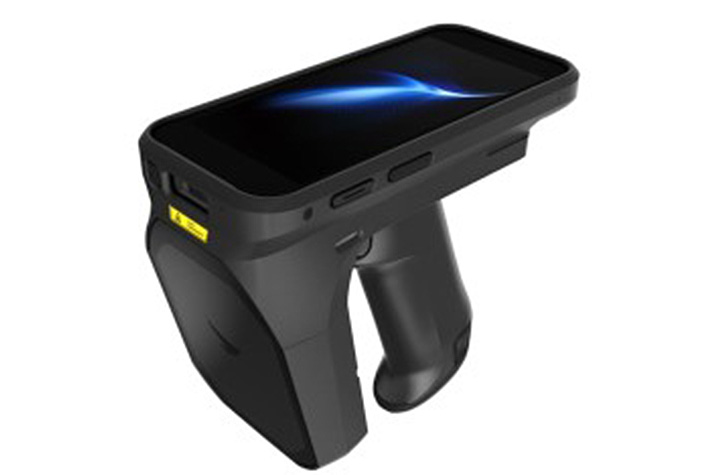
Levata is excited to introduce the new TSC S10 RFID, an all-in-one handheld RFID mobile computer.
Unlike traditional RFID handheld devices that require separate mobile computers and RAIN RFID handheld sleds connected through Bluetooth, the S10 RFID combines both functions into an all-in-one integrated device. The result is a simpler user experience, fewer points of failure, and a lower total cost of ownership.
Let’s review more of the S10 RFID’s capabilities:
| TSC S10 RFID Feature | Operational Benefit |
| Impinj E710 RFID chip | Delivers fast, accurate RFID performance for high-volume inventory and asset tracking applications. |
| Reads up to 1,300 tags per second | Accelerates inventory counts, cycle counts, and asset audits while reducing manual labor. |
| Read range over 42 ft. (13 m) | Quickly locate inventory and assets across large warehouses, retail floors, and manufacturing environments. |
| Lightweight ergonomic design (613.8 g) | Improves user comfort during extended shifts and reduces operator fatigue. |
| Rugged construction with 5-foot drop protection | Withstands demanding warehouse, manufacturing, retail, and field environments, reducing downtime and repair costs. |
| Hot-swappable battery | Enables continuous operation across multiple shifts without shutting down or interrupting workflows. |
| Android operating system | Provides a familiar user experience that simplifies training and user adoption. |
| Wi-Fi 6 connectivity | Delivers fast, reliable communication with enterprise applications and real-time data updates. |
| Integrated handheld design (no separate Bluetooth sled) | Eliminates Bluetooth pairing frustrations, reduces the number of devices and batteries to manage, and simplifies day-to-day operations. |
Built for Real-World RFID Applications
The S10 RFID is designed for organizations that rely on accurate, real-time visibility. Common applications include:
- Warehouse inventory management and cycle counting
- Retail stock accuracy and item location tracking
- Asset management in construction and heavy equipment environments
- Healthcare equipment tracking and compliance audits
- Manufacturing work-in-progress (WIP) tracking
- Field service equipment identification and maintenance documentation
Whether you’re beginning your RFID journey or expanding an existing deployment, the right hardware foundation can make all the difference.
By combining enterprise mobility and RFID performance into a single rugged device, the TSC S10 RFID helps organizations eliminate complexity, accelerate adoption, and achieve faster returns on their RFID investment.
As a trusted RFID solutions provider, Barcodes, Inc. can help you evaluate, deploy, and support the right RFID technologies for your unique operational requirements. The result is greater visibility, improved accuracy, and a stronger foundation for long-term RFID success. Contact Barcodes, Inc. today.
Warehouse Uptime Starts with Smarter Data Capture
Warehouse operations run on precision. Every scan, every pick, and every movement contributes to keeping orders flowing and inventory accurate. But when mobile computers lag, disconnect, or fail, the consequences extend far beyond a single worker. Productivity slows, fulfillment timelines slip, inventory errors increase, and employee frustration grows—creating a ripple effect that impacts the entire operation.
In today’s high-volume warehouses, mobile computing performance is directly tied to operational uptime. Even small interruptions repeated across dozens or hundreds of workers can quickly become a significant cost to the business. That’s why selecting the right rugged mobile computer isn’t simply an IT decision—it’s a strategic investment in productivity, accuracy, and warehouse performance.
The Cost of Mobile Device Downtime at a Glance
Nearly 30% of frontline workers experience dropped mobile sessions that interrupt workflows.
12–16 hours of productivity can be lost per employee, every month due to mobile device-related downtime.
Six-figure annual losses are possible for larger warehouse operations when device slowdowns and interruptions occur at scale.
Every delayed scan can contribute to slower order fulfillment, reduced inventory accuracy, and lower workforce productivity.
What Continuous Warehouse Uptime Really Requires
Continuous warehouse uptime depends on more than simply keeping devices powered on. Every workflow—from receiving and replenishment to picking, packing, inventory management, and shipping—relies on mobile computers that help employees work faster, make fewer errors, and avoid interruptions.
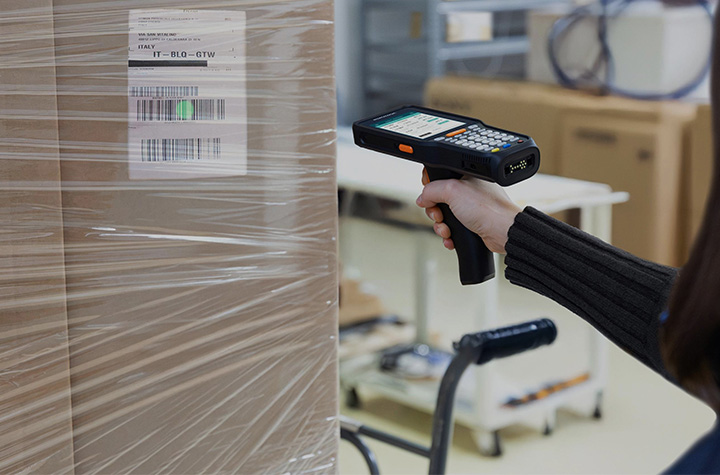
To support uninterrupted operations, warehouse teams need technology that delivers measurable outcomes:
- Reliable performance that minimizes downtime
Operational Benefit: Keep orders moving by eliminating device interruptions and delayed data that can stall receiving, replenishment, picking, packing, and shipping workflows. - Fast, accurate barcode scanning
Operational Benefit: Increase picking speed and order accuracy. Capture barcodes quickly—even damaged or poorly printed labels—to reduce rescans and improve throughput. - Dependable data capture in demanding environments
Operational Benefit: Improve inventory accuracy. Record inventory movements correctly the first time to reduce discrepancies, misplaced inventory, and costly manual corrections. - Ergonomic, glove-friendly operation
Operational Benefit: Maintain workforce productivity. Enable employees to work comfortably throughout long shifts, in freezers, manufacturing facilities, and other industrial environments with fewer interruptions. - Benefit: High-performance inventory management tools
Operational Benefit: Complete cycle counts faster. Spend less time counting inventory while improving stock accuracy and confidence in warehouse data. - Physical keypad for rapid data entry
Operational Benefit: Accelerate warehouse transactions. Quickly enter quantities, locations, lot numbers, overrides, and other operational data without slowing workflows. - Rugged construction for industrial environments
Operational Benefit: Reduce costly downtime. Keep devices in service longer by minimizing failures caused by drops, dust, moisture, and everyday warehouse abuse.
Unfortunately, many legacy mobile computers create unnecessary friction. Worn charging contacts, unreliable wireless connections, difficult touchscreen input, and missed barcode scans all interrupt workflows that should be seamless.
Built for the Pace of Modern Warehousing: Datalogic Skorpio X40/X45
The Datalogic Skorpio X40/X45 was designed specifically to eliminate common warehouse and manufacturing pain points.
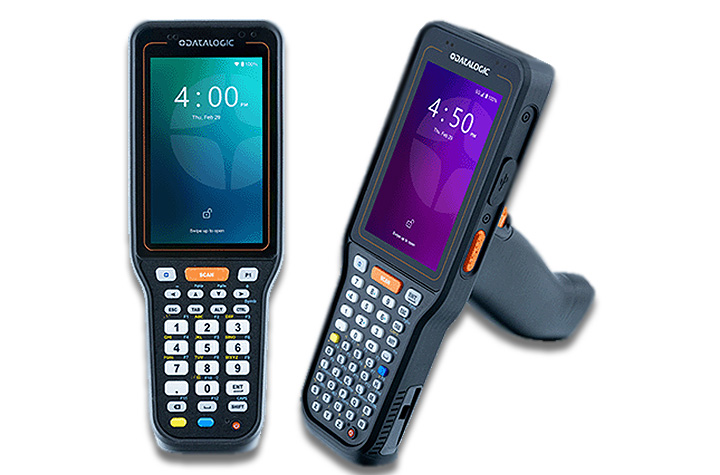
| Capability | How it Improves Operations | Ideal for |
| Ergonomic, Lightweight Design | Reduces worker fatigue during long shifts while supporting comfortable one-handed operation for continuous picking, replenishment, and inventory tasks. | Retail Distribution, Warehousing, Manufacturing |
| Up to 48-Key Physical Keypad | Speeds quantity, location, lot number, and override entry while reducing input errors—especially when gloves are required or touchscreen use is impractical. | Warehousing, Transportation & Logistics, Manufacturing |
| Standard & Long-Range Barcode Scanning | Captures barcodes quickly from close range or elevated storage locations, reducing rescans and accelerating receiving, picking, cycle counting, and shipping. | Warehousing, Logistics, Manufacturing |
| Green Spot Good Read Feedback | Gives operators immediate visual confirmation of successful scans, minimizing rescans and improving workflow confidence in noisy environments. | Warehousing, Manufacturing, Retail Distribution |
| Qualcomm Dragonwing™ Processor | Delivers fast application response for WMS, ERP, inventory management, and warehouse workflows without lag or delays. | All Industrial Operations |
| Android™ Enterprise Platform | Supports long device lifecycles, security updates, and compatibility with enterprise applications while reducing future migration costs. | IT, Enterprise Warehousing, Manufacturing |
| Wi-Fi 6/6E & Optional 5G (X45) | Maintains reliable real-time connectivity across warehouses, yards, loading docks, and outdoor operations to prevent workflow interruptions. | Transportation & Logistics, Yard Operations, Manufacturing Campuses |
| Industrial Ruggedness (IP65/IP67, 1.8 m Drop) | Withstands drops, dust, moisture, and harsh environments to minimize device failures and costly downtime. | Warehousing, Manufacturing, Cold Chain, Logistics |
| Field-Detachable Scan Handle | Provides flexibility for different workflows without requiring separate devices, improving operator comfort and productivity. | Warehousing, Distribution Centers |
| Centralized Device Management | Enables remote provisioning, monitoring, firmware updates, and fleet management to reduce IT workload and maximize device uptime. | Enterprise IT, Multi-Site Operations |
| Cross-Compatible Accessories | Simplifies upgrades and lowers deployment costs by leveraging existing charging and accessory investments. | Existing Datalogic Customers, Enterprise Rollouts |
Future-Ready Warehouse Mobility
Warehouse technology should enable productivity—not become another obstacle. Warehouse performance depends on thousands of interactions every day—every scan, every inventory update, every pick, and every shipment. When mobile technology slows those interactions, productivity suffers. But when the right tools are placed in the hands of frontline workers, technology becomes a competitive advantage that improves throughput, inventory accuracy, and operational resilience.
That’s exactly what the Datalogic Skorpio X40 and Datalogic Skorpio X45 are designed to deliver. As warehouses continue to face growing throughput demands, labor constraints, and rising customer expectations, investing in reliable, future-ready mobility is no longer just an IT upgrade—it’s a strategic decision that supports long-term operational performance. Contact Barcodes, Inc. today to learn how to maximize your warehouse uptime.
Easier Rollouts with Expanded iPhone Barcode Scanning Support
Organizations across retail, healthcare, hospitality, warehousing, and logistics continue investing in mobile technologies that help frontline workers capture data faster, improve workflow accuracy, and stay connected in real time. As many businesses standardize on Apple devices for their ease of use and employee familiarity, the challenge becomes extending consumer-grade smartphones into enterprise-ready tools capable of supporting demanding operational workflows.
Mobile barcode scanning, RFID data capture, mobile point-of-sale, inventory management, patient identification, and asset tracking all require more than a standard smartphone. They require ruggedized solutions that can withstand daily use while delivering the performance, battery life, and reliability needed for business-critical operations.
At the same time, organizations are under increasing pressure to simplify device management, reduce deployment complexity, and protect existing technology investments. Enterprise mobility leaders want solutions that allow them to adopt newer smartphone generations without replacing accessories, retraining employees, or redesigning workflows.
To support these evolving mobility strategies, IPCMobile has expanded compatibility for its Linea® Pro Rugged™ platform to include the new iPhone® 17e and iPhone® 17. The update enables organizations to continue leveraging enterprise-grade barcode scanning, RFID capabilities, rugged protection, and mobile payment functionality while maintaining consistency across device generations. The result is a more flexible path for businesses looking to modernize frontline mobility programs, streamline device rollouts, and maximize the value of their existing mobility infrastructure.
Simplified Mobility Management with Cross-Generation Support
Organizations already deploying compatible Linea® Pro Rugged™ accessories can transition to newer iPhone hardware without overhauling their mobility infrastructure. Existing charging setups, accessories, and workflows remain consistent, helping reduce downtime and streamline device rollouts.
The IPCMobile Linea® Pro Rugged™ platform now supports the iPhone 17e using the same SKU already designed for the iPhone 16e, helping organizations upgrade devices without replacing their existing rugged scanning infrastructure. IPCMobile also offers a dedicated Linea® Pro Rugged™ SKU for iPhone 17, while maintaining accessory compatibility across iPhone 15 and newer generations.
This flexibility helps businesses:
- Simplify procurement
- Minimize deployment disruptions
- Protect existing accessory investments
- Standardize workflows across device generations
This compatibility approach is especially valuable for enterprises managing large mobile fleets across multiple locations or shifts.
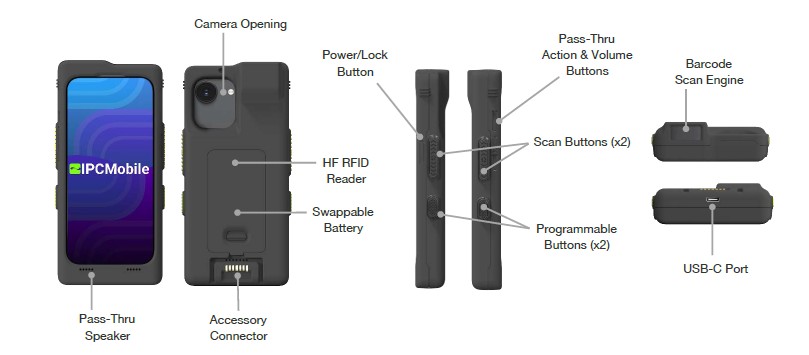
Consumer Simplicity. Enterprise Performance.
One of the biggest advantages of the Linea® Pro Rugged™ platform is its ability to combine familiar iOS usability with enterprise-grade performance. Employees already know how to use iPhones, reducing training time and accelerating adoption.
At the same time, the Linea® Pro Rugged™ platform delivers the durability and scanning performance businesses expect from industrial mobility hardware, helping workers maintain productivity even in high-volume environments.
Key capabilities include:
- Advanced 1D/2D barcode scanning for capturing damaged, low-contrast, or poorly printed barcodes
- Optional long-range scanning up to 40 feet
- Contactless HF RFID support compatible with Apple VAS and Google Smart Tap
- Programmable workflow buttons to trigger specific functions
- Swappable smart battery for multi-shift operations
- IP65-rated protection against dust and moisture
- 1.2 meter drop to concrete per MIL-STD-810G
- Lightweight, compact ergonomic design
Designed for Around-the-Clock Operations
The Linea® Pro Rugged™ platform is engineered for continuous workflows where downtime is not an option. A swappable 2330mAh smart battery supports uninterrupted multi-shift operations, allowing teams to replace batteries without stopping work or removing devices from service.
This is especially valuable for organizations operating:
- 24/7 healthcare facilities like hospitals
- Busy retail environments
- Large distribution centers or mail plants
- Hospitality venues with extended operating hours
Combined with real-time connectivity and enterprise software integration tools, the platform enables workers to send and receive updates instantly while maintaining operational visibility across locations.
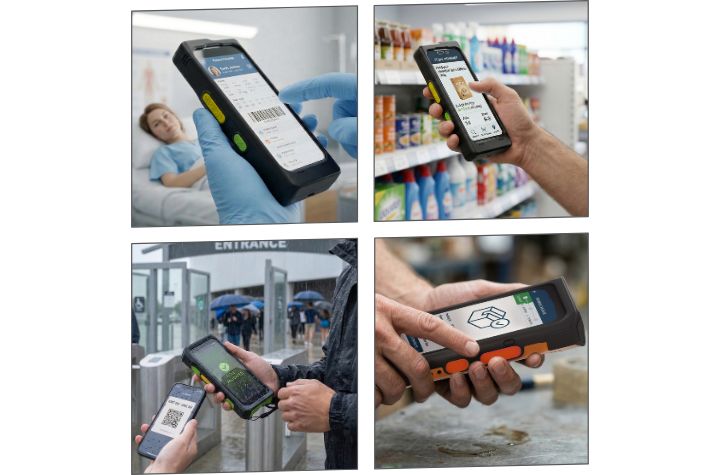
Industry Use Cases
The flexibility of the Linea® Pro Rugged™ platform makes it well-suited for a wide range of enterprise applications.
Healthcare
- Scanning patient wristbands for identity verification, improving safety outcomes
- Managing faster prescription fulfillment while adhering to DEA standards
- Accessing patient records and nurse call systems at the point of care
- Preventing critical shortages with real-time data & tracking
Its rugged housing and disinfectant-resistant housing make it ideal for clinical environments where reliability and sanitation matter.
Hospitality
- Express check-in/check-out with mobile workstations
- More revenue from tableside ordering and payment
- Easy ticket and loyalty card scanning to keep guests moving
- Validating shipments and tracking inventory levels without line of sight
The compact design helps staff remain mobile while delivering faster guest service experiences.
Retail
- Accurate inventory visibility for efficient management and shelf auditing
- Simplified payments with mobile POS and BOPIS workflows for improved customer experience
- Real-time price verification or stock replenishment solutions to support workflows
By combining barcode scanning with familiar iPhone functionality, associates can move seamlessly between customer engagement and operational tasks.
Warehousing and Logistics
- Enhance customer satisfaction with real-time package tracking, updates, and verification
- Minimize errors and delays by automating data entry, optimizing cross-docking workflows, and reducing inventory costs
- Accelerate delivery times and improve throughput with greater visibility and insights to streamline operations
The rugged design and long battery life support reliable performance in demanding industrial environments.
Enabling Smarter, More Sustainable Enterprise Mobility
As organizations modernize frontline mobility strategies, they need solutions that do more than support the latest devices. They need platforms that simplify upgrades, protect existing technology investments, reduce deployment complexity, and empower workers with reliable access to real-time data. By combining enterprise-grade barcode scanning, RFID capabilities, rugged durability, extended battery performance, and cross-generation accessory compatibility, IPCMobile’s expanded support for the iPhone 17e and iPhone 17 helps businesses create a more flexible and future-ready ecosystem. The result is a streamlined approach to enterprise mobility that improves productivity, and enables organizations to evolve their technology strategies without disrupting day-to-day operations.
Master Enterprise Labeling and Supply Chain Traceability with BarTender 12
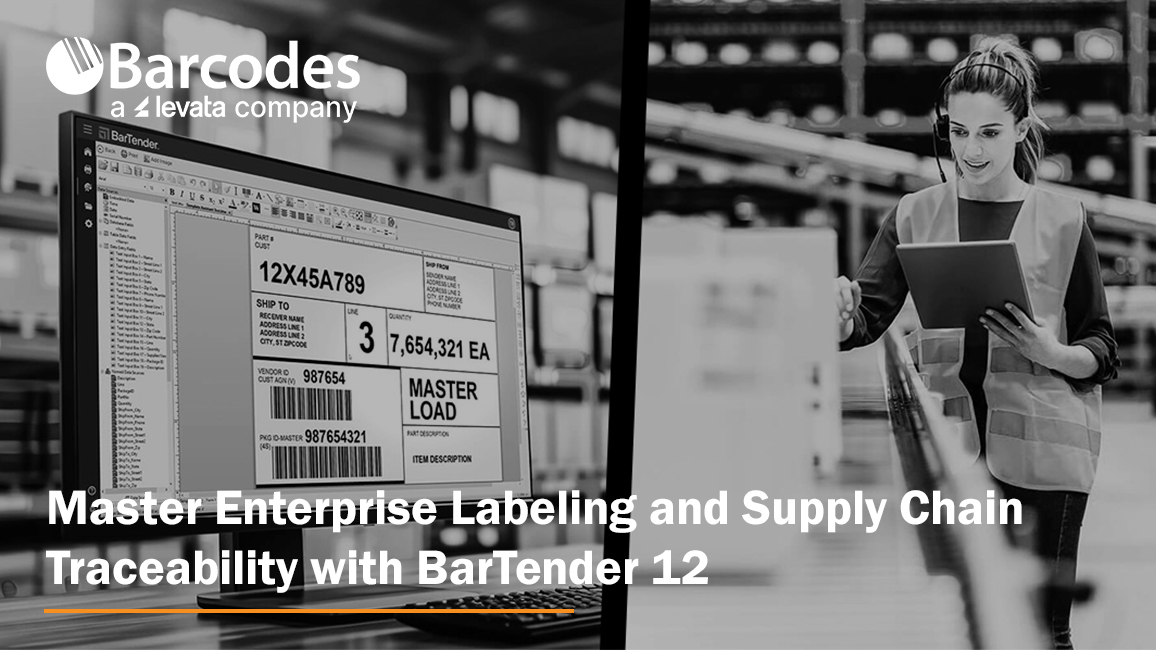
In supply chain environments, labeling plays a far greater role than simply identifying products or packages. Accurate, standardized labeling serves as the foundation for operational visibility, inventory accuracy, traceability, and workflow efficiency across manufacturing, retail, healthcare, logistics, food production, automotive, and warehouse operations. From barcode and RFID labels used in receiving and fulfillment to compliance and shipping labels required for retailer and carrier standards, effective labeling enables organizations to move products faster, reduce manual errors, improve scanning accuracy, and maintain real-time visibility throughout the supply chain.
BarTender is a leading enterprise labeling and traceability platform for organizations that need to design, manage, print, and automate barcode labels, RFID tags, compliance labels, and shipping labels across complex supply chains. For businesses in manufacturing, warehousing, retail, healthcare, food production, logistics, and other regulated industries, BarTender helps improve labeling accuracy, support compliance, reduce manual errors, and strengthen end-to-end visibility. This article highlights how BarTender 12 combines hybrid cloud and on-premises deployment, browser-based label design, centralized management, intelligent automation, ERP connectivity, stronger security, and cloud-based printing innovations to help modernize labeling operations and turn traceability into a competitive advantage.
- What BarTender does: Supports enterprise barcode labeling, RFID labeling, compliance labeling, shipping labels, and supply chain traceability
- Why it matters: Helps reduce labeling errors, improve scanning accuracy, increase operational efficiency, and maintain real-time supply chain visibility
- Where it fits: Ideal for manufacturing, warehousing, retail, healthcare, food production, logistics, and other regulated operations
- Key capabilities: Designer Online, Intelligent Forms, File Drop integrations, ERP connectors, centralized management, and secure access controls
- Deployment options: Cloud, on-premises, and hybrid environments that support distributed teams and multi-site operations
- Traceability advantage: Improves product identification, authentication, compliance, and item-level visibility with barcode, RFID, and cloud-connected workflows
As operations become increasingly automated and omnichannel fulfillment expectations continue to rise, businesses rely on intelligent labeling systems to support seamless data capture, improve coordination between systems and frontline workers, and ensure products, assets, and shipments can be accurately tracked from origin to final destination.
This is where solutions like BarTender 12 become increasingly valuable. As organizations work to improve supply chain visibility, automate workflows, and support faster, more accurate operations, labeling software has evolved into a critical operational platform rather than a simple printing utility. Organizations now have even greater flexibility to manage labeling operations across both on-premises and cloud environments while gaining new tracking and automation capabilities that improve visibility throughout the supply chain.
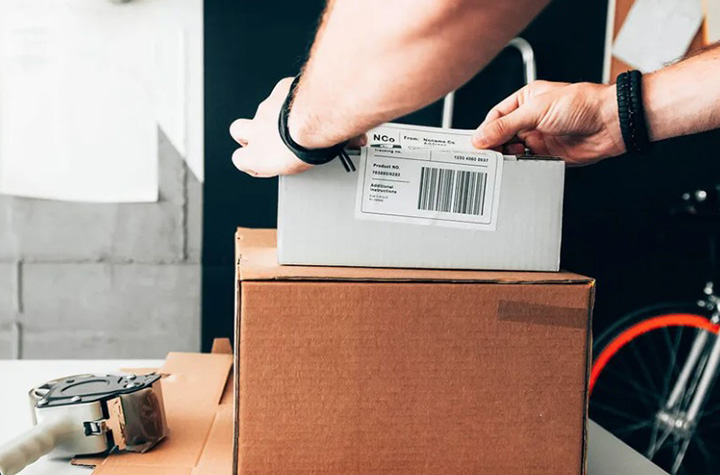
Why Labeling Matters More Than Ever
Every product moving through the supply chain depends on accurate identification. Barcode labels, RFID tags, compliance labels, shipping labels, and tracking identifiers all play a role in ensuring products arrive where they should, when they should, and in compliance with industry regulations.
The challenge for many organizations is balancing accuracy, scalability, and operational simplicity. Manual labeling processes increase the risk of costly errors, production delays, and compliance issues. At the same time, many businesses operate across multiple facilities, remote teams, contract manufacturers, and distributed warehouses that all require consistent labeling standards.
BarTender helps solve these challenges by combining powerful label creation tools with centralized management and scalable printing capabilities.
Flexible Deployment for Every Environment
One of the biggest advantages of BarTender 12 is its ability to support on-premises, cloud deployments, and even hybrid environments. Some organizations require local infrastructure for security, compliance, or operational control, while others need the flexibility and accessibility of cloud-based systems.
This flexibility helps IT and operations teams support:
- Multi-site warehouse operations
- Distributed retail environments
- Manufacturing facilities
- Remote workforce printing
- Enterprise labeling standardization
- Secure supply chain labeling workflows
With centralized label management and cloud accessibility, teams can create, manage, and print barcode and RFID labels from virtually anywhere while maintaining operational consistency across the organization.
BarTender 12 embraces a hybrid future by unifying these environments. Businesses can now deploy labeling operations in the way that best fits their IT strategy while maintaining consistent workflows across facilities and teams.
Easier Label Design and Collaboration
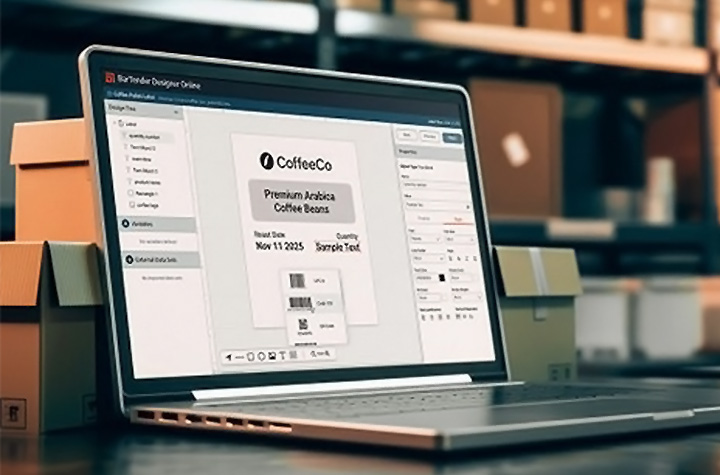
A major highlight of BarTender 12 is the all-new BarTender Designer Online. This refreshed, web-based designer allows users to create and edit labels directly from a browser without specialized software installation or advanced development skills.
This capability improves collaboration between internal teams, suppliers, and external partners. Instead of relying on a single workstation or local environment, teams can now design and update labels from anywhere, accelerating approvals and reducing downtime.
The platform also simplifies compliance by providing pre-built tools and templates that support current industry regulations and labeling standards, including updated automotive templates that meet the latest VDA requirements.
Intelligent Automation Reduces Complexity
Many organizations struggle with disconnected systems and repetitive manual processes. BarTender 12 introduces several new automation capabilities that simplify printing and improve operational efficiency.
Intelligent Forms allow print operators to select and print the correct labels through customizable web-based forms without ever opening a label template. This reduces training requirements and minimizes the chance of selecting the wrong label. BarTender now supports multi-page forms allowing users to break down complex forms into easy-to-use manageable sections.
File Drop integrations provide another major advantage. Users can now trigger print jobs simply by dropping JSON, CSV, or XML files into designated folders. This eliminates the need for complex API development and makes integration easier for organizations of all sizes.
BarTender 12 also strengthens connectivity with pre-built print connectors for major ERP systems such as Microsoft Dynamics, SAP, and Workday, helping businesses integrate labeling directly into existing workflows without extensive programming.
Stronger Security and Enterprise Control
As labeling becomes increasingly connected to enterprise systems, security and access control are more important than ever.
BarTender 12 expands single sign-on support with compatibility for Microsoft EntraID, PingID, and other OIDC providers. This helps organizations strengthen authentication policies while simplifying deployment for IT teams.
Additional enhancements to print history logging, authorization controls, and Printer Maestro performance provide greater visibility and oversight across enterprise print environments. These capabilities are especially important for industries with strict compliance requirements, including healthcare, pharmaceuticals, food production, and manufacturing.
Cloud Innovation for Modern Operations
The new Cloud Enterprise tier further demonstrates how BarTender is evolving for modern supply chain environments. Organizations gain enhanced labeling control, simplified ERP integration, and future-ready cloud security features designed to support enterprise growth.
Cloud-specific innovations such as Direct Cloud Printing for Zebra printers eliminate the need for driver installations and dramatically simplify printer deployment. New Amazon Transparency integration capabilities also help brands protect product authenticity and improve traceability throughout the supply chain.
A Platform Built for Growth
As retail, manufacturing, warehousing, healthcare, and logistics operations continue evolving, labeling has become a foundational component of real-time data accuracy, inventory visibility, product traceability, and connected frontline execution. Businesses can no longer rely on disconnected printing systems or manual labeling processes that create inefficiencies, errors, and operational blind spots.
With flexible cloud and on-premises deployment options, intelligent automation capabilities, advanced security features, ERP and WMS integrations, and enhanced collaboration tools, BarTender 12 helps organizations modernize how information flows throughout the supply chain. From barcode and RFID labeling to enterprise-wide print management and traceability, the platform transforms labeling into a strategic operational advantage.