


How to Choose a Food Label Printer for Retail and Food Prep
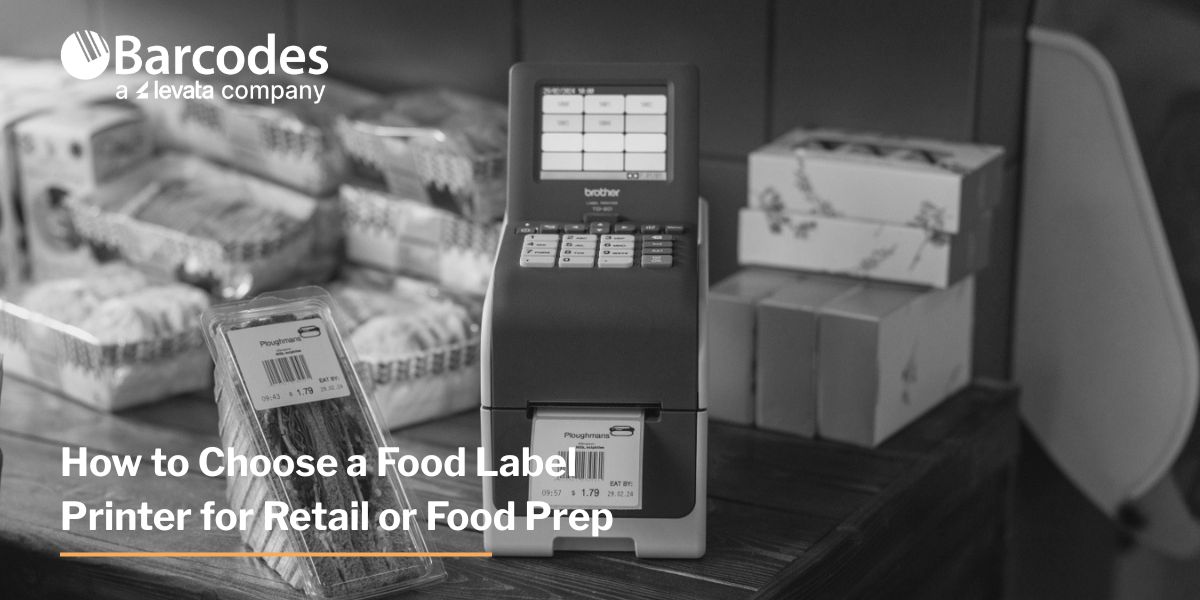
A food label printer should match the information you print, the container you label, and the conditions that label must survive. For grocery delis, convenience stores, restaurants, and meal-prep businesses, choosing the right combination of printer, labels, and software helps keep product information readable and daily workflows consistent.
Start with your operation’s labeling tasks, then compare equipment.
Which food labels does your operation need?
Separate customer-facing food labels from internal prep labels and order labels. Each serves a different purpose and may need a different template, size, or adhesive.
| Application | Information to plan for | Selection priority |
| Grab-and-go meals | Product name, ingredients, allergens, net quantity, business details, nutrition when applicable | Room for readable consumer information |
| Kitchen prep and rotation | Item name, preparation/opening date, discard date, employee or batch reference | Quick printing; removable or dissolvable media for reusable containers |
| Pickup and delivery | Order identifier, customer name, modifiers, handling instructions | Printing at the packing station; suitable packaging adhesive |
| Retail markdowns | Product identifier, revised price, relevant date information | Alignment with POS pricing and inventory records |
This table is a planning aid; required information varies by product and jurisdiction. In the U.S., FDA guidance on retail allergen labeling confirms that foods packaged at retail for sale must declare major allergens they contain, including sesame.
Which printing method and label format should you choose?
Print method and label format are separate decisions. Direct thermal and thermal transfer describe how an image is produced; die-cut and linerless describe the label stock.
| Option | Practical fit | What to verify |
| Direct thermal printing | Short-use prep, order, and fresh-food labels; no ribbon needed | Readability throughout the label’s life and exposure conditions |
| Die-cut labels | Consistent sizes for batch printing and packaged-food templates | Label dimensions, adhesive, and peeler compatibility |
| Linerless labels | Variable-length labels with no backing liner to discard | A linerless-capable printer and approved media |
Refrigeration alone does not determine the print method. Cold-rated direct thermal media can work in appropriate applications; evaluate the complete printer-and-label combination.
Check both minimum application temperature—when the label is attached—and service temperature range—conditions after application. Also test condensation, container texture, grease, and removal requirements. A label rated for frozen storage may still need application to a warmer, dry surface.
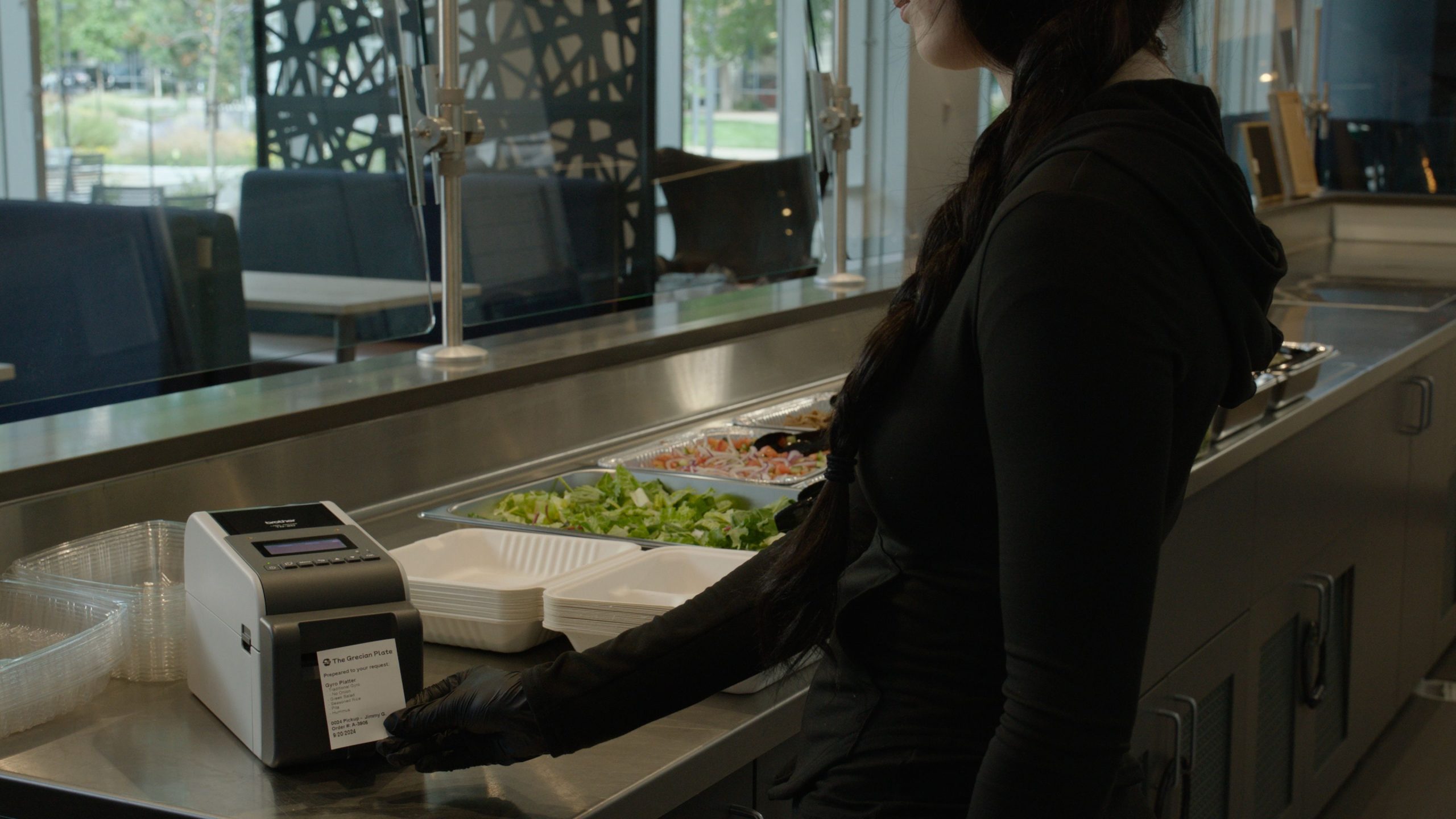
How do Brother TD 2300 and TD 4 Direct Thermal Desktop series printers compare?
The Brother TD 2300 Desktop Thermal Printer series suits compact prep stations and smaller labels. The Brother TD 4 Desktop Thermal Printer series provides more space for ingredient lists and other packaging information, with fast speeds to keep up with your workflow.
| Selection factor | Brother TD 2300 Series | Brother TD 4 Series |
| Label-size class | 2-inch class | 4-inch class |
| Print method | Direct thermal | Direct thermal |
| Resolution | 203 or 300 dpi, by model | 203 or 300 dpi, by model |
| Maximum series speed | Up to 6 inches/second | Up to 8 inches/second |
| Connectivity choices | USB; network and wireless options on selected models | USB; network and wireless options on selected models |
| Workflow fit | Smaller prep, rotation, and order labels | Larger packaged-food labels and broader media needs |
The TD 2300 series supports direct thermal printing with resolutions up to 300 dpi and offers USB, Wi-Fi®, and Bluetooth® connectivity options. Depending on the configuration, features can include a battery base, cutter, tablet mount, or peeler.
With a compact footprint and a splash and spill resistant keypad, these printers can be integrated into a variety of food-preparation and retail environments.
For applications requiring larger labels or fast print speeds, 4-inch thermal printers provide additional capacity and flexibility.
Brother’s TD 4 series supports direct thermal printing, with print speeds of up to 8 inches per second and resolutions up to 300 dpi. USB, Wi-Fi®, and Bluetooth® connectivity options allow the printers to integrate with existing systems and devices.
Both the TD 2300 and TD 4 are available as linerless models and media. Brother linerless media improve productivity and environmental impact – reduce waste, accelerate labeling, and improve workplace efficiency all while helping lower costs.
Their compact design and modular options can also make it easier to deploy printers throughout a workplace or share them among multiple users.
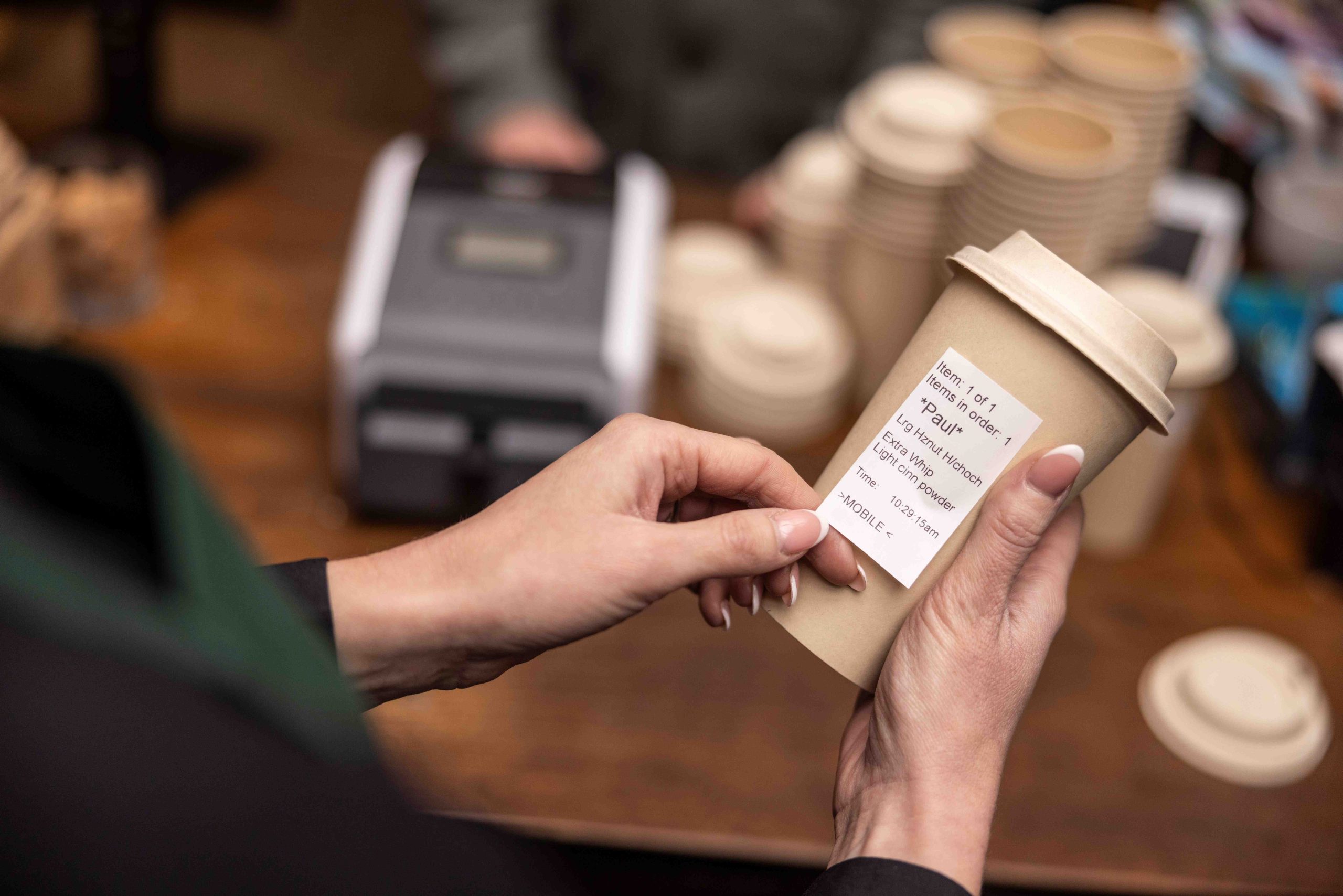
How can you prevent incorrect allergen and date labels?
Control the data feeding the printer. A sharp label can still contain the wrong recipe, allergen statement, price, or date.
Build these controls into your food labeling solution:
Use approved recipe records. Review ingredient and allergen information whenever recipes or supplier ingredients change.
Control templates. Restrict edits to approved users and remove outdated versions from every station.
Validate date calculations. Configure prep and discard dates using approved food-safety procedures.
Retain batch references. Connect printed identifiers to records that help staff locate affected ingredients or products.
Keep consumer quality dates separate from kitchen discard instructions. USDA explains that “Best if Used By” indicates quality; it is not a safety date. A printer cannot establish safe shelf life or replace temperature control and allergen-management procedures.
What should you test before buying a food label printer?
Run a pilot using your actual containers, software, staff, and busiest labeling period. Measure the entire process from selecting an item to applying its label.
Readability: Print your longest ingredient list and scan barcodes with the devices used at checkout or receiving.
Adhesion: Check labels after refrigeration, condensation, handling, and the intended storage period.
Integration: Verify item data, prices, dates, drivers, and connections from your existing application.
Placement: Keep equipment away from direct heat, steam, and cleaning spray; confirm power or optional battery arrangements.
Operating cost: Compare labels, ribbons where applicable, cleaning, reprints, roll changes, and staff time.
Sustainability: If your organization seeks out eco-friendly solutions, consider a linerless label printer model to reduce landfill waste by eliminating the label backing.
Track labels per minute, reprint rate, roll changes per shift, and labeling time per item. These measures provide a clearer buying comparison than print-engine speed alone. For detailed barcode layout guidance, use Barcodes, Inc.’s label design best practices.
Where can you find the right food labeling solution?
Barcodes, Inc. can help match Brother printers, compatible labels, and software to your workflow. Contact our team with your label dimensions, daily volume, container samples, and storage conditions to discuss a suitable configuration.
FAQ: What else should you know about food label printers?
Can one printer handle several food label templates?
Yes, if its software and media support them. Standardizing label sizes can reduce roll changes between tasks.
Can you print food labels without a PC?
Selected Brother TD 2300 configurations support standalone operation. Confirm the exact model and template workflow.
Are ordinary sticky labels tamper-evident?
Not necessarily. Select packaging labels designed to reveal interference and test them on your actual container.
Does linerless printing eliminate label waste?
It eliminates backing-liner waste. Incorrect prints, unused labels, and roll cores still require management.
Keep Food Moving Safely From Prep to Plate
Food labeling is a critical part of the food-safety process. The right labeling solution can help businesses provide customers with important information while supporting traceability, regulatory compliance, operational efficiency, and brand consistency.
As food retail and preparation models continue to change, flexible on-demand printing can help businesses adapt without sacrificing accuracy or efficiency.
With experience in supporting food-labeling applications, Brother offers a range of desktop, mobile, die-cut, and linerless printing solutions designed to meet different operational requirements.
Looking to improve food labeling in your operation? Contact Barcodes, inc. to explore food-labeling solutions that can help you print clear, accurate labels where and when you need them.
Printers for Transportation and Logistics Workflows
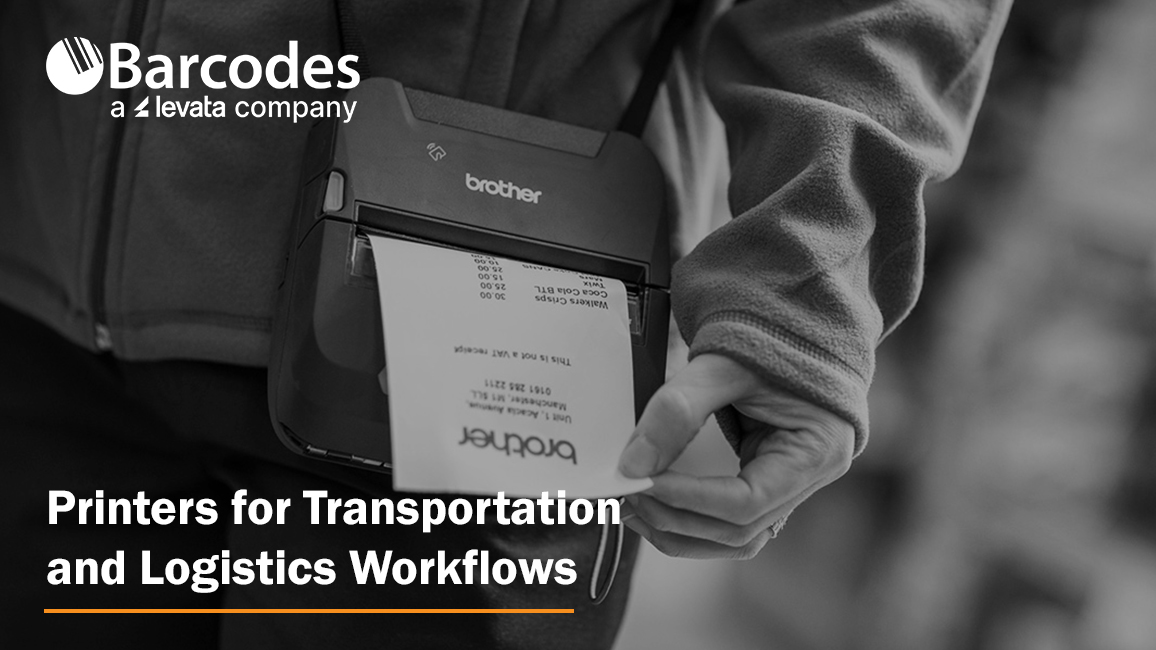
Transportation and logistics companies are navigating a challenging road. E-commerce continues to increase demand for fast, cost-effective delivery, while driver shortages, rising operating costs, supply chain disruptions, and evolving safety and compliance requirements put additional pressure on fleets and logistics operations.
For carriers, distributors, and delivery organizations, doing more with fewer resources requires more than simply adding vehicles or workers. It requires greater visibility, streamlined workflows, and technology that helps drivers and warehouse teams complete essential tasks quickly and accurately.
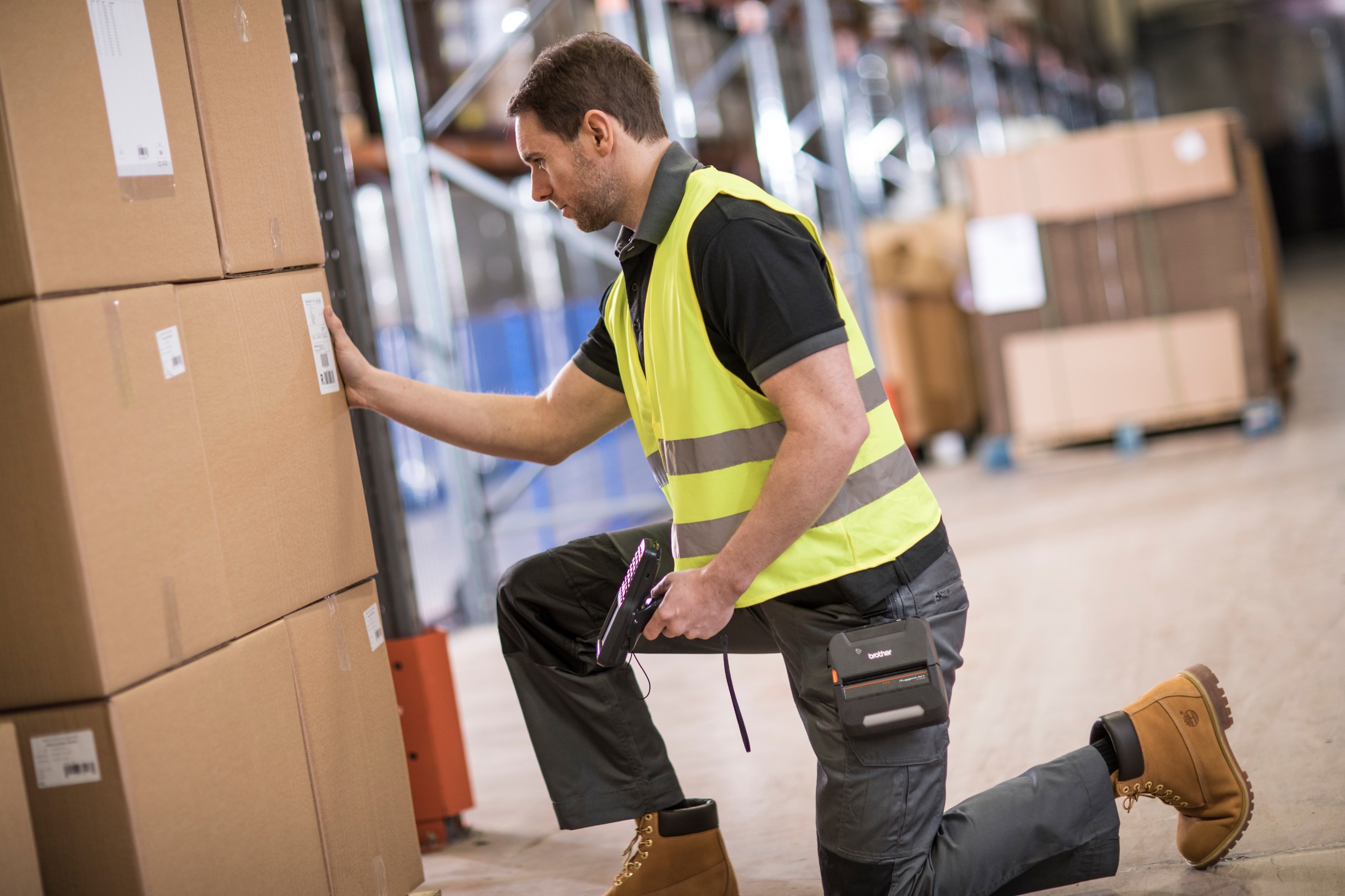
A delivery driver needs a receipt at the customer site; a warehouse associate needs a scannable shipping label at the dock. Printing in the wrong place can slow both handoffs. Brother offers different printers for each job: a mobile printer for field labels and receipts, a portable printer for full-page documents in a vehicle, and desktop or industrial printers for warehouse labeling. The right choice depends on output size, print volume, label life, and the devices that send the print job.
Addressing the Transportation and Logistics Labor Challenge
The driver shortage remains a significant concern for the transportation industry. Retirements, turnover, and growing fulfillment demands are putting pressure on companies to get more productivity from every driver and vehicle.
At the same time, drivers face physically and emotionally demanding jobs. Technology that eliminates unnecessary administrative work can help make their jobs easier while allowing them to spend more time focused on the road and the delivery itself.
Benefits of Mobile and Industrial Thermal Printers
Mobile printers from pickup to delivery
- Visibility: When connected to transportation systems, mobile printers produce labels and receipts from current shipment records at each handoff, giving drivers and customers a physical reference.
- Fewer errors and delays: Print return labels, proof-of-delivery receipts, and delivery paperwork at the stop, reducing manual transcription and trips to a fixed workstation.
- Compliance and safety: Make manifests, bills of lading, incident forms, and appropriate warning labels available on the road. Verify the printed format against applicable requirements.
Desktop and industrial printers in the warehouse
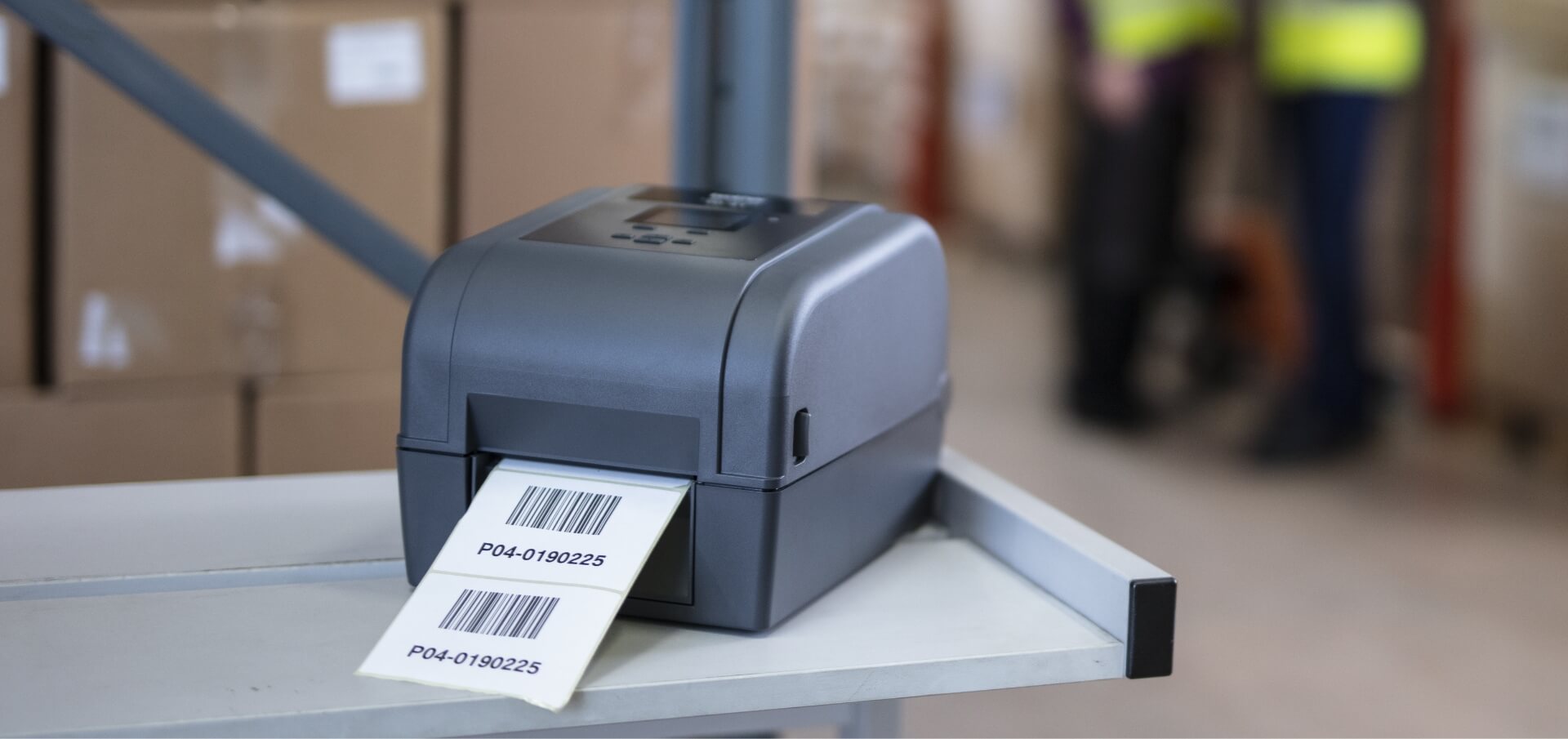
- At warehouse and distribution stations: Print high-volume shipping, inventory, and barcode labels near packing benches and docks so associates can identify goods as work progresses.
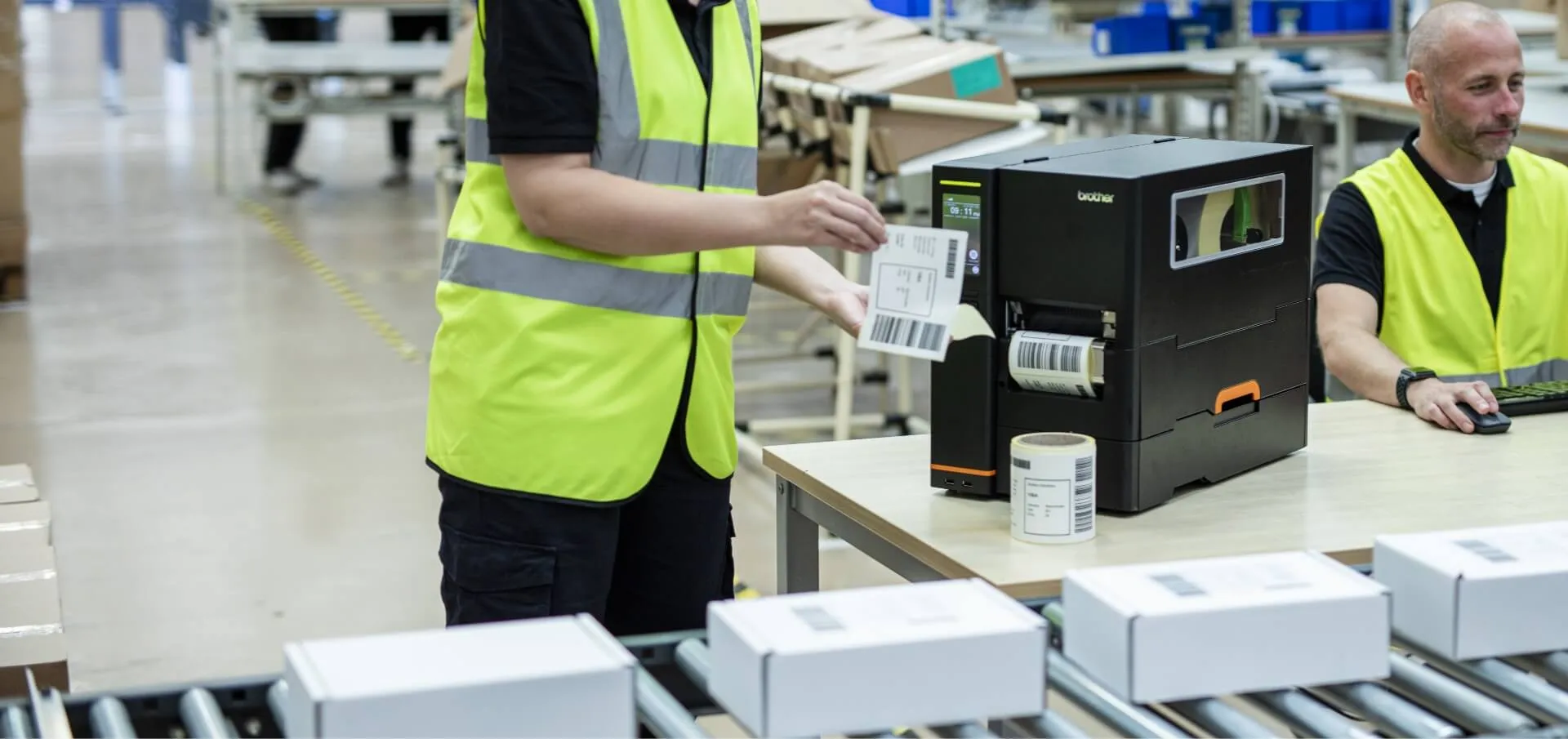
- For high-volume demand: Industrial printers support continuous label production on busy lines; compact desktop units provide on-demand output at smaller or distributed stations.
Which Brother Printer Fits Your Logistics Workflow?
Start with the document or label you need to produce, then match the printer to where and how often it will be used.
| Brother series | Best fit | Output and method | Main buying consideration |
| RuggedJet 4 | Mobile pickup, delivery, route dsd work | Labels, receipts; direct thermal | Portable and rugged; optional wireless and mounting options by model |
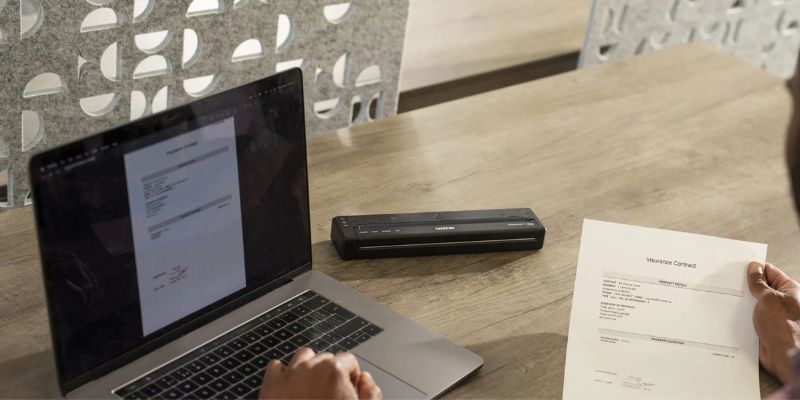
| PocketJet 8 | In-cab full-page mobile paperwork | Up to 8.5-inch-wide documents; direct thermal | Full-page output; optional power, battery, and paper bundle |
| TD 4 | Packing stations, smaller docks | Four-inch-class labels; direct thermal or thermal transfer by model | Choose the right print method and connections |
| Brother Titan Industrial Printer | Busy shipping lines, distribution centers | Industrial high-volume labels; direct thermal or thermal transfer dual printing ability | Built for sustained volume; allow space for media and ribbons |
A fleet may need more than one format. For example, a driver can print a proof of delivery receipt at dropoff, while a shipping station prints fresh carton labels and an in-cab unit handles full-page customer paperwork. Map those handoffs before choosing hardware for every location.
Brother Printer Reviews for Fleets and Warehouses
RuggedJet 4 for labels and receipts at the point of work
The Brother RuggedJet 4 is the practical choice when drivers need a label or receipt at a pickup or delivery stop. A driver could scan a returned parcel and print its identifier before leaving the customer site. Its direct thermal design avoids ink and ribbons, and its rugged housing suits route work. Selected models offer Bluetooth, Wi-Fi, and NFC pairing; check the specific configuration against your handhelds and vehicle mounts. Our assessment: it brings four-inch-class label printing to the field, but its thermal media and compact format do not replace full-page paperwork or longer-life warehouse labels. Test battery life and rugged design on a typical route.
PocketJet 8 for full-page documents in the cab
The Brother PocketJet 8 serves a different purpose: full-page invoices, delivery records, manifests, or other documents up to 8.5 inches wide. The slim portable printer uses thermal paper, so drivers do not carry ink cartridges. USB-C is available across the line, with Bluetooth and Wi-Fi on selected models. Our assessment: it is a strong in-vehicle option where a full-page physical document is necessary. Review the bundle carefully; some printer-only SKUs require a separate battery or vehicle power accessory. Confirm your document template and paper format before installing it in a cab.
TD 4 for desktop shipping and inventory labels
The Brother TD 4 series puts label printing at a packing bench or smaller shipping station. Choose a direct thermal model for routine, short-use shipping labels, or a thermal transfer model when compatible media and ribbons are needed for longer-lived identification. Network, wireless, cutter, and peeler options vary by SKU. Our assessment: TD 4 is a flexible middle ground when labels should print near the operator, though buyers must specify the exact print method rather than assume every TD 4 has ribbon capability. It suits distributed stations that do not need an industrial printer at each bench.
Titan for higher-volume industrial labeling
The Brother Titan Industrial Printer series is intended for busy distribution and shipping lines. Titan thermal transfer printer models can use ribbons with suitable label stock for durable barcodes, and representative models also support direct thermal printing. The TJ-4021TN, for example, offers 203 dpi and up to 10 inches per second; 300 dpi options prioritize finer detail. Ethernet is standard on that model, with optional accessories such as a peeler or cutter. Our assessment: Titan is the stronger fit for sustained label production and varied media, while a TD 4 may be simpler for a lighter-duty station.
Frequently Asked Questions
Can a Brother mobile printer print from a driver handheld?
Yes, when the selected printer, handheld, app, and connection are compatible. Verify Bluetooth or Wi-Fi support on the exact RuggedJet and PocketJet configuration and test your production workflow before deployment.
Does PocketJet 8 require ink or a battery?
It does not need ink or toner; it uses compatible thermal media. A battery is optional on some configurations, so check whether your order includes one or instead uses vehicle or external power.
Does printing a receipt update the transportation management system?
No. A printer creates the physical output; the application and its integration must record the transaction and synchronize delivery data. Test both steps together.
What labels work for cold or outdoor conditions?
Choose media and adhesive rated for the surface, temperature, moisture, and expected lifespan. For longer-lived labels, evaluate thermal transfer stock and ribbon, then test barcode readability in the actual environment.
How should we compare total printing cost?
Calculate printer and accessory costs alongside media, ribbons, batteries, maintenance, and staff time. Use expected volume and a short pilot to compare cost per usable label or document.
Ready to equip the route and the dock? Compare the four Brother printer series above, then bring your print volumes, media needs, devices, and sample labels to Barcodes, Inc. We can help identify the configuration that fits each handoff in your transportation and logistics operation.
Build a More Efficient Transportation Operation
The transportation and logistics industry face growing pressures. Mobile and industrial printing solutions can offer relief by reducing administrative work, improving documentation accuracy, supporting compliance, and helping drivers and warehouse employees complete tasks without unnecessary trips back to a fixed workstation.
Brother offers printing solutions across the transportation and logistics workflow—from RuggedJet mobile printers for portable labels and receipts, to PocketJet mobile printers for full-page documents, TD 4 desktop thermal printers for everyday warehouse labeling, and Titan industrial printers for high-volume label production.
Ask Barcodes, Inc. how to bring reliable printing capabilities closer to where work actually happens.
Item & Asset Tracking: Transform Inventory Chaos with BarTender® Track & Trace™
What if your team could find a critical asset in minutes instead of spending hours searching? What if inventory could be received and counted with less manual effort, while management had a clear view of what was on hand, where it was located, and how it was being used?
For organizations managing inventory, equipment, tools, parts, or other valuable assets, visibility has a direct impact on efficiency, costs, and accountability.
BarTender® Track & Trace™ provides item and asset tracking that turns hard-to-find inventory into instantly discoverable assets. It combines barcode and RFID technology with mobile tools, dashboards, facility maps, and reporting, helping organizations count, find, and report on inventory and assets across one or multiple facilities.
The goal is simple: transform item and asset chaos into organized, simplified, and efficient operations.
When Do You Need Item & Asset Tracking?
Manual inventory tracking can create problems long before anyone realizes there’s a problem.
Employees spend valuable time searching for equipment. Inventory counts get delayed or inaccurate. Items move between locations without records being updated. And when something can’t be found, organizations sometimes buy a replacement even though the original asset is still somewhere in the operation.
BarTender Track & Trace is built for organizations that need:
- Real-time inventory and asset visibility across one or multiple facilities
- Better accountability for item movement and location
- Faster, more accurate receiving and inventory counts
- Greater value from existing RFID and barcode investments
- Better reporting and visibility to reduce unnecessary capital expenditures
By replacing manual processes with connected item-level tracking, organizations can gain better control without adding operational complexity.
Count: Simplify Receiving and Inventory
Inventory accuracy starts with accurate receiving and counting. When these processes depend on manual data entry and individual scans, errors and delays add up fast.
Track & Trace uses barcode and RFID technology to streamline receiving and inventory processes.
With One-Scan Receiving, employees can quickly capture RFID- or barcode-labeled items as inventory arrives. RFID can also identify tagged items on shelves, in boxes, and on pallets, cutting down the effort needed for traditional inventory counts.
Track & Trace also supports instant inventory cycle counts and zone-based counting, helping teams catch discrepancies and keep records accurate.
Key capabilities include:
- One-Scan Receiving
- Instant Inventory Cycle Counts
- Discrepancy Detection
- Advanced Shipment Notice (ASN) support
- Zone-Based Assignment
The result: less time spent counting and reconciling inventory, and fewer opportunities for manual error.
Find: See and Locate Assets on Demand
Finding inventory and equipment shouldn’t require a scavenger hunt.
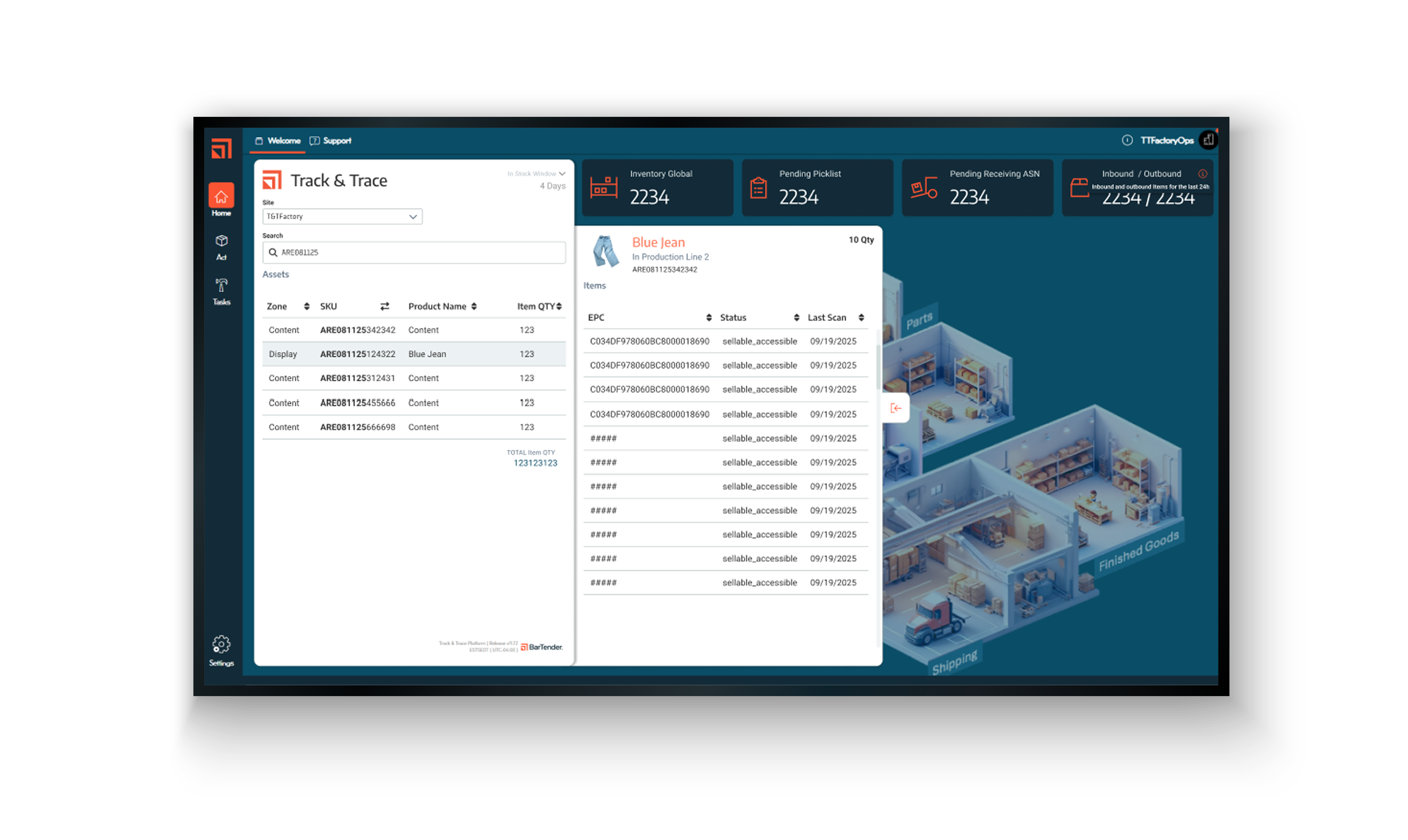
Track & Trace gives teams item-level visibility so employees can quickly see where assets are located and where they were last seen. Interactive facility and zone maps show inventory visually, while search tools make it easy to locate specific items.
For particularly hard-to-find assets, Find My Item™ combines RFID with audible and visual cues to help users zero in on an item’s exact location.
Track & Trace helps organizations:
- Search for specific items quickly
- View items by facility and zone
- Locate hard-to-find assets using RFID
- Review location history
- Manage inventory across multiple sites
- Create and fulfill picklists while updating inventory
That means teams spend less time searching and more time using the equipment and inventory they need. This visibility can help reduce equipment losses, minimize operational delays, and avoid duplicating purchases of items that are just hard to locate.
Report: Turn Inventory Data Into Actionable Insights
Accurate tracking data becomes even more valuable when it’s easy to turn into useful information.
Track & Trace provides dashboards and reporting tools that give teams visibility into inventory status, locations, discrepancies, and movement. Instead of spending hours compiling information from spreadsheets and disconnected systems, users can access and generate what they need faster.
Organizations can use reporting to understand where inventory is located, identify discrepancies, review movement history, and make better decisions about equipment and resources.
Key reporting capabilities include:
- Status dashboards
- One-click report generation
- Zone and category reporting
- Discrepancy reporting
- Movement audit trails
- Easy data export
Reports can be filtered for specific business needs and exported as CSV files for use with other systems.
Reduce the Hidden Costs of Missing Inventory
The cost of lost or misplaced inventory isn’t limited to the value of the item.
There’s also the employee time spent looking for it. The potential delay to a customer or production process. The cost of purchasing a replacement. And the administrative effort required to figure out what happened.
Better item and asset tracking addresses those costs by making inventory more visible and accountable. Track & Trace is designed to help organizations reduce time spent searching for assets, cut equipment losses, and eliminate duplicate purchases. According to BarTender’s stated solution benefits, the platform can deliver ROI in weeks, with payback in less than six months.
Improve Accountability Across Locations
As organizations grow, inventory visibility becomes harder to maintain. Items move between departments, zones, buildings, and facilities. Without consistent processes, it’s harder to know where inventory is or who is responsible for it.
Track & Trace provides tools for managing item movement and maintaining location history across operations. Facility and zone maps give a visual view of inventory, while movement audit trails document changes. Together, they create a more complete history of an item’s lifecycle and support accountability and compliance requirements.
For organizations with multiple facilities, this visibility is especially valuable. Teams can keep track of inventory across locations while using consistent tracking processes.
Applications and Use Cases for Item & Asset Tracking
BarTender Track & Trace helps organizations improve inventory visibility and asset accountability across a range of industries. From production floors to healthcare facilities and field service operations, the solution adapts to different workflows and tracking requirements.
Manufacturing
Manufacturers can use item and asset tracking to improve visibility throughout production and across multiple facilities.
- Track tools and equipment across production areas or sites
- Manage work-in-process inventory
- Document quality control checkpoints
Healthcare
Healthcare organizations can use asset tracking to improve equipment visibility, utilization, and accountability while supporting documentation requirements.
- Track medical equipment and other critical assets
- Optimize asset usage and availability
- Support compliance documentation
Warehouse & Distribution
For warehouses and distribution operations, accurate tracking helps improve receiving, inventory control, and order fulfillment.
- Verify receiving and shipping activities
- Improve inventory accuracy
- Support pick-and-pack operations
Field Services
Field service organizations need to know what equipment and inventory is available, where it’s located, and whether the right items are going to the job.
- Allocate and track tools and equipment
- Manage vehicle inventory
- Verify assets during service calls
What’s New in BarTender Track & Trace 12.5?
For organizations managing multiple sites, consistency and configuration management matter just as much as item tracking itself.
BarTender Track & Trace Version 12.5 introduces enhancements that make it easier to configure and manage locations and zones, reducing manual effort and increasing control across the tracking environment.
Standardize Site Configurations With Bulk CSV Import and Export
Track & Trace 12.5 lets administrators and integrators export location and zone configurations to structured CSV files, make changes in bulk, and import the updated configurations.
This simplifies:
- Creating new sites from existing configurations
- Standardizing location and zone settings
- Updating multiple configurations at once
- Backing up configurations for recovery and audit purposes
Administrators can also validate configuration files and review proposed updates before applying them.
Support GS1 Compliance With Built-In Validation
Expanded GS1 support makes it easier for integrators to generate, encode, and print GS1-compliant labels directly from Track & Trace.
Enhanced Serialization API capabilities show which GS1 standards and input fields are supported, while built-in validation checks inputs against the selected standard’s rules before generating labels. Supported output formats include EPC URN, GS1-128, Digital Link, and more.
Strengthen Audit Readiness With Configuration History
Version 12.5 also introduces a centralized history of configuration changes.
Administrators can see what changed, who made the change, and when it happened across Inventory, Lifecycle, and Master Data settings. Automatically recorded, chronological histories give more visibility into configuration changes and support internal governance and compliance efforts.
Refresh Site Information on Demand
Site managers can now manually refresh the Site Configuration Dashboard to get a more current view of locations, zones, and related information. A timestamp shows when the dashboard was last refreshed, so it’s easy to confirm how current the displayed data is.
Build a More Visible, Efficient Operation
Effective inventory and asset tracking isn’t just about knowing how many items you have. It’s about knowing where those items are, how they move, and what that information means for your operation. BarTender Track & Trace brings these capabilities together through three essential functions:
- Count inventory faster and improve accuracy.
- Find items and assets when and where they’re needed.
- Report on inventory data to make smarter, more informed decisions.
With barcode and RFID capabilities, mobile tracking, facility maps, dashboards, reporting, and new Version 12.5 configuration tools, Track & Trace provides a scalable approach to item and asset tracking across individual sites or complex multi-site operations.
The result: ROI realized in weeks and payback in less than six months, driven by fewer labor hours spent searching and counting, fewer equipment losses and duplicate purchases, and greater utilization of assets you already own.
Contact Barcodes, Inc. to learn more and get help transforming item and asset chaos into an organized, efficient operation with BarTender Track & Trace.
UPC Barcodes Complete Guide to UPC-A and UPC-E
A UPC barcode identifies an asset so point-of-sale and inventory systems can retrieve the correct product record. For most consumer products, UPC-A is the standard choice. UPC-E is a smaller, zero-suppressed version used when packaging does not have enough room for a full UPC-A symbol. The correct format, number assignment, label material, printing method and scanner all matter if the product barcode must work reliably across stores and distribution networks.
The most important distinction is that a barcode generator creates the machine-readable symbol, but it does not give a business ownership of a globally unique product number. Before generating or printing UPC labels, product managers should obtain and assign valid product identifiers, confirm retailer requirements and test the complete workflow.
What Is a UPC Barcode
UPC stands for Universal Product Code. In the GS1 system, a UPC-A barcode carries a 12-digit Global Trade Item Number, or GTIN-12. The barcode is the data carrier that scanners read; the GTIN-12 is the unique product identifier stored in business systems and shared with trading partners.
A UPC barcode normally identifies a product variation, not an individual physical unit. Different sizes, colors, flavors, pack counts or other variants typically need different GTINs. The symbol itself does not contain the retail price. When a scanner decodes the number, the POS or inventory application uses it to retrieve information such as the item description, price, tax category and inventory record from a database.
For a broader view of linear and two-dimensional options, compare the major barcode symbologies in the types of barcodes overview.
UPC-A vs. UPC-E: Which Product Barcode Should You Use
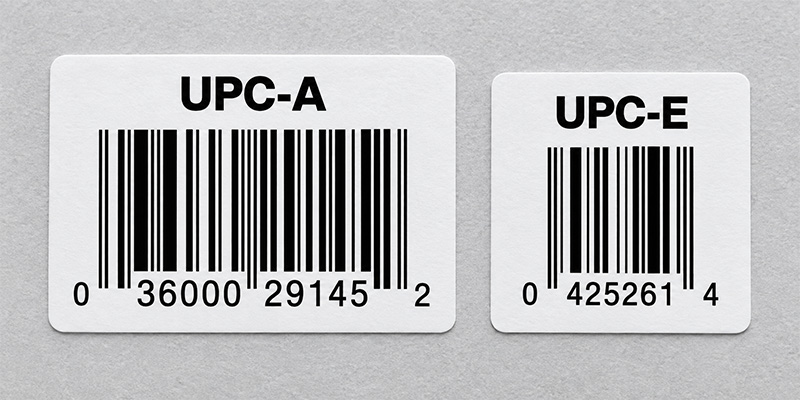
| Buying consideration | UPC-A barcode | UPC-E barcode |
| Best use | Most retail products and packages | Small packages with limited label space |
| Visible number | 12 digits | Compact 8-digit presentation |
| Underlying identity | GTIN-12 | A zero-suppressed representation of an eligible GTIN-12 |
| Data capacity | Numeric retail product identification | The same product identity in a smaller symbol |
| Key limitation | Requires more horizontal space | Only certain GTIN-12 number patterns can be compressed |
| Buyer guidance | Use by default unless space is constrained | Use only after confirming eligibility and retailer acceptance |
When to Use a UPC-A Barcode
Use UPC-A for most products sold at retail checkout. Its 12 digits include a GS1 Company Prefix and item reference whose lengths can vary, followed by a calculated check digit. UPC-A is familiar across retail supply chains, widely supported by POS scanners and easier to manage than a compressed format when the package provides sufficient space.
When to Use a UPC-E Barcode
Use UPC-E when a full UPC-A symbol will not fit on a small product or package. UPC-E removes eligible zeros from the symbol representation while preserving the underlying GTIN-12 identity. It is not a separate eight-digit product number like GTIN-8, and a business cannot create it by simply deleting zeros from any UPC-A value.
Not every UPC-A number can be represented as UPC-E. Use software that correctly validates the conversion, then confirm how deployed scanners transmit the result to the host system. Some scanners can report the compact UPC-E value, while others may be configured to expand it to the equivalent UPC-A number. The output must match the format expected by the POS or inventory application.
How Do You Get a Valid UPC Barcode Number
Creating a scannable image is only one part of launching a retail product. The number must be unique, assigned to the correct product and accepted by the retailers or marketplaces where it will be used. A practical process is:
- Count the products and variations. Determine how many separate sellable items need identifiers, including changes in size, color, flavor or pack quantity.
- License identifiers through GS1. Brand owners can obtain a single GS1 US GTIN or a GS1 Company Prefix sized for a larger product portfolio.
- Assign and document each GTIN-12. Keep product data, packaging level and lifecycle status accurate so trading partners receive a consistent identity.
- Choose UPC-A or UPC-E. Use UPC-A for the standard case. Consider UPC-E only when space is limited and the assigned number is eligible for zero suppression.
- Generate, print and test the symbol. Confirm the check digit, dimensions, print quality, placement and scanner output before a production run.
Do not reuse a discontinued product’s GTIN for a different item. If product attributes change, consult the current GS1 allocation rules and the requirements of the retailer or marketplace before deciding whether a new identifier is required.
Can a UPC Barcode Generator Create a Valid UPC
A UPC barcode generator converts an existing valid number into bars, spaces and human-readable digits. It can calculate a check digit and produce an image for testing or design work, but it does not assign a globally unique number or register a product with GS1 or a retailer.
Start with the free Barcodes, Inc. barcode generator tools, then open the dedicated UPC/EAN generator to create a UPC-A or an eligible UPC-E symbol. For a production workflow, barcode label software is usually a better choice because it can control dimensions, connect to product data, create batches, manage templates and drive compatible printers.
How to Print UPC Barcodes That Scan Reliably
A valid number can still fail at checkout if the UPC label is resized incorrectly, printed with weak contrast, placed on a difficult surface or damaged in distribution. Use these practices when deciding how to print UPC barcodes:
- Preserve the barcode proportions. Generate the symbol at its intended size instead of stretching or squeezing an exported image.
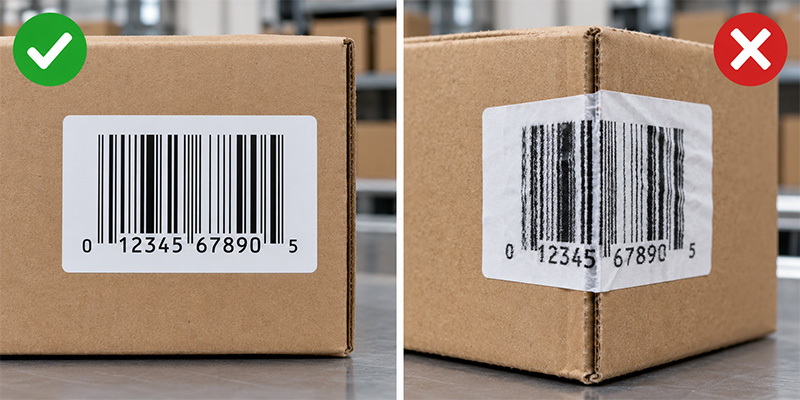
- Protect the quiet zones. Keep text, borders, artwork and package seams away from the blank areas on both sides of the barcode.
- Use dependable contrast. Dark bars on a light, solid background are the safest choice. Avoid reflective finishes, patterns and low-contrast color combinations unless they have been tested.
- Match printer resolution to symbol size. Small UPC labels require enough resolution to reproduce narrow bars cleanly. Test how the chosen module width maps to the printer’s dots.
- Choose the right label material and adhesive. Account for moisture, refrigeration, abrasion, heat, curved surfaces and the required product life.
- Place the code on a scanner-friendly surface. Avoid folds, corners, seams, sharp curves and areas likely to be covered or damaged.
- Test production samples. Scan labels from the actual printer on the actual package with the scanners and software used in the workflow. Use formal barcode verification when a retailer or quality program requires it.
Use the complete barcode label design best practices to review quiet zones, contrast, size, materials and testing before production.
Should You Print UPC Labels In-House or Buy Pre-Printed Labels
The best production method depends on volume, change frequency, staffing and quality-control requirements.
| Operating need | Likely approach | Why it fits |
| Small or changing product line | Print on demand with a desktop barcode printer and label software | Fast changes, low setup burden and control over quantities |
| Stable designs or outsourced production | Order pre-printed or custom UPC labels | Consistent output without maintaining an internal print process |
| High-volume manufacturing | Use an industrial printer, managed templates and verification | Throughput, durability and repeatable control across shifts |
| Short-life indoor labels | Consider direct thermal media after testing | No ribbon and a simpler print process |
| Longer-life or demanding labels | Consider thermal transfer media and ribbon | Greater resistance to abrasion, heat and environmental exposure |
Browse UPC labels and barcode media and compatible barcode label printers for in-house production. If printing is not the right fit, compare pre-printed barcode label options or request a custom label quote for a project-specific recommendation.
What Equipment Do You Need for a UPC Barcode Workflow
- UPC labels. Select the size, material, adhesive and print technology for the package and environment.
- Barcode printer. Match the printer to daily volume, label width, resolution, connectivity and operating conditions. A desktop model may suit a small product line, while an industrial printer is better for sustained output.
- Label design software. Use true UPC encoding, controlled templates and trusted data sources. Avoid treating an ordinary font as a complete production system.
- POS barcode scanner. Confirm UPC-A and UPC-E support, decode configuration, presentation style, connectivity and compatibility with the POS application.
- Quality process. Establish approval, sample testing, printhead maintenance and periodic checks so label quality does not drift over time.
Retailers replacing scanning equipment should evaluate two-dimensional imaging as well as 1D UPC performance. A modern 2D imager can read UPC symbols while supporting the growing use of QR Code and Data Matrix at checkout. Compare POS barcode scanners and use the barcode scanner buying guide to assess form factor, scan volume and future requirements.
Common UPC Barcode Use Cases
- Retail checkout. The scanner reads the GTIN and the POS system retrieves the item and price record.
- Receiving and replenishment. Workers scan products or cases to confirm receipts, update inventory and direct restocking.
- E-commerce listings. Marketplaces use product identifiers to match listings with the correct trade items and product data.
- Inventory counts. UPC scanning can improve count speed and accuracy when each unit carries a readable product barcode.
- Returns and price verification. The UPC connects the physical product to the retailer’s transaction and item records.
UPC identifies the product type, not a unique serialized unit, lot or expiration date. If a workflow needs internal alphanumeric identifiers, Code 128 may be a better choice. If it needs richer standardized data in a small area, evaluate a GS1-compatible 2D barcode. Inventory teams can also compare inventory barcode scanners and review how a complete inventory scanning system connects labels, hardware and software.

Are UPC Barcodes Going Away
UPC-A and UPC-E remain important retail product barcodes, but retail scanning is expanding. GS1 Sunrise 2027 is accelerating the ability of POS systems to process approved two-dimensional barcodes that can carry a GTIN plus additional data or connect consumers to digital information. During this transition, brands and retailers may support both established UPC workflows and newer 2D use cases.
The practical buying decision is to solve today’s UPC requirement while avoiding unnecessary hardware limits. If a retailer is purchasing new POS scanners, software or packaging systems, it should confirm current UPC performance and a clear path to standards-based 2D scanning.
Frequently Asked Questions About UPC Barcodes
UPC-A is the full-size format most people mean when they say UPC barcode. It carries a 12-digit GTIN-12. UPC-E is the compact, zero-suppressed form used for eligible numbers on small packages.
No. Only GTIN-12 values with specific zero patterns can be represented in UPC-E. Use a compliant encoder to validate the conversion instead of removing zeros manually.
No. A generator turns a valid number into a barcode image. The brand owner still needs a properly assigned GTIN and accurate product data.
Many retail scanners support both formats, but the symbologies must be enabled and the transmitted data format must match the POS application. Test the final printed label and scanner configuration.
No. The UPC identifies the product. The POS system uses that number to retrieve price and other item data from the retailer’s database.
Usually, yes. Each distinct trade item or sellable variation generally needs its own GTIN. Confirm the current GS1 allocation rules and trading-partner requirements for the change being made.
Build the Complete UPC Labeling and Scanning Workflow
A reliable UPC barcode program connects a valid product identifier with the right symbol, label, printer, software and scanner. Start with UPC-A for most retail products, use UPC-E only when space and number eligibility support it, and validate the full workflow before production. Barcodes, Inc. can help match UPC labels, barcode printers, label software and POS scanners to your product, volume and operating environment.
Contact the Barcodes, Inc. team for help selecting and testing a complete solution that supports dependable scans from packaging through checkout.
Code 128 Barcode: What It Is, How It Works, and When to Use It
A Code 128 barcode is a high-density, one-dimensional barcode used to identify inventory, shipments, assets, warehouse locations and work in process. It can encode numbers, uppercase and lowercase letters, punctuation and control characters, making it more flexible and compact than many older linear barcode formats. For the underlying symbol rules and character table, see the Code 128 technical specification.
Code 128 is often a strong choice when a business needs to create its own internal identification system. However, choosing the symbology is only the first decision. Reliable scanning also depends on a consistent data structure, correctly generated symbols, suitable label material, a printer matched to the workload and scanners selected for the operating environment.
What Is a Code 128 Barcode
Code 128 is a variable-length linear, or 1D, barcode. Unlike a UPC, it is not limited to a fixed set of 12 numeric digits. A Code 128 symbol can represent the full 128-character ASCII set through three code sets, which allows businesses to encode identifiers such as INV-20481, BIN-A17, LOT-0826 or a longer numeric shipment reference.
The barcode usually identifies a record in an inventory management system, warehouse management system, ERP or other database. When a worker scans the label, the application uses the decoded value to retrieve or update information about the item. For that reason, a successful Code 128 inventory barcode program requires both readable labels and a disciplined method for assigning and managing the values behind them.
How Does Code 128 Work
A scanner reads the changing widths of the bars and spaces and converts the pattern into data. Each valid Code 128 symbol includes a quiet zone, a start character, encoded data, a required check character, a stop character and a second quiet zone. Barcode software or a properly configured Code 128 barcode generator normally selects the code set and calculates the check character automatically.
Code 128 can also switch code sets within one symbol. That flexibility lets encoding software use a compact numeric mode for a run of digits and then switch back for letters or punctuation. Buyers rarely need to calculate this manually, but they should use software that supports true Code 128 encoding rather than applying an ordinary font to unprocessed text.
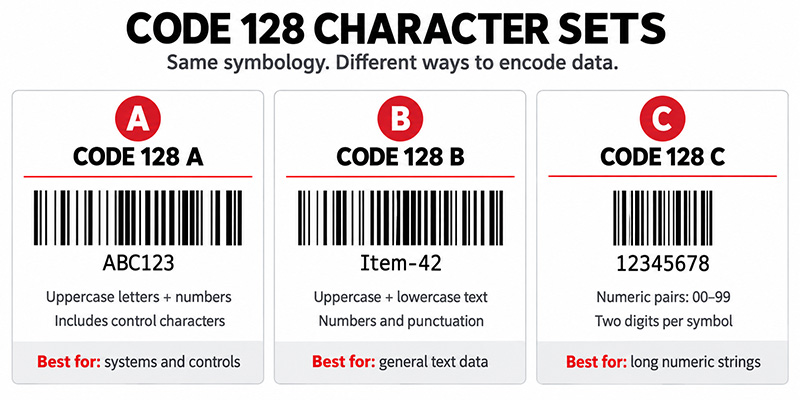
What Are Code 128 A, B, and C
| Code set | Best suited for | Buyer guidance |
| Code 128 A | Uppercase letters, numbers and ASCII control characters | Useful when control characters are required. Most everyday inventory labels do not need users to select it manually. |
| Code 128 B | Uppercase and lowercase letters, numbers and punctuation | A common choice for mixed alphanumeric identifiers such as item, asset and location IDs. |
| Code 128 C | Long strings of digits encoded in pairs | Produces a denser symbol for even-length numeric data. It is not intended for letters. |
| Automatic switching | Mixed strings with numeric runs and text | Usually the best production setting because capable software chooses and changes code sets to reduce symbol width. |
When Should You Use Code 128
Use Code 128 when you control the identifier format, need alphanumeric data and want a compact 1D barcode that is compatible with common business scanners. It is especially practical when existing systems and processes are already built around linear scanning.
Common applications include:
- Inventory labels for products, bins, totes and storage locations
- Shipping, receiving and order-fulfillment labels
- Asset tags for tools, equipment and IT devices
- Manufacturing work-in-process, lot and component tracking
- Laboratory samples, documents, tickets and internal records
A Code 128 inventory barcode works best when every encoded value is unique, stable and tied to a defined record. Learn how the hardware and software fit together in this overview of an inventory scanning system.
When Is Another Barcode Type a Better Choice
| Requirement | Consider | Why |
| Retail point-of-sale identification | UPC or EAN | Retail channels commonly require standardized product identifiers rather than an internally assigned Code 128 value. |
| Trading-partner or logistics data using GS1 rules | GS1-128 | GS1-128 uses the Code 128 symbol structure with FNC1 and GS1 Application Identifiers to give data standardized meaning. |
| Simple legacy industrial identifiers | Code 39 | Code 39 remains common in some installed systems, although its symbols are generally wider for the same data. |
| More data in a smaller area | Data Matrix or QR Code | A 2D barcode can hold more data and may fit applications where a long linear symbol is impractical. |
For a broader comparison, review the types of barcodes overview.
Is Code 128 the Same as GS1 128
No. GS1-128 is based on the Code 128 symbology, but it follows the GS1 system for structuring data. A GS1-128 symbol uses an FNC1 character and GS1 Application Identifiers to distinguish fields such as an SSCC, GTIN, lot number, serial number or date. A plain Code 128 barcode can encode the same letters and numbers without giving them standardized GS1 meaning.
Choose plain Code 128 for a proprietary internal ID when no customer, carrier, retailer or regulator requires a GS1 data structure. Choose GS1-128 when a trading partner or industry process requires standardized supply-chain data. Generating an ordinary Code 128 image of GS1-looking text does not make it GS1-128 compliant.
How Do You Create a Code 128 Barcode
Start with the data and workflow, not the artwork. Decide what the code will identify, which system owns the record, how values will remain unique and what should happen after a scan. Then choose a generation method that fits the scale of the project.
1. Define a stable naming convention. Keep the identifier as short as practical and avoid reusing values for different items.
2. Choose Code 128 and allow automatic code-set selection when your software supports it. Use Code 128 C only when the data is strictly numeric and formatted appropriately.
3. Create a prototype with the free Barcodes Inc barcode generator. The tool supports Code 128 A, B and C and is useful for individual test symbols.
4. Use dedicated label-design software for repeatable production, database connections, serialized labels, user controls and automated printing. This barcode generator software overview explains the difference between individual generation and production workflows.
5. Test the decoded value in the receiving application. A symbol that beeps successfully can still send the wrong format, add an unexpected prefix or update the wrong field.
How to Print Code 128 Labels Reliably
Knowing how to print Code 128 correctly matters as much as generating the data. A technically valid image can fail after it is resized, printed on unsuitable media or placed too close to text and graphics.
1. Preserve the quiet zones. Keep text, borders and graphics away from the blank areas on both sides of the symbol.
2. Do not stretch or compress a barcode image to force it into a layout. Set the required dimensions in the barcode software and regenerate it.
3. Match printer resolution to barcode density and label size. A 203 dpi printer can handle many common labels, while small or dense symbols may benefit from 300 or 600 dpi after testing.
4. Choose label material and adhesive for the environment. Consider moisture, abrasion, chemicals, cold storage, heat, sunlight, surface texture and the required service life.
5. Include human-readable text so workers can identify or enter the value if a label is damaged.
6. Test production samples with the actual printers, scanners, distances, lighting and surfaces used in the workflow. For external compliance or high-risk processes, use formal barcode verification when required.
Use the complete barcode label design best practices to review size, contrast, quiet zones, label materials and testing before production.
What Equipment Do You Need for a Code 128 System
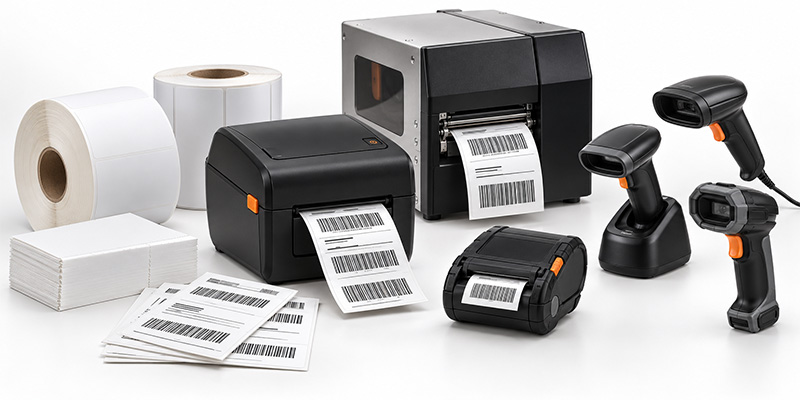
Code 128 Labels
The right media depends on how long the label must last and what it will encounter. Direct thermal labels can suit short-term shipping, receiving and temporary inventory workflows. Thermal transfer Code 128 labels are often better for assets, racks, manufacturing and other applications that require greater resistance to abrasion, chemicals or environmental exposure. Browse barcode labels by printer, material and application.
Barcode Printers
Select a printer according to daily volume, label width, resolution, connectivity and operating environment. Desktop printers fit lower-volume workstations; industrial printers support sustained, high-volume output; and mobile printers produce labels at the point of activity. Compare barcode printers or use the barcode printer buying guide to narrow the options.
Barcode Scanners
Code 128 is a common 1D symbology supported by many modern linear and 2D imagers, but buyers should still confirm that it is enabled and test the exact label. Consider scan distance, label size, motion, damage, screen scanning, cable requirements, wireless range and ruggedness. Shop barcode scanners and review the barcode scanner buying guide.
Build the Complete Workflow Before Buying
A Code 128 barcode is only one component of the solution. Before purchasing equipment, test the full path from source data to label generation, printing, application, scanning and the final software action. Confirm who creates identifiers, how duplicate values are prevented, what happens when a label is damaged and how changes will be managed across locations.
Barcodes Inc can help match the symbology, software, printer, Code 128 labels and scanners to the operating environment. Explore the free generator for a prototype, then speak with a barcoding expert before scaling a business-critical deployment. The right combination can reduce manual entry, avoid relabeling and improve inventory accuracy across the workflow. For more context, see how barcode technology can reduce operational costs.
Frequently Asked Questions About Code 128
Can any barcode scanner read Code 128
Many current 1D scanners and 2D imagers support Code 128. Confirm support in the scanner specifications, make sure the symbology is enabled and test the final printed label under real conditions.
Does Code 128 require a check digit
Yes. A required modulo-103 check character is part of the symbol. A true Code 128 generator or label-design application normally calculates and inserts it automatically.
What is the difference between Code 128 and Code 39
Code 128 supports a broader character set, includes a required check character and generally encodes data more densely. Standard Code 39 supports uppercase letters, numbers and a limited set of symbols, and it remains common in some legacy and industrial applications.
Can I create Code 128 barcodes in Excel or Word
It is possible, but applying a barcode font directly to text may not calculate the required check character or choose code sets correctly. Use an encoder, add-in or dedicated labeling application designed for Code 128, then test the output.
What data should a Code 128 inventory barcode contain
In many systems, the barcode should contain a short, unique identifier that points to a database record instead of every descriptive detail about the item. The best structure depends on the WMS, ERP or inventory application and any customer or industry requirements.
Ready to put Code 128 to work in your operation?
Whether you need help selecting compatible labels, printers and scanners or planning a complete barcode solution, contact the Barcodes, Inc. team for expert guidance tailored to your application.
Rugged Handheld Barcode and RFID Scanners Compared
Choosing the right handheld scanner starts with the workflow. A barcode scanner is often the most cost-effective choice for item-by-item data capture. An RFID scanner can deliver greater value when workers need to identify multiple tagged items or read data without direct line of sight.
Warehouses, factories, transportation hubs, retailers and healthcare facilities also need devices that withstand drops, dust, moisture and continuous use. The Datalogic PowerScan 9600 and PowerScan 9600 RFID provide options for rugged barcode scanning or hybrid barcode-and-RFID capture.
Why Invest in a Rugged Handheld Scanner?
A general-purpose scanner may cost less initially, but failures can interrupt receiving, production, picking and shipping. Downtime, repairs, replacements and manual data entry can quickly outweigh the upfront savings.
When buying an industrial scanner, compare verified drop resistance, IP ratings, trigger durability, operating temperatures and charging design. These factors indicate whether a device can remain available through demanding shifts—not simply whether it carries a “rugged” label.
Barcode Scanner vs. RFID Scanner
The right choice of technology depends on what employees must identify and how quickly they need to capture it.
| Buying consideration | Barcode handheld scanner | RFID scanner |
| Capture method | Reads printed 1D or 2D barcodes | Reads radio-frequency tags; hybrid models may also scan barcodes |
| Line of sight | Usually required | Not required for RFID |
| Items captured | Typically one targeted code at a time | Can capture multiple tags simultaneously |
| Cost | Lower-cost labels and simpler implementation | Higher tag and deployment costs |
| Best uses | Picking, receiving, checkout and parcel processing | Inventory counts, asset searches and shipment verification |
| Key advantage | Precise item-level scanning | Faster bulk and non-line-of-sight identification |
RFID is most valuable when it reduces time spent counting inventory, locating assets or verifying groups of products. Results depend on tag selection, placement, surrounding materials, software and process design.
Organizations can also use both technologies. A hybrid scanner supports existing barcodes while adding RFID to selected products, assets or workflows.
Where Are Rugged Barcode and RFID Scanners Used?
Manufacturing
Manufacturers use rugged handheld scanners for work-in-process tracking, component verification, material picking, quality control and finished-goods identification. Extended-range barcode scanning can help workers capture labels at different distances, while direct-part-mark reading supports components marked through laser etching, dot peening or other methods.
An RFID scanner can accelerate component identification and track tools, reusable containers or materials when barcodes are obstructed or difficult to reach.
Warehousing and Transportation
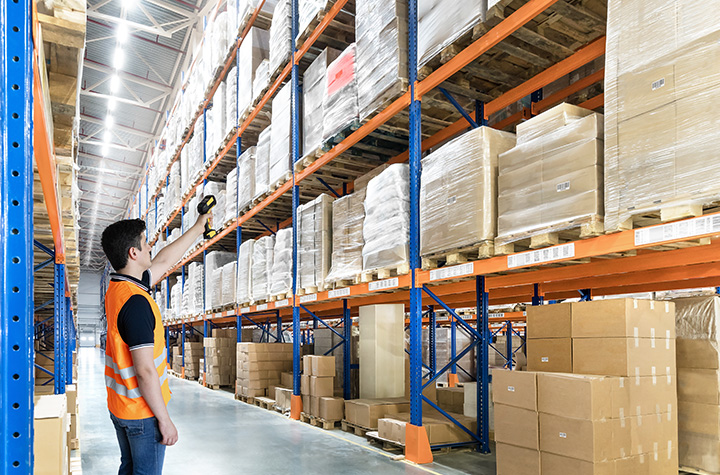
Warehouse and logistics teams rely on scanners for receiving, put-away, picking, packing, shipping and parcel processing. Auto-range barcode models allow workers to scan nearby picklists and labels positioned on elevated racks with one device.
RFID can improve cycle counting, tagged-item searches and shipment verification by capturing multiple tags without requiring employees to aim at each label.
Retail
Retailers can use handheld scanners for inventory management, price verification, checkout, returns and backroom operations. Rugged construction is particularly valuable in high-volume, warehouse-style and home-improvement stores.
RFID supports faster inventory counts, product searches and loss-prevention processes. A hybrid scanner lets employees process conventional barcodes while using RFID where merchandise has been tagged.
Healthcare
Healthcare organizations use barcode scanners to identify supplies, medications, equipment and laboratory items. RFID can support faster counts and help locate tagged medical assets, instruments and consumables. Any healthcare deployment should also evaluate cleaning protocols, tag placement and integration with clinical or inventory systems.
Datalogic PowerScan 9600 Product Comparison
| Feature | PowerScan 9600 | PowerScan 9600 RFID |
| Best fit | Rugged barcode workflows | Hybrid barcode and UHF RFID workflows |
| Data capture | 1D/2D barcodes; DPM or images on select models | 1D/2D barcodes and UHF RFID; images and OCR on select models |
| Mobility | Corded, Bluetooth or Datalogic STAR cordless | Cordless |
| Configurations | Standard Range, High Performance, Document Capture, Auto Range and DPX | Standard Range and Document Capture |
| Charging | Inductive charging on cordless models | Inductive charging |
| Primary advantage | Broad optical and connectivity choices | Barcode and RFID in one device |
| Main consideration | No RFID capability | Requires RFID tags, software and workflow planning |
Datalogic PowerScan 9600 Review
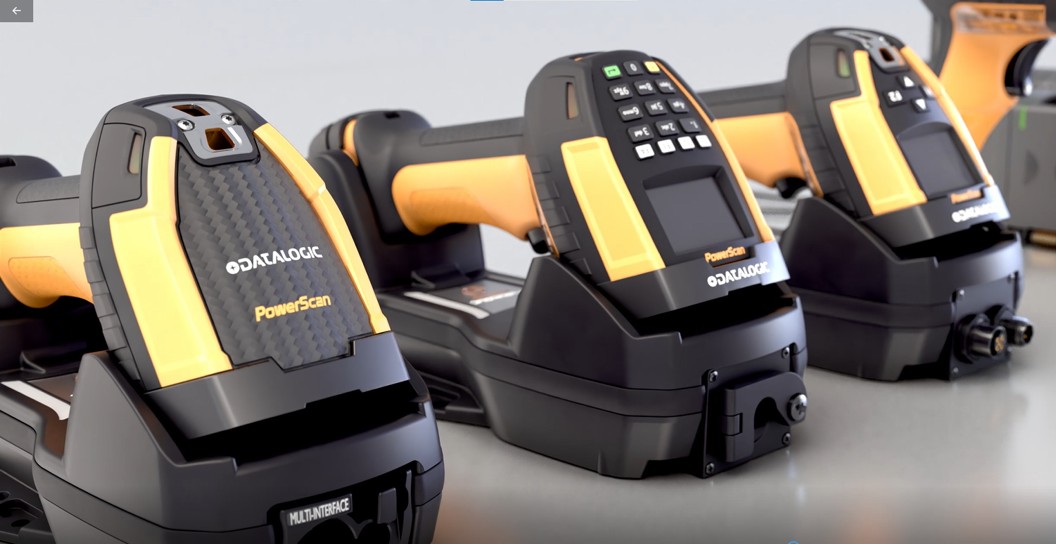
The rugged Datalogic PowerScan 9600 suits businesses that primarily use barcodes but need more durability, range or connectivity than a general-purpose scanner provides.
Datalogic rates the handheld scanner at IP65 and IP67 and for drops from 2.5 meters onto concrete. Its trigger is tested for up to 10 million activations. Standard Range, High Performance, Document Capture, Auto Range and DPX configurations support applications ranging from conventional barcode reading to elevated rack labels and direct part marks.
Buyers can choose corded PD9600, STAR cordless PM9600 or Bluetooth PBT9600 models. Modular interfaces include USB, USB-C, RS-232, Ethernet, EtherNet/IP and PROFINET. Cordless models use inductive charging, eliminating exposed contacts that can become dirty or damaged.
Best for: Barcode-intensive warehouse, manufacturing and logistics applications requiring ruggedness and configuration flexibility.
Buyer’s tip: Businesses planning or currently using RFID should compare the RFID version.
Datalogic PowerScan 9600 RFID Review
The Datalogic PowerScan 9600 RFID combines UHF RFID read-and-write capability with 1D and 2D barcode scanning in one rugged cordless device.
Its configurable RFID range reaches approximately one meter, supporting tagged-item searches, inventory verification and asset tracking. The Standard Range model handles barcode and RFID capture. The Document Capture model adds dual cameras, color image capture, OCR, an OLED display and a 16-key keypad.
Best for: Organizations adopting UHF RFID while retaining barcode-based processes.
Buyer’s tip: Remember compatible RFID tags and software
Which PowerScan 9600 Should You Buy?
Choose the standard PowerScan 9600 when barcodes remain the primary identifier, corded operation is required or the workflow needs Auto Range or DPX scanning.
Choose the PowerScan 9600 RFID when employees must read UHF tags, barcode and RFID tasks overlap or faster inventory counts and asset searches can generate measurable savings.
Frequently Asked Questions
It requires compatible UHF RFID tags for RFID functions. The correct tag depends on the item, material, read range and environment. It can still scan standard barcodes without RFID tags.
The scanner is designed for UHF RFID. NFC and high-frequency RFID use different technologies, so buyers should verify tag standards and regional frequency requirements.
Metal and liquids can reflect or absorb UHF signals. Specialized tags, careful placement and testing may be necessary around machinery, tools, beverages or medical supplies.
Test real labels and tags, read distances, damaged codes, peak volumes, wireless conditions, employee usability and integration with the intended host application.
Yes, especially when downtime could delay production or shipments.
One platform for today’s needs and tomorrow’s technology
The right data-capture technology should make work faster, more accurate and more reliable—not add unnecessary complexity. The biggest advantage of the PowerScan 9600 family is its ability to support different stages of an organization’s data-capture strategy.
For businesses that primarily rely on barcodes, the PowerScan 9600 provides an ultra-rugged platform with high-performance scanning, flexible connectivity, cordless mobility and wireless charging.
For businesses ready to incorporate RFID, the PowerScan 9600 RFID Series adds UHF RFID capabilities without requiring workers to carry a completely separate handheld device. That hybrid capability can make it easier to introduce RFID into existing workflows while continuing to support traditional barcodes.
Contact Barcodes, Inc.to learn more and get help finding the right handheld scanning solution for your needs.
A Familiar Device Takes on Data Capture Frontline Work
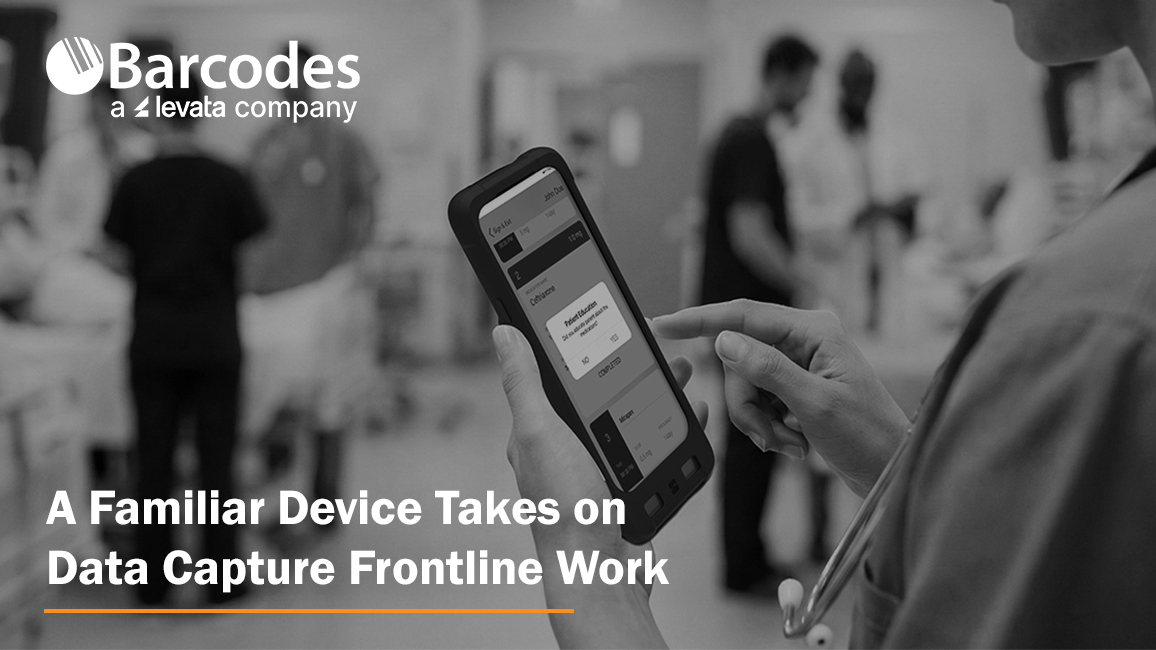
Frontline workers increasingly depend on mobile technology to scan inventory, communicate with teammates, access applications, capture information, complete forms and respond to customers. But supporting all those tasks can create a device problem of its own.
A worker may need a smartphone for communication, a device for enterprise barcode scanning, and access to additional tools for specialized workflows. More devices can mean more hardware to purchase, carry, charge, manage and support.
For many organizations, a more flexible approach is emerging: use a smartphone barcode scanner to perform more of the work—while potentially lowering total cost of ownership compared with deploying separate purpose-built devices.
The new IPCMobile Linea® Pro G (LPG) S1 brings purpose-built enterprise barcode scanning and data capture to the Google Pixel™ 10a. Designed in partnership with Google Pixel for Business, the LPG S1 is a form-fitted smart case that transforms the Pixel 10a into a versatile, enterprise-grade mobile device—with optional 1D/2D barcode scanning, programmable buttons, push-to-talk capabilities and swappable, extended battery power. The LPG S1 is also available for the Google Pixel 9a.
Why Familiar Form Factors Matter for Enterprise Mobility
Familiar smartphone interfaces can reduce training and accelerate adoption while giving employees one multifunctional device for scanning, communication and business applications. Standardizing on a common platform can also simplify device management and support. With purpose-built enterprise accessories, organizations can gain the scanning performance, battery life and durability frontline operations require without abandoning a familiar form factor.
The LPG S1 gives organizations a way to take the familiar Google Pixel experience and add the functionality frontline workers need. Rather than relying solely on the smartphone’s touchscreen or camera, the smart case adds dedicated hardware controls and optional scanning capabilities designed for fast-moving business environments.
The modular approach can also help organizations tailor devices to specific workflows. Accessories, battery options and scanning configurations can be selected based on how each team works, while custom branding options can help organizations create a consistent, company-specific device experience.
Industry Applications for Smartphones Scanners
The new LPG S1 can help organizations equip mobile workers across:
- Retail: Real-time inventory visibility, mobile orders and customer engagement
- Hospitality: Mobile check-in, service requests and maintenance ticketing
- Public Sector: Field inspections, code enforcement and public safety
- Healthcare: Faster data capture from intake through discharge
- Supply Chain & Logistics: Inventory tracking, warehouse workflows and proof-of-delivery
- Travel: Ramp and baggage operations, gate changes and mobile check-in validation
- Postal: Package tracking, postage verification and route optimization
What Is the IPCMobile Linea Pro G S1?
The IPCMobile Linea Pro G S1 is a purpose-built enterprise smart case available for the Google Pixel 10a and Pixel 9a. Rather than relying solely on a smartphone camera and touchscreen for business data capture, it adds dedicated controls and optional scanning technology designed for repetitive, fast-moving frontline workflows.
This makes the device more than simply a smartphone with a barcode scanner attached. Depending on how it is configured, the Pixel and LPG S1 combination can become a scanner, communication tool, data-entry device, AI-enabled capture tool and mobile workstation in one familiar form factor.
Four programmable buttons can be configured to trigger specific actions and send information directly to the application currently open on the Pixel.
Depending on the workflow, employees can use dedicated buttons to:
- Push to Scan 1D and 2D barcodes
- Push to Talk for team communications
- Push to Capture forms and information
- Push to Dictate information into workflows
- Push to Translate using speech recognition
- Push to Verify identification or other information
- Push to Recognize objects using AI
- Push to Emergency for rapid-response workflows
- Push to AI for supported AI functions
- Push to Workflow to initiate customized actions
This physical push-button functionality can be especially useful when employees repeatedly perform the same tasks throughout a shift and need a faster, more predictable alternative to navigating touchscreen menus.
Through the AIWedge app, the LPG S1 can go beyond traditional barcode scanning. Users can inspect camera frames, recognize speech and objects, verify information, automate item counts and build customized workflows using AI-powered capabilities.
Enterprise Scanning Without Giving Up the Smartphone
For organizations that want to leverage Google Pixel devices while adding purpose-built data capture, the LPG S1 offers a compelling alternative to traditional rugged handheld computers. By combining a smartphone employees already know with purpose-built scanning and data-capture capabilities, organizations may be able to consolidate devices and reduce the total cost of ownership associated with purchasing and supporting separate smartphones and scanners.
Its optional integrated 1D/2D scan engine can read a wide range of barcodes—including dirty, torn, low-contrast and damaged labels and tags. An optional extended-range engine supports scans from up to 30 feet away.
The Pixel’s native NFC capabilities can also be used to read access and loyalty cards and tags, expanding the device’s capabilities beyond barcode scanning.
Power for Multiple Shifts
Frontline teams can’t always stop to recharge or swap devices during the workday. The LPG S1 features a swappable smart battery available in 2,500mAh and extended 5,000mAh capacities. With the extended battery, the system provides up to 10,000mAh of total power, helping support continuous use across multiple shifts.
A range of charging accessories helps further reduce downtime during high-volume scanning and other demanding workflows. Additional accessories and configuration options allow organizations to adapt the LPG S1 to specific operational needs rather than deploying a one-size-fits-all device.
Built for Frontline Environments
The LPG S1 adds rugged protection to the Pixel platform, with an IP65 rating for dust and moisture protection and a 1.2-meter drop-to-concrete rating per MIL-STD-810G. It is also designed to withstand strong disinfectants and operate in harsh climates.
Despite its rugged capabilities, the LPG S1 is designed to remain lightweight and slim enough for employees to carry throughout the workday.
Explore a More Flexible Approach to Enterprise Scanning
The IPCMobile Linea Pro G S1 for Google Pixel 10a bridges the gap between familiar smartphones and purpose-built enterprise data capture. Organizations can gain professional scanning, programmable controls, rugged protection, extended battery capabilities and AI-enabled workflows without abandoning a smartphone platform employees already understand. With configurable scanning, battery and accessory options—and the potential to consolidate devices and lower total cost of ownership—the LPG S1 gives organizations a flexible way to equip frontline workers for today’s workflows while allowing room to adapt as those needs evolve. Custom branding options can also help organizations extend their identity directly to the devices employees use every day.
Could the smartphone your workforce already knows become the enterprise data capture device they need?
Explore the IPCMobile Linea Pro G S1 now.
Need help from an expert? Contact Barcodes, Inc. today.
Flexible Industrial Label Printing for Barcode, RFID and Compliance Labeling
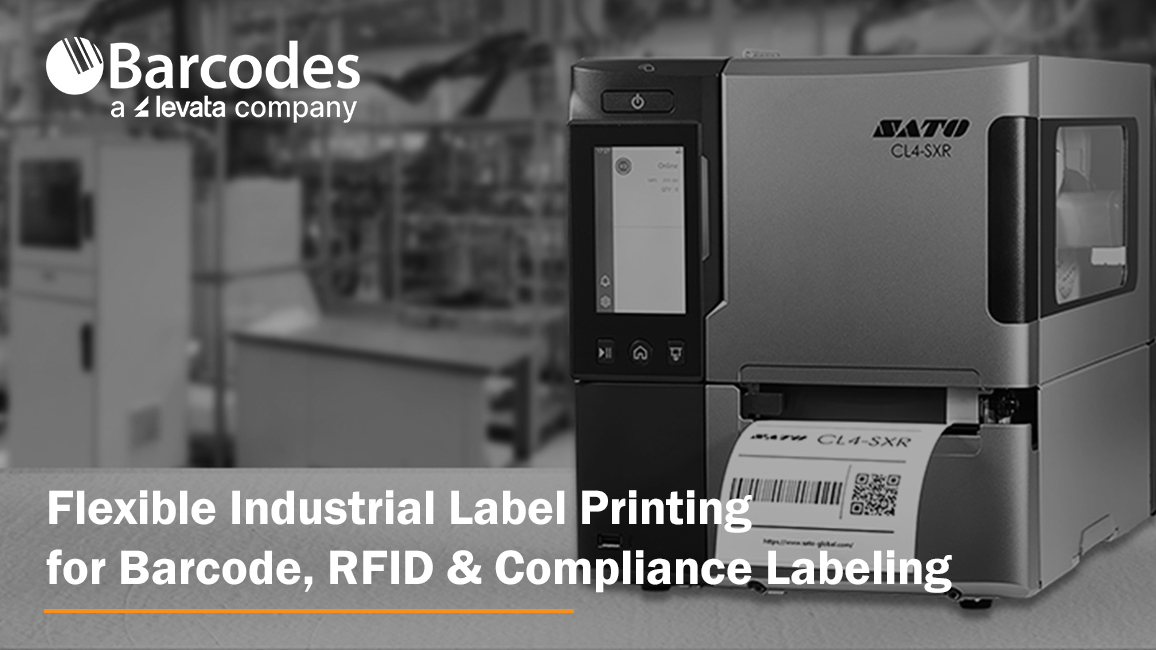
Labeling requirements rarely stay confined to one application. A manufacturing facility may need durable barcode labels for work-in-process tracking, RFID labels for automated inventory visibility and compliance labels for finished goods. A warehouse may print shipping labels, pallet labels, location labels and RFID tags—sometimes from the same printing station. Healthcare organizations must support patient identification, specimen tracking, asset management and regulatory labeling while maintaining accuracy in demanding environments.
Managing these varied requirements with separate printers can add unnecessary cost and complexity. Organizations increasingly need flexible industrial label printers that can produce a wide variety of high-quality labels, support multiple media types and integrate with barcode, RFID and compliance workflows.
The right printer should do more than produce a readable label. It should deliver consistent output at production speeds, accommodate changing label formats, connect to existing systems and withstand continuous use in challenging operational environments.
Let’s learn more about industrial label printing, and how front-runners like the SATO CL4-SXR and CL6-SXR.
What Features are Most Important for an Industrial Label Printer?
A flexible industrial label printer can adapt to different applications without forcing an organization to invest in a separate device for every label size, material or identification technology.
Important capabilities include:
- Support for multiple label widths, materials, ribbons and adhesive types
- High-resolution printing for text, graphics, barcodes and regulatory information
- Accurate media positioning for small or precisely formatted labels
- RFID encoding and verification options
- Reliable performance during long or high-volume print runs
- Connectivity with critical operating systems used for warehouse, manufacturing and healthcare
- Easy maintenance that limits disruption to critical workflows
- Remote management for printers deployed across multiple locations
Print width is another important consideration. Four-inch industrial printers accommodate many standard barcode, product, shipping and RFID labels. Six-inch printers provide additional space for pallet labels, chemical labels, automotive documentation, healthcare forms and other applications that require larger formats or more information.
Flexible Printing for Barcode, RFID and Compliance Labels
Industrial label printers must produce crisp, precisely positioned barcode labels that scan reliably at speed. Consistent print quality helps prevent rescanning, relabeling and data-entry errors across product identification, inventory, shipping, asset tracking and healthcare workflows.
For RFID applications, printers must accurately print, encode and verify each tag. Supporting both barcode and RFID labels gives organizations the flexibility to improve inventory visibility, shipment verification, traceability and asset tracking without maintaining separate printing platforms.
Compliance labels add requirements for legible text, symbols, barcodes and safety information. Precise printing and flexible media handling help businesses meet industry, regulatory and customer standards for applications ranging from product and chemical labeling to medical devices, food traceability and retailer-mandated shipping labels.
Label Printing in Demanding Operational Environments
Manufacturing, warehouse and healthcare environments have distinct labeling requirements, but all depend on reliable performance:
- Manufacturing: Printers must withstand dust, temperature changes and continuous workloads while producing readable labels for production, inspection, traceability and distribution.
- Warehousing: Printers must support high-volume receiving, picking, packing and shipping without interruptions that create backlogs or delay fulfillment.
- Healthcare: Printers must deliver accuracy and reliability across specimen, medication, medical device, supply, equipment and patient-identification workflows.
Beyond print speed, organizations should evaluate print accuracy, environmental adaptability, media compatibility, ease of maintenance and integration with existing systems.
SATO CL4-SXR and CL6-SXR: Top Choices for Flexible Industrial Labeling
For organizations seeking an industrial printer platform that can support varied barcode, RFID and compliance applications, the SATO CL4-SXR and SATO CL6-SXR are compelling options.
The third generation of SATO’s CL industrial printer platform combines high-speed printing, precise media handling, connected management and RFID capabilities. The CL4-SXR offers a four-inch print width for widely used label formats, while the CL6-SXR expands the print width to six inches for larger labels and information-intensive applications.
Together, the two models give organizations the flexibility to standardize around a common printer family while addressing different label dimensions and workflow requirements.
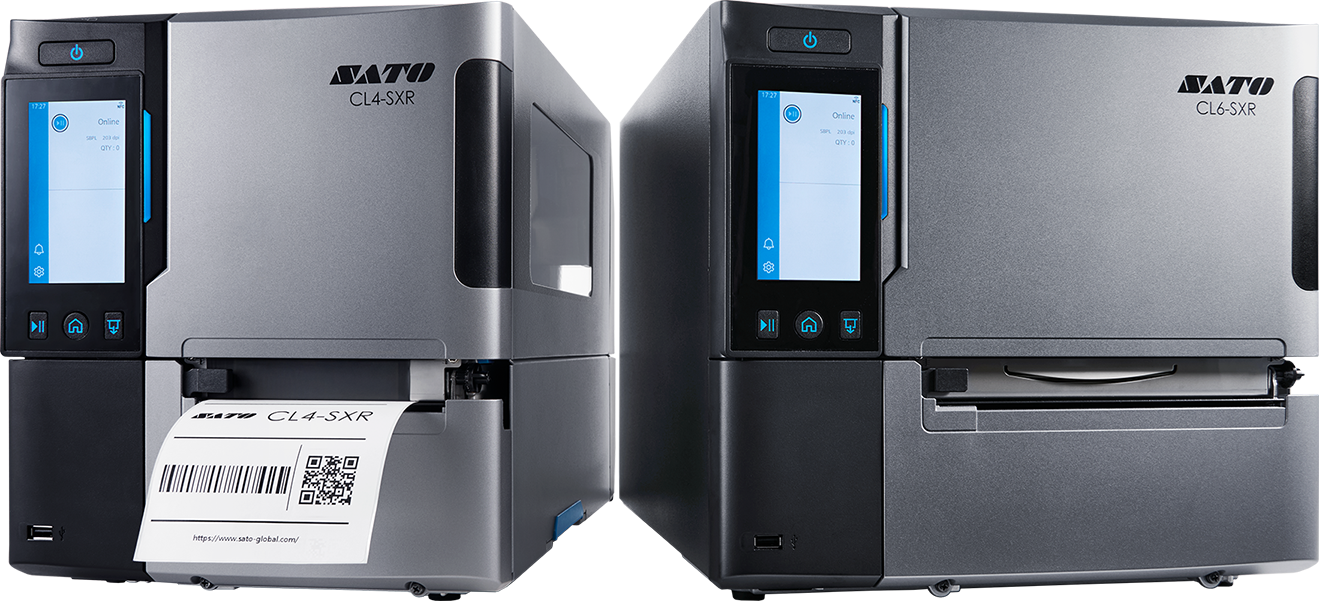
SATO CL4-SXR vs. CL6-SXR: At-a-Glance Comparison
| Feature | SATO CL4-SXR | SATO CL6-SXR |
|---|---|---|
| Print Width | 4-inch format | 6-inch format |
| Max Print Speed | Up to 18 inches per second at 203 dpi | Up to 14 inches per second |
| Print Accuracy | Up to +/- 0.3 mm | Up to +/- 0.3 mm |
| Best Suited For | Barcode, RFID, product and shipping labels | Larger labels requiring more space for data, graphics or compliance information |
| RFID Support | HR and UHF RFID | UHF RFID |
| RFID Capabilities | Print, encode and verify | Print, encode and verify |
| Media Handling | Supports thin, small, irregularly shaped and strongly adhesive labels | Supports varied media, ribbons and wider label formats |
| Print-quality Controls | GAP2 label-positioning sensor with temperature and humidity sensing | GAP2 label-positioning sensor with temperature and humidity sensing |
Shared Operational Advantages
- Accurate output: Precise positioning supports small labels, closely spaced layouts, barcodes, text and RFID inlays.
- Consistent print quality: Environmental sensing automatically adjusts thermal-head output as temperature and humidity change.
- Flexible media options: A redesigned peel-off mechanism and adaptable media configurations accommodate applications ranging from paper shipping labels to specialized product, compliance and asset labels.
- RFID quality control: Integrated verification identifies defective RFID tags before they enter production, warehouse or shipping workflows.
- One adaptable platform: Support for conventional and RFID labels helps organizations address current barcode requirements while preparing for expanded RFID adoption.
Connected, Serviceable and Resource-Efficient Printing
The SATO CL4-SXR and CL6-SXR combine connected management, proactive maintenance and waste-reduction features to support more efficient operations:
- Streamlined integration: SATO Application Enabled Printing allows applications to run directly on the printer, potentially eliminating the need for a separate computer in certain workflows.
- Flexible connectivity: Gigabit Ethernet, Bluetooth and optional Wi-Fi 6E support deployment across production lines, warehouse zones, healthcare departments and multiple facilities.
- Remote management: Remote desktop functionality simplifies access to printers installed in unattended or difficult-to-reach locations.
- Predictive maintenance: SATO Online Services uses AI-assisted monitoring to anticipate service needs, including thermal printhead replacement, before failures disrupt operations.
- Simplified servicing: Tool-free thermal head and platen roller replacement helps reduce maintenance time and restore printing more quickly.
- Less material waste: Printing can begin with the first label on a newly loaded roll, while recycled resin represents 34% of CL4-SXR components and 36% of CL6-SXR components.
A Versatile Platform for Evolving Labeling Requirements
The ideal industrial label printer should support what an organization prints today while providing the flexibility to accommodate new label formats, materials, identification technologies and compliance demands.
Whether the requirement involves barcode labels, RFID tags, compliance labels or a combination of all three, the SATO SXR series provides a flexible industrial printing platform designed for demanding operations. These capabilities make them top choices for manufacturing, warehouse, logistics and healthcare organizations that depend on high-quality labels to keep products, assets, inventory and information moving accurately.
Learn more about the SATO CL4-SXR and CL6-SXR and find the right configuration for your labeling applications.
How Barcode Technology Can Reduce Operational Costs
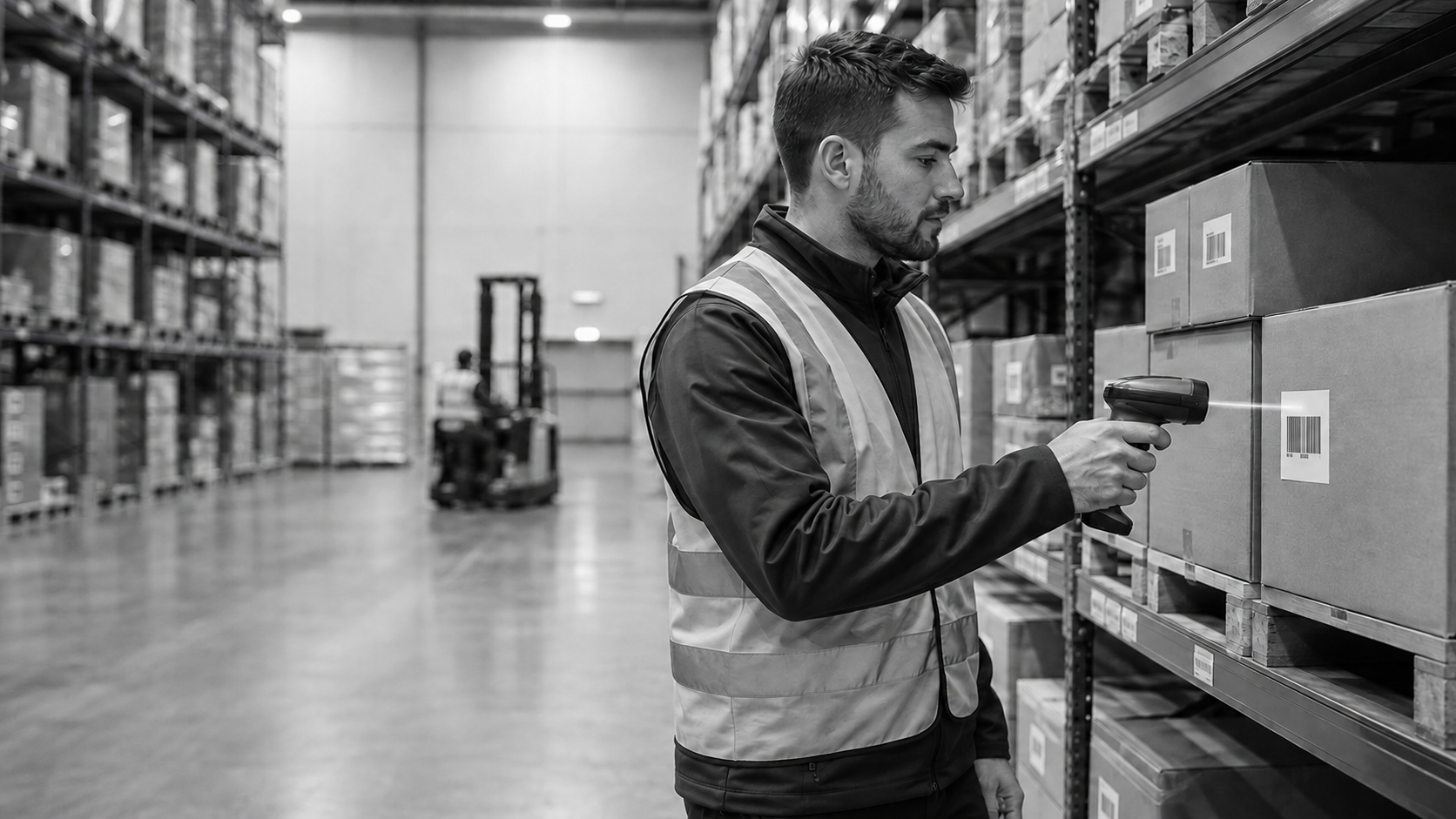
Operational costs often rise because of small, recurring inefficiencies: inventory records that do not match physical stock, time spent entering data manually, misplaced assets, shipping mistakes and unnecessary reorders. Individually, these problems may seem manageable. Across thousands of transactions, however, they can significantly affect productivity and profitability.
Inventory management with barcode scanning helps businesses reduce these costs by creating a faster and more accurate way to identify, record and track products, materials and assets. From receiving and storage to order fulfillment and shipping, barcode technology gives employees immediate access to reliable data while reducing dependence on manual processes.
What Is Inventory Management with Barcode Scanning?
Inventory management with barcode scanning uses barcode labels, scanners and software to capture and update information as items move through an operation. Each barcode represents data associated with a product, component, package or asset. When an employee scans the code, the system records the transaction and can update inventory levels, locations or order status in real time.
Compared with typing product numbers or recording inventory on paper, scanning allows employees to complete transactions with fewer steps. It also creates more consistent data that operations, purchasing, customer service and management teams can use to make informed decisions.
Reduce Manual Data Entry and Labor Costs
Manual inventory tracking requires employees to write down information, enter it into a system and sometimes verify it again. These repetitive tasks consume time that could be spent on receiving, picking, replenishment or customer service.
Barcode scanning simplifies data capture at the point of activity. Employees can scan an item when it arrives, moves to another location, enters production or leaves the facility. Faster data collection can increase the number of transactions completed during each shift while reducing administrative workload.
Businesses can also select barcode scanning equipment designed for specific workflows, including handheld, cordless, wearable, presentation and fixed-mount scanners. Matching the device to the task can help employees work more efficiently without adding unnecessary steps.
Prevent Costly Inventory Errors
A single incorrect item number or quantity can create problems throughout an operation. Data-entry errors may lead to inaccurate inventory counts, incorrect replenishment decisions, production delays or orders for products that are already in stock.
Scanning validates the item being handled and records its information directly in the connected system. This reduces opportunities for transcription mistakes and helps maintain more dependable inventory records.
Greater accuracy can lower costs associated with emergency orders, excess stock, avoidable stockouts and time spent investigating discrepancies. It can also improve confidence in the data used for forecasting and purchasing.
Improve Inventory Visibility
Without current inventory information, businesses may purchase more stock than they need or fail to reorder an essential item in time. Barcode scanning provides a clearer picture of what is available, where it is located and how quickly it is being used.
This visibility helps inventory teams maintain appropriate stock levels rather than relying on estimates or outdated spreadsheets. It may also reveal slow-moving products, duplicate inventory and materials occupying valuable warehouse space.
Better information supports more disciplined purchasing decisions, reduces unnecessary carrying costs and helps businesses use available inventory before ordering additional stock.
Accelerate Inventory Counts
Traditional physical inventory counts can require extensive labor and may disrupt regular operations. Barcode technology allows workers to scan products and locations systematically, accelerating cycle counts and full inventory checks.
More frequent counting also helps teams identify discrepancies before they become larger problems. Instead of waiting for an annual inventory event, businesses can verify selected products, bins or departments throughout the year.
This approach reduces the burden of counting while helping maintain accurate records for daily operational decisions.
Reduce Picking, Packing and Shipping Costs
Fulfillment mistakes create expenses beyond the cost of the incorrect product. Businesses may need to process a return, ship a replacement, restock the original item and respond to a dissatisfied customer.
Barcode scanning can verify products during picking and packing to confirm that the correct item and quantity are associated with each order. A final scan before shipment can provide another checkpoint and create a digital record of fulfillment activity.
Reducing mis-picks and shipping errors helps control return-related costs while supporting faster, more dependable customer service.
Track Tools and Business Assets
Barcode technology is not limited to products for sale. Organizations can also label computers, tools, equipment, furniture and other assets. Employees can scan each asset during assignment, transfer, maintenance or return.
Improved asset tracking reduces the time spent searching for equipment and helps prevent unnecessary replacement purchases. Maintenance teams can use scan records to confirm service history, while managers gain better visibility into asset location, condition and availability.
Choosing the Right Barcode Scanning Solution
The potential savings depend on selecting technology suited to the operating environment. A retail counter may need a compact presentation scanner, while a warehouse may require a cordless or rugged device. High-volume production and logistics applications may benefit from wearable or fixed scanners that support hands-free and automated workflows.
Before choosing equipment, consider:
- The barcode types and distances that must be read
- Whether employees need corded, cordless or hands-free operation
- Environmental conditions such as dust, moisture or repeated drops
- Compatibility with existing inventory and business systems
- Expected transaction volumes and future growth
- Battery, connectivity and ergonomic requirements
Barcodes, Inc. offers a broad selection of barcode scanners and scanning solutions for retail, warehouse, manufacturing, healthcare and field-service applications.
Turn Better Data Capture into Lower Operating Costs
Inventory management with barcode scanning can reduce operational costs by improving accuracy, accelerating routine tasks and giving businesses better control over inventory and assets. Its value extends across receiving, storage, counting, fulfillment, shipping and equipment management. The right solution should do more than read a barcode. It should fit naturally into employee workflows, integrate with existing systems and deliver dependable performance in the intended environment. Explore barcode scanning options from Barcodes, Inc. or connect with a specialist to identify the scanners, software and accessories that best support your operational goals.
The Evolution of ID Card Printing: From Simple Badges to Smarter Credentials

ID card printing has evolved from producing basic visual identification badges into creating sophisticated credentials that can support security, access control, authentication, and connected workplace experiences. Advances in printing technology, card materials, software, and credential encoding have made today’s ID card printers faster, easier to manage, and capable of supporting increasingly complex identity programs.
While the fundamental need remains the same—reliably identifying people—the technology behind the ID badge has changed significantly.
The Early Days of ID Card Printing
Early identification programs were primarily focused on one goal: creating a card that allowed someone to visually confirm a person’s identity.
Organizations needed a badge that could display basic information such as:
- A photograph
- Employee or student name
- Identification number
- Company or institution name
Producing these credentials was often a multi-step process. Photos, printed information, and laminated card components could require separate equipment and considerable manual effort.
As plastic card printing matured, organizations gained the ability to produce professional-quality credentials from a desktop printer. This helped make in-house ID card printing practical for businesses, schools, healthcare organizations, government agencies, and membership programs.
How Did Direct-to-Card Printing Change ID Badges?
Direct-to-card (DTC) printing represented an important advancement because it enabled organizations to print images and information directly onto plastic cards.
In a DTC printer, the printhead applies dye from a printer ribbon directly to the card surface. Color ribbons typically use individual panels to reproduce full-color images, text, logos, and other design elements.
The result is a relatively simple and economical approach to producing professional ID badges.
Direct-to-card printers remain popular today because they can offer a strong balance of:
- Print quality
- Speed
- Affordability
- Ease of operation
- Compact desktop footprints
Organizations can choose from a broad range of modern ID card printers designed for everything from basic single-sided badge printing to higher-volume credential issuance.
Why Did Retransfer ID Card Printing Emerge?
As credential requirements became more sophisticated, organizations wanted better image quality and greater flexibility in the types of cards they could print.
Retransfer technology addressed some of those requirements.
Rather than printing directly onto the card, a retransfer printer first prints the card image onto a transparent transfer film. That film is then fused to the card surface.
This indirect printing process can provide true over-the-edge printing, eliminating the small border commonly associated with direct-to-card printing. It can also produce consistent results on cards with embedded electronics or slightly uneven surfaces.
Direct-to-Card vs. Retransfer Printing
| Feature | Direct-to-Card | Retransfer |
| Printing process | Ribbon prints directly onto card | Image prints onto film, then transfers to card |
| Edge-to-edge appearance | Small border may remain | True over-the-edge printing |
| Print quality | Very good | Excellent |
| Specialty card compatibility | Varies | Generally greater flexibility |
| Initial investment | Typically lower | Typically higher |
| Best suited for | Everyday employee and student IDs | Premium, secure and technology-enabled credentials |
Neither technology is inherently right for every application. The choice depends on card volume, image-quality requirements, credential technology, security needs, and budget.
How Has ID Card Printing Become More Secure?
The evolution of ID card printing hasn’t only improved appearance. Modern card issuance has increasingly become part of an organization’s broader security infrastructure.
A basic printed photo and name can now be supplemented by features such as:
- Barcodes and QR codes
- Magnetic stripes
- Contactless credentials
- RFID and proximity technology
- Smart chips
- Holographic elements
- Laminates and overlays
Modern card printers can also be configured with encoding capabilities that allow compatible electronic credentials to be personalized as part of the issuance process.
This changes the role of the ID printer. Instead of simply producing something employees wear, the printer can become part of a system for creating credentials that interact with physical access control, time-and-attendance, authentication, and other applications.
How Have ID Card Printers Become Easier to Manage?
Another major change has occurred behind the scenes.
Older card-printing environments could require significant hands-on management, particularly when organizations operated printers across multiple offices. Today’s systems increasingly emphasize easier configuration, intuitive interfaces, remote management capabilities, and more centralized software.
Cloud-based ID card software has also changed how some organizations approach badge issuance. Instead of keeping every part of the cardholder database and design workflow tied to a single workstation, authorized users may be able to manage aspects of credential issuance across locations.
That can be particularly valuable for organizations with distributed offices, campuses, healthcare facilities, or branch locations.
How Are Sustainability and Card Materials Changing?
The evolution of card printing is also extending beyond the printer itself.
As identity technology evolves, mobile credentials are becoming an increasingly popular alternative or complement to traditional plastic ID and access cards. Instead of presenting a physical credential, users can store a digital credential on a compatible smartphone or wearable device and use it to access secured doors and other authorized resources. Mobile credentials can reduce dependence on physical card issuance and replacement while giving organizations greater flexibility in how credentials are distributed and managed. For many organizations, the future is likely to be a hybrid credential environment, where mobile access and securely printed ID cards work together based on security requirements, user preferences, and operational needs.
What Does the Future of ID Card Printing Look Like?
Physical credentials aren’t disappearing. Instead, they’re becoming part of a broader identity ecosystem.
Organizations are increasingly evaluating how physical badges can work alongside technologies such as mobile credentials, contactless access, cloud-based identity management, and multi-factor authentication.
That means the next stage of ID card printing is less about printing alone and more about credential lifecycle management: how identities are created, issued, used, updated, secured, and eventually retired.
For organizations selecting new card-printing technology, scalability is therefore increasingly important. A printer purchased for basic photo IDs today may eventually need to support dual-sided printing, electronic encoding, higher card volumes, or additional security features.
Choosing ID Card Printing Technology for Today’s Needs
The history of ID card printing reflects a larger shift in how organizations think about identity. What began as a way to put a name and photograph on a badge has developed into technology capable of supporting sophisticated credential and security programs.
Direct-to-card printers continue to provide an accessible solution for everyday identification, while retransfer, encoding, lamination, and software technologies support more advanced requirements.
When evaluating a new system, consider not only what you need to print today but also how your credential program may evolve. Barcodes, Inc. offers ID card printers for a wide range of credentialing applications, making it possible to compare technologies and find a solution aligned with your print volume, card requirements, and future identity strategy.