


Barcoding News
Data tracking news, product updates, tips, and more
Cart-mounted label printing heats up efficiency for manufacturer
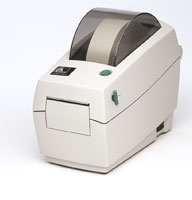 Challenge
When the weather heats up, so does the work at Four Seasons, which manufacturers auto- motive air conditioning systems and components sold through thousands of auto parts stores across the United States. Employees at the 400,000-square foot production facility in Lewisville, Texas have to move fast to ship orders on time. But they no longer have to move far to get shipping labels, since Four Seasons began producing labels on demand wherever they’re needed with cart-mounted printers. Migrating from centralized printing has taken a lot of the legwork out of operations and given a boost to labor efficiency.
“When we used stationary bar code printers throughout our facility, workers had to walk to a central print station when they needed a shipping label. More often than not, this meant waiting in line behind two or three other users while their print jobs were being processed,†said Kevin Pentecost, network administrator at the Four Seasons Lewisville facility. “Sometimes they might be 60 feet away from the printer. With some workers needing 200 labels a day, you can just imagine the amount of time that was wasted just walking back and forth.â€
Four Seasons wanted to find a process to cut the wasted time without requiring an undue amount of work or effort to change business processes, rewrite label printing applications, or make modifications to its homegrown warehouse management system (WMS) and JD Edwards enterprise resource planning applications (ERP) that resided on an IBM AS/400.
Where the Curbside Meets the Bottom Line: Wirelessly Extending Computerized Check-in Systems to the Curbside
 Airlines know that one of the most proven ways to increase business is to improve service. On-time arrivals, helpful employees, and faster check-ins-especially during these security-conscious times-translate quickly to the bottom line through satisfied customers who become repeat travelers.
Challenge
At American Airlines, curbside check-in requires users to present their luggage and ID to a skycap at curbside, along with their ticket (both traditional and e-tickets are accepted). In return, they receive a boarding pass with their seat assignment and bag tag receipts. Because the ticket is surrendered and matched with luggage, the system is considered more secure than processing luggage and people separately. Boarding pass in hand, passengers are able to bypass busy ticket counters at the front of the terminal and check in stands at the gate, stopping only to present the boarding pass and identification to the gate agent for scanning before settling into their seats.
Achieving fast check in at curbside was made possible by a system design meticulously built around the needs of its users, the skycap These are hard workers who make their living and feed their families on the tips they make-one bag at a time. Any new process that cuts into a skycap’s ability to process passengers quickly dies on the curbside.
While the system may reinvent the passenger check-in process, it streamlined the job of the skycap, who doesn’t have to do anything differently. The clever system enables skycaps to check in passengers and generate a boarding pass using only one more keystroke than it takes to check-in baggage.
“We want our skycaps to focus on passengers.We don’t want them to have to deal with anything else,†says an American Airlines spokesperson.
After receiving a passenger’s ticket, skycaps call up the flight number and enter the first letter of the passenger’s surname on a touch-screen computer built into the curbside check-in kiosk. The data is transmitted over a wireless network from the kiosk to a host computer inside, which then transmits flight details and a partial passenger list to the kiosk. The skycap verifies that the passenger in front of him has a reservation and hits another key to create bar coded baggage tags and a bar coded boarding pass, generated by separate printers within the kiosk.
To enable fast transaction times, skycaps are not able to change seat assignments, check in international passengers, sell tickets, or make itinerary changes.
Beloit Memorial Hospital Improves Management of Bedside Medication with Bar Coding
 Challenge
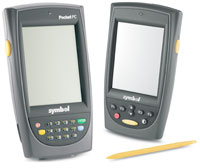
Beloit Memorial Hospital, a 175-bed community hospital in Beloit, Wisconsin decided to make patient safety a strategic priority after recent reports indicated that medical errors were increasing costs nationwide. The Institute of Medicine concluded that medical errors were a serious problem in the industry, and a study from the Joint Commission on the Accreditation of Healthcare Organizations (JCAHO) found that each incident involving an adverse drug event (ADE) costs hospitals an average of $2,000. About 40 percent of errors in prescribing medication are caught by the pharmacist or nurse before reaching the patient, but the hospital had no such “second check†for bedside administration of medication.
Solution
Beloit Memorial wanted to see if introducing technology tools at the point of care would reduce the risk for error. One possibility for streamlining the process for prescribing medication was computerized physician order entry (CPOE). But Beloit conducted demonstrations of CPOE products, and determined the technology did not meet the hospital’s needs: it wasn’t easy to use, and in fact added complexity to the process.
Aurora Relies on Zebra for High Quality Bar Codes at the Bedside
Challenge: Reduce adverse drug events
In the wake of the 1999 Institute of Medicine study, “To Err Is Human,†Aurora Health Care wanted to consider the local implications. So management at the not-for-profit integrated delivery network, which is based in Milwaukee and includes 12 acute care hospitals, extrapolated the findings. To their surprise, they learned that medical errors were taking as many as 3.5 lives on an average day in Wisconsin.
So Aurora took action. Leadership began exploring how to further Aurora’s use of integrated electronic medical records across facilities in eastern Wisconsin to promote quality and protect patients. A core component of that initiative was to use bar coding to prevent and detect medication errors.
“Bar coding is part of a larger patient safety effort, but it’s a multi-stage project on its own,†says Robert Raschke, manager of electronic health record systems and information services at Aurora. “With bar coding and, eventually, CPOE [computerized physician order entry] in mind, we envisioned a closed-loop, integrated point-of-care medication administration system.â€
Solution: Part One – Labeling Pharmacy Medications
As the first phase toward realizing this vision, Aurora determined that the value of any bar coding effort would be directly proportional to the percentage of medications properly labeled. In fact, their goal is to label 100 percent of medications. This objective called for on-demand bar code printing in a wide variety of settings.While some smaller Aurora facilities might demand an average of 6,000 to 25,000 bar code labels per month, larger sites may need to print more than 50,000. Aurora needed printers that were appropriate to the volume demands of their varying sized hospitals. They also placed a priority on finding printers that would integrate smoothly with an existing pharmacy information system from Cerner.
Barcelona City Police choose Zebra RW 420 printers for processing fines and penalties
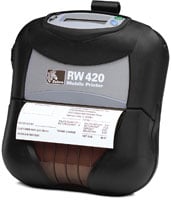 Barcelona City Police have adopted a new solution to speed up the bureaucratic processing of traffic fines. The benefits of implementing this new technology solution have been faster processing of traffic fines which can now be paid immediately via credit card. In addition data and information management has improved which has subsequently helped to reduce the amount of errors being made.
Barcelona City Council continues incorporating new technology to provide its local police force with more modern and efficient systems. In a recent project, the local police have started using a total of 330 PDAs and 150 Zebra RW 420 mobile printers.
The RW 420 mobile printer is connected to the PDA via Bluetooth® for printing fines and violations. The printer also contains a built in magnetic card and smart card reader which allows the user to log into the system using their identification card whilst also accepting credit card payments.
User friendly system
This new mobile technology solution allows more accurate data and information management by users, as the PDAs enable fast data entry and access to various tools and information. Users no longer have to carry bulky forms for fines and street maps. An added benefit is that the PDA software reduces the risk of errors in issuing fines as items such as street names are selected from drop-down menus, preventing the user from mis-typing or mis-spelling details
The new system also complies with new local legislation which came into effect in July 2006. It allows additional information to be added to the fine such as the loss of license or penalty points
Iceland Post improves deliveries with Zebra
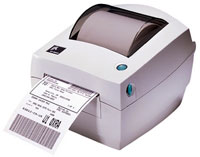 The Project
Previously Iceland Post had to manage a significant part of its post and parcel management manually. One of the main goals of the project was to make this process more efficient, while at the same time increase tracking abilities of deliveries, something that previously could only be done with registered mail. To become more customer-focused, the organization required a solution that automated certain work processes.
“Iceland Post had a solution which required manual stamping for postage and was only able to track registered mail. To become more proactive towards its customer needs, Iceland Post chose to strengthen its position on the market with the help of Zebra’s printing technology,†said Clive Fearn, Vertical Marketing Manager, Zebra Technologies Europe.
The organization’s previous solution made it hard for staff to do their job quickly and efficiently. The printers used for the ‘Post Assistant’ broke down regularly and only had a life expectancy of about two years.
The Solution
The Zebra applications chosen can be divided into three areas; sorting and distribution applications, applications in the post offices, and business post applications. Sorting and distribution applications include solutions for labeling of postbags, sorting trays, routing labels for local deliveries and shipping labels for parcels. Continue reading »
Motorola introduces Symbol MT2000 Series: MT2070 & MT2090 barcode scanner
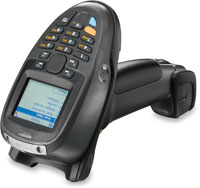 Combines the simplicity of a scanner and the brainpower of a mobile computer in an ultra-ergonomic gun-style form factor
The Motorola MT2000 series of mobile terminals offer highly flexible device capable of streamlining many scan-intensive business processes in a wide variety of industries — from the front to back door in manufacturing plants, retail establishments, warehouses, hospitals and more. The easy-to-use and affordable mobile terminal offers a unique hybrid design, functioning as both a scanner and a mobile computer throughout the business day. Its rugged ergonomic design ensures reliability in almost any environment.
Both the MT2070 series and MT2090 series can be utilized right out of the box as a scanner — either tethered to a point of sale (POS), laptop or other computing system — or as a standalone wireless mobile computer capable of enabling inventory and other scan-intensive applications anywhere in the enterprise. The MT 2090 series also offers integrated 802.11 a/b/g for real-time direct application connectivity. The MT2000 series is available at an entry level price, making this addition a superior value with unmatched ROI.
Microscan QX Hawk previewed at ControlDesign.com
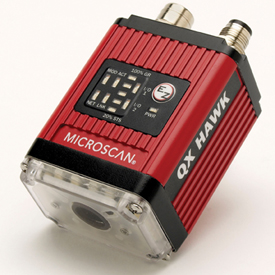 ControlDesign.com has an exclusive preview of Microscan‘s upcoming QX Hawk designed for high performance direct park mark reading.
Selection of a proper code reader is critical to a track-and-trace system’s successful implementation. Microscan says its new QX Hawk is the first high-performance reader with the flexibility to read any mark at any distance and speed in any environment.
Continue reading: Microscan’s QX Hawk Code Reader Simplifies Track-and-Trace Implementation
Microscan will be introducing the QX HAWK, at the Assembly Technology Expo in Chicago on September 21-22, 2009.
Automated System Keeps Inventory Accurate and Updated
 Challenge:
A leading Grand Rapids, Michigan-based manufacturer of household cleaning machinery relied on a seven-person staff of full-time employees to manually enter hand-written inventory data. Every part placed into the warehouse and every finished product sent to the shipping dock was recorded on a transfer ticket and later entered into the company’s antiquated warehouse management system. In the hustle of this fast-paced consumer goods manufacturing environment, errors were common and the employees were spending more time entering data than moving product. The system was so inefficient and inaccurate, the company was forced to use three full-time dedicated counters to ensure that inventory levels were sufficient to meet production schedules.
To make the situation worse, the company did not record the locations of parts and finished products, causing pickers to waste time searching for goods in the warehouse.
“One person, the forklift driver, stocked supplies and finished goods within the warehouse,†said a manufacturing systems analyst. “If he was off for a day or on vacation, the entire system suffered because there was no physical or electronic record indicating where he put the stock.â€
Solution:
To synchronize the warehousing operations with the rest of the manufacturing operations, the company implemented a home-grown wireless network that incorporated a supply chain management solution with a data capture system. The system relies on bar coded labels and tags, printed on
Zebra® printers, to track the movement of goods into and out of the warehouse.
Portable Betting System is Winning Ticket
 Challenge:
Autotote, the nation’s leading supplier of pari-mutuel wagering systems to horse track, dog track, and off-track betting parlors, wanted to find a way to bring the betting window to its customers.
Solution:
A “walkabout†system was developed as an add-on to the existing teller network. Information sent from a handheld is read by the Tote network and sent back to the handheld.