


Barcoding News
Data tracking news, product updates, tips, and more
US Naval Air Force Reserve Optimizes Resources and Labor with Mobile Computers
The U.S. Commander Naval Air Forces Reserve (CNAFR) maintains and repairs military aircraft such as the E-2C Hawkeye, an early warning radar aircraft; AH-1 Cobra, a strike helicopter; and EA-6B Prowler, an aircraft that jams electronic signals. Other aircraft include the FA-18 Hornet strike fighter and C-130 Hercules transport plane. During times of war, CNAFR sends troops to battle, reducing manpower on the base. This means fewer Sailors are available to repair aircraft.
Each piece of equipment within the aircraft must be in working order to assure the safety of the aircrew and optimize the chances for success in combat. So at the beginning of the War on Terror, CNAFR wanted a way to optimize the manpower on base while expediting the repair process so aircraft could return to combat as soon as possible. To do so, CNAFR teamed up with Intermec Technologies and partner Diamond Data System to help develop its Base Level Inventory Tracking System (BLITS).
Manual Processes Delay and Dislocate
Several Naval Air Force Reserve bases have warehouses that store equipment and parts for the repair of military aircraft. So when a repair part is not available at one base, logistics personnel must input a requisition for stock from another.
“Before BLITS, the sailors had to call the other base and track down the repair part,†said Lieutenant Commander Chris Stevens of CNAFR. “Parts were often tracked using spreadsheets, so users in one base weren’t able to read the spreadsheet in another without having to call someone to look it up. Ultimately, it took a lot of work, wasting unnecessary time and labor.â€
Before BLITS was deployed, CNAFR used a bar-coded form to track orders. Sailors would also have to use this form when requesting parts to repair aircraft. Whenever a part was delivered to the base, a driver took the part into the warehouse and had the form signed by a recipient. Once the driver returned to the warehouse with the form, the data was manually entered into a database used for tracking parts between bases. Using this system, it wasn’t uncommon for items to be misplaced.
“With the long strings of numbers associated with aviation components, typos were made when inputting data,†said Stevens. “This could wreak havoc on our system because it showed that the wrong part was ordered or delivered. Another problem was misplacing parts throughout the supply chain. This resulted in increased labor and expenses because of the time it took to determine the origin of the mistake or the location of the part. â€
BLITS Tracking Features Deliver
In order to reduce the opportunities for error and optimize labor, CNAFR turned to Intermec to install BLITS. A key component of BLITS is Intermec’s CK31G mobile computers, which are used for tracking repair parts. Using the new system, when a driver delivers a part, it must be scanned by someone’s Common Access Card (CAC) for it to be received. When the CAC card is scanned, the system identifies who received the item and the date and time. This information is stored on the CK31G mobile computer until it is docked and uploaded to a central server.
Bar Code Labels Stand the Test of Time on Signs
Challenge
There are approximately 18,000 road signs to guide drivers through Kitsap County, Wash., which covers 396 scenic square miles on the Puget Sound. To properly track and maintain each one of those signs, Kitsap County had to manually enter sign inventory data and maintenance records into a database—an extremely time consuming and error-prone task. “The staff were spending an hour or more per day in the shop looking up information and transcribing what they had done in the field onto an electronic spreadsheet,†said Jeff Shea, a Kitsap County traffic engineer. “Weekly checks indicated that numbers were being transposed and sign information was getting incorrectly documented. With some 18,000 signs, it was imperative that we got a handle on correctly identifying the correct sign with the correct action.â€
Shea wanted to find a less labor intensive way of recording information in the field and entering it into the computer system. Unaware of any existing automated sign management applications, Shea faced the challenges of finding appropriate application software, sourcing durable mobile computers that could operate in harsh weather conditions, and determining a way to permanently identify signs. To top it off, the solution also had to be easy to use and affordable.
Solution
They decided on SignTrack, and a durable labeling solution from Zebra Technologies that operates on easy-to-use Phaser mobile bar code scanning terminals from Symbol Technologies. This solution would lead Kitsap to become what is believed to be the first county road department in the nation to use handheld terminals and bar codes to manage road signs.
Chippewa County Improves Emergency Response in Michigan’s Upper Peninsula
 Situation:
The need for reliable, cost-effective connectivity with the state’s emergency response system
The eastern end of Michigan’s Upper Peninsula consists of three counties—Chippewa, Luce and Mackinac—that are home to a wide range of residents. The area boasts a variety of locations and lifestyles: the bustling port cities of Sault Ste. Marie and St. Ignace and numerous rural communities as well as the tourist mecca of Mackinac Island. This mix of urban, rural and seasonal populations combines with long, hard winters and an area of 3,486 square miles to create a challenging emergency response environment.
To improve operations across the region, the three counties agreed to centralize emergency dispatch operations. Because it possessed the newest network and equipment, Mackinac and Luce Counties agreed to contract with Chippewa County to create a leading-edge regional dispatch center. There were three main objectives: help reduce response time, improve efficiency and increase safety for residents of the region. There was one major challenge: to convince the state of Michigan that wireless connectivity to the Michigan Public Safety Communications System (MPSCS) would not only be affordable, but also reliable and secure. Complicating matters was a very aggressive timetable. The goal was to have the system operational by December 1, 2008.
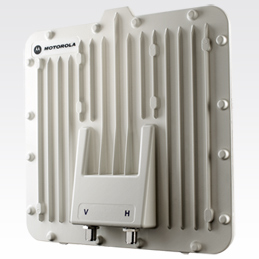
Solution: High-speed Motorola 4.9 GHz Point-to-Point wireless network
To accommodate additional call volume from the other two counties, Chippewa County needed to replace its existing dispatch system with a solution that delivered more bandwidth. The county explored a number of different technology alternatives for building the new network. Traditionally, Michigan dispatch operations have used licensed microwave-based solutions for data transport. But traditional licensed microwave networks can cost tens of thousands of dollars per link, well beyond the project’s budget. Another possibility was leasing T1 lines from telephone providers, but T1 lines have their own issues. One is cost; monthly recurring lease costs can run from $300 to $1,300 per month per line. Other problems include reliability, lack of availability of T1s due to the remoteness of the desired location, timing of deployment and loss of control due to dependence on an outside supplier.
Continuous Improvement Key to Chain of Custody Evidence Excellence
Since 1960, Long Island’s Suffolk County Police Department has racked up awards and gained national recognition, thanks to its high-tech evidence tracking system and keen focus on its continuous improvement. Ever since the tracking system was instituted in 1960—after the five western towns of Suffolk County, New York, decided to merge their police departments into one unit – it has been a source of pride for the Suffolk County Police Department.
Located on Long Island, about 70 miles east of Manhattan, the Suffolk County Police Department has jurisdiction over 560 square miles, protects 1.4 million residents, and collects between 70,000 and 75,000 pieces of evidence annually.
“In 43 years, we’ve never lost a piece of evidence,†said officer Michael Beam, the firearms and narcotics control officer who works in the Property Section.
Because of its sterling reputation, the Suffolk County Property Section has earned numerous awards and national recognition. It has been featured on Discovery Channel’s “Curators of Crime†program, and is used as an example in seminars conducted by the International Association for Property and Evidence. Officials from more than 30 law enforcement agencies have visited Suffolk County to learn about how to improve their own evidence management procedures.
Challenge:
Although considered one of the nation’s best, the Suffolk County Police Department has made improving procedures for identifying, managing, and accessing the vast amount of evidence within its system a continuous process.
In 1988, the county became the first in the nation to implement the ACE computerized evidence management system. Processes were further automated in the 1990s when a thermal label printer was added to the system to automatically create evidence labels and eliminate the need for manual labeling.
In late 2002, the Property Section began tracking evidence with bar codes for the first time. As part of the transition, the department began an upgrade from its original ACE DOS-based evidence tracking software from Software Techniques to a newer, Windows-based version called WinACE, which supports bar code data entry.
When police officers collect evidence at the scene of a crime, they bring it back to their respective precincts, where it is signed in and locked up. Lost or stolen property recovered by officers is also submitted to the precincts.
Each day, the assigned officers of the department’s Property Section collect these items from the precincts and bring them to a 30,000-square-foot warehouse. More than 220,000 items are stored in the warehouse where they remain untouched until they are released, destroyed, or requested by a police officer or the district attorney’s office. (The oldest invoice of evidence in the warehouse is from an unsolved 1931 murder.)
Every box, every envelope, every item—from a tiny piece of glass to an item as large as a boat—must be labeled before being stored in the warehouse. Eleven civilian Evidence Control clerks and five police officers have the responsibility of recording evidence into the system, then maintaining records and safeguarding the evidence until it is needed.
Solution:
Items were labeled with a dot matrix printer until 1995, when the department installed its first thermal label printer, an Eltron QB440 (Eltron International merged with Zebra Technologies in 1998). The lone printer performed flawlessly, producing more than 70,000 labels annually, but the department decided to purchase a new unit as part of its system upgrade.
Tracking Evidence and Stolen Property is Easier with a Portable Bar Code Solution
For most companies, inventory-tracking errors are important, but rarely life-or-death situations. For the Lake County (Ill.) Sheriff’s Department however, “life-or-death†takes on new meaning. To manage all its criminal evidence, victims’ personal effects and lost items, this Sheriff’s Department turned to bar coding to ensure that nothing is misplaced or mislabeled.
Challenge:
Once evidence is received at the Lake County Sheriff’s Department’s evidence facility, it must be entered into the system to identify what is in inventory and how it got there. Traditionally, after sealing an item in an evidence bag, the officer would fill out a handwritten form to request that the items be submitted into property control. The property control form included all vital information about the item: the case number, the nature of the incident, the time and date that the item was collected, the location of the offense, the location at which the item was collected (if different), the name of the victim or suspect, the property owner’s information (in the case of stolen property) and an identifying number provided by the officer to sequentially record the many individual items recovered at each scene. Finally, the officer would include a brief description of the evidence itself. Besides being a time-consuming task—a new form had to be completed for each item—the information on this form was only as valid as the legibility of the officer’s handwriting. After submitting the form, the information would then be manually entered into the system, diminishing the likelihood for complete validity even further.
U.S. military relies on Zebra for visibility to keep equipment shipments on track
Challenge
As military personnel continue to carry out the mission known as “Operation Iraqi Freedom,†innumerable amounts of material, from food to ammunition to spare parts, need to follow the troops wherever they go. This would be a tough situation for any supply chain, but add to it the austere conditions of the Iraqi desert.
The Department of Defense (DoD) needed a portable system that its movement control teams (MCT) within the transportation movement battalion could use at the point of activity to monitor and report material receipt and shipment, as well as correct any problems regarding shipment identification.
Solution
The DoD turned to Zebra Technologies to create a mobile material tracking system. What resulted was the deployable asset visibility system (DAVS), a self-contained mobile system that utilizes mobile computers plus bar code and radio frequency identification (RFID) to track assets throughout the transportation process. Using this system, soldiers have immediate access to the data necessary to create a new military shipping label or rewrite a tag. Should communication with the DoD host server be necessary, a satellite-based messaging and routing system works with the mobile unit to do the job. The DAVS system also enables the MCT to monitor receipt and shipping, plus correct problems that would otherwise delay the shipment.
Unitech PA600, PA968 & HT680 Certified for use with IntelliTrack
IntelliTrack has certified the latest Unitech PA600, PA968 and HT680 portable data collectors. IntelliTrack now supports Windows Mobile 6.1 and Windows CE 5.0 operating systems installed on these latest product releases.
The Unitech PA600 not only fits in your pocket, but is lightest in its class. Recommended for use with IntelliTrack is the 20-key keypad configuration.
The Unitech PA968 offers a 2-megapixel camera bonus feature along with the ability to work in the harshest conditions. Recommended for use with IntelliTrack is the 24-key keypad configuration.
The Unitech HT680’s compact, rugged design is ideal for manufacturing, retail, logistics and transportation. The feather light handheld boasts rust-proof connector pins and a six-foot drop spec. Recommended for use with IntelliTrack is the 22-key keypad configuration.
RFID Tags Improve Efficiency For Paper Shipping Company
Sunoco, a manufacturer of packaging products, recently invested in RFID technology to make shipment tracking more convenient for its customers.
Many of the Hartsville, South Carolina-based company’s clients are in the paper industry themselves; thus, having paper cores arrive that were RFID-ready will offer Sunoco and its customers a more efficient and effective inventory management system to keep track of their materials.
Logic Controls SB-9090 All-in-One Point of Sale Terminal
 Offering the latest Projected Capacitive Touch (PCT) screen technology, simple hardware connectivity, an exchangeable hard drive, hidden cable compartment, and adjustable base, and customer display, the Logic Controls SB-9090 All-in-One Point of Sale Terminal delivers great accessibility and usability to the customers.
Furthermore, to assure a stable and continuing operation, Logic Controls SB-9090 is designed to resist both internal and external sources that might cause potential computer downtime. With its signature fanless operation the SB-9090 is a great fit for harsh environment where dust, dirt, or grease may be present or when fan noise is not desirable. Logic Controls SB-9090 carries the highly efficient Intel Atom 1.6GHz Processor that consumes less power while still achieving high performance.
Professional Canon Camera Now Supports Barcode Readers
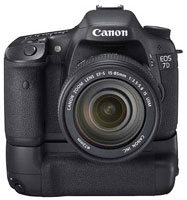 Canon is now shipping a special EOS 7D kit that includes support for barcode scanners and has the ability to embed barcode data directly into the picture’s metadata.