


Rugged Handheld Barcode and RFID Scanners Compared
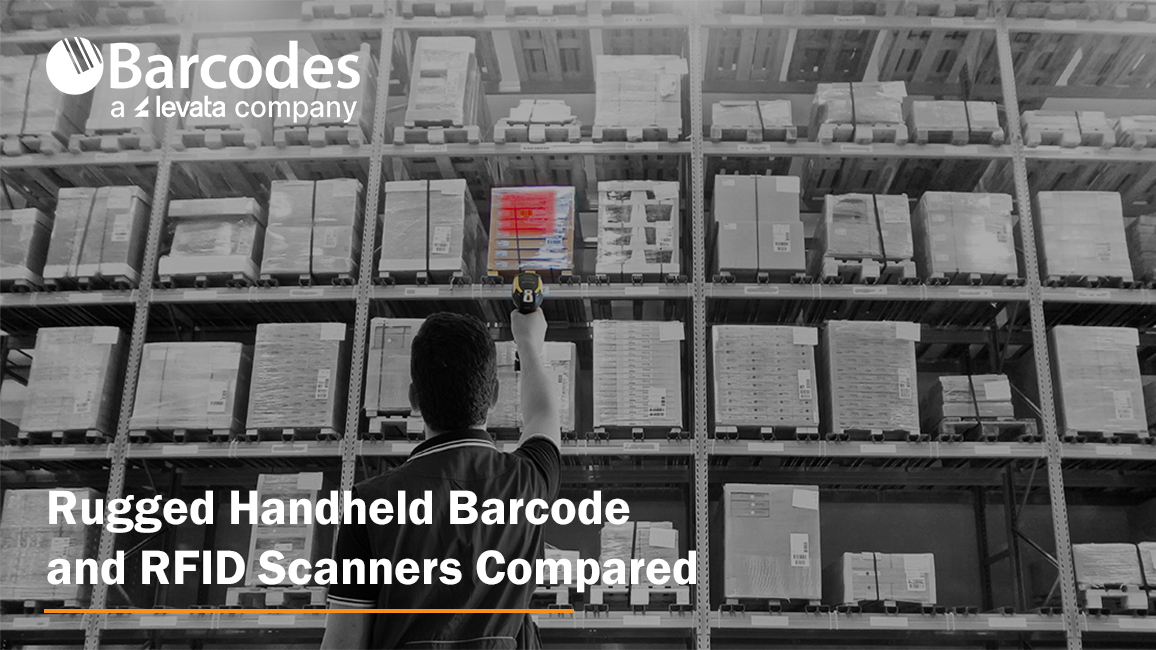
Choosing the right handheld scanner starts with the workflow. A barcode scanner is often the most cost-effective choice for item-by-item data capture. An RFID scanner can deliver greater value when workers need to identify multiple tagged items or read data without direct line of sight.
Warehouses, factories, transportation hubs, retailers and healthcare facilities also need devices that withstand drops, dust, moisture and continuous use. The Datalogic PowerScan 9600 and PowerScan 9600 RFID provide options for rugged barcode scanning or hybrid barcode-and-RFID capture.
Why Invest in a Rugged Handheld Scanner?
A general-purpose scanner may cost less initially, but failures can interrupt receiving, production, picking and shipping. Downtime, repairs, replacements and manual data entry can quickly outweigh the upfront savings.
When buying an industrial scanner, compare verified drop resistance, IP ratings, trigger durability, operating temperatures and charging design. These factors indicate whether a device can remain available through demanding shifts—not simply whether it carries a “rugged” label.
Barcode Scanner vs. RFID Scanner
The right choice of technology depends on what employees must identify and how quickly they need to capture it.
| Buying consideration | Barcode handheld scanner | RFID scanner |
| Capture method | Reads printed 1D or 2D barcodes | Reads radio-frequency tags; hybrid models may also scan barcodes |
| Line of sight | Usually required | Not required for RFID |
| Items captured | Typically one targeted code at a time | Can capture multiple tags simultaneously |
| Cost | Lower-cost labels and simpler implementation | Higher tag and deployment costs |
| Best uses | Picking, receiving, checkout and parcel processing | Inventory counts, asset searches and shipment verification |
| Key advantage | Precise item-level scanning | Faster bulk and non-line-of-sight identification |
RFID is most valuable when it reduces time spent counting inventory, locating assets or verifying groups of products. Results depend on tag selection, placement, surrounding materials, software and process design.
Organizations can also use both technologies. A hybrid scanner supports existing barcodes while adding RFID to selected products, assets or workflows.

Where Are Rugged Barcode and RFID Scanners Used?
Manufacturing
Manufacturers use rugged handheld scanners for work-in-process tracking, component verification, material picking, quality control and finished-goods identification. Extended-range barcode scanning can help workers capture labels at different distances, while direct-part-mark reading supports components marked through laser etching, dot peening or other methods.
An RFID scanner can accelerate component identification and track tools, reusable containers or materials when barcodes are obstructed or difficult to reach.
Warehousing and Transportation
Warehouse and logistics teams rely on scanners for receiving, put-away, picking, packing, shipping and parcel processing. Auto-range barcode models allow workers to scan nearby picklists and labels positioned on elevated racks with one device.
RFID can improve cycle counting, tagged-item searches and shipment verification by capturing multiple tags without requiring employees to aim at each label.
Retail
Retailers can use handheld scanners for inventory management, price verification, checkout, returns and backroom operations. Rugged construction is particularly valuable in high-volume, warehouse-style and home-improvement stores.
RFID supports faster inventory counts, product searches and loss-prevention processes. A hybrid scanner lets employees process conventional barcodes while using RFID where merchandise has been tagged.
Healthcare
Healthcare organizations use barcode scanners to identify supplies, medications, equipment and laboratory items. RFID can support faster counts and help locate tagged medical assets, instruments and consumables. Any healthcare deployment should also evaluate cleaning protocols, tag placement and integration with clinical or inventory systems.
Datalogic PowerScan 9600 Product Comparison
| Feature | PowerScan 9600 | PowerScan 9600 RFID |
| Best fit | Rugged barcode workflows | Hybrid barcode and UHF RFID workflows |
| Data capture | 1D/2D barcodes; DPM or images on select models | 1D/2D barcodes and UHF RFID; images and OCR on select models |
| Mobility | Corded, Bluetooth or Datalogic STAR cordless | Cordless |
| Configurations | Standard Range, High Performance, Document Capture, Auto Range and DPX | Standard Range and Document Capture |
| Charging | Inductive charging on cordless models | Inductive charging |
| Primary advantage | Broad optical and connectivity choices | Barcode and RFID in one device |
| Main consideration | No RFID capability | Requires RFID tags, software and workflow planning |
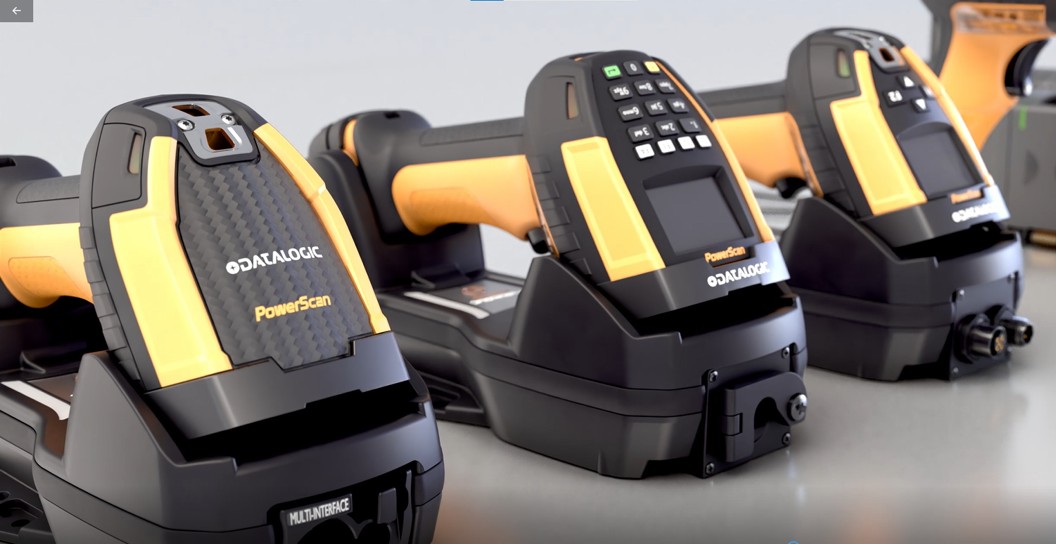
Datalogic PowerScan 9600 Review
The rugged Datalogic PowerScan 9600 suits businesses that primarily use barcodes but need more durability, range or connectivity than a general-purpose scanner provides.
Datalogic rates the handheld scanner at IP65 and IP67 and for drops from 2.5 meters onto concrete. Its trigger is tested for up to 10 million activations. Standard Range, High Performance, Document Capture, Auto Range and DPX configurations support applications ranging from conventional barcode reading to elevated rack labels and direct part marks.
Buyers can choose corded PD9600, STAR cordless PM9600 or Bluetooth PBT9600 models. Modular interfaces include USB, USB-C, RS-232, Ethernet, EtherNet/IP and PROFINET. Cordless models use inductive charging, eliminating exposed contacts that can become dirty or damaged.
Best for: Barcode-intensive warehouse, manufacturing and logistics applications requiring ruggedness and configuration flexibility.
Buyer’s tip: Businesses planning or currently using RFID should compare the RFID version.
Datalogic PowerScan 9600 RFID Review
The Datalogic PowerScan 9600 RFID combines UHF RFID read-and-write capability with 1D and 2D barcode scanning in one rugged cordless device.
Its configurable RFID range reaches approximately one meter, supporting tagged-item searches, inventory verification and asset tracking. The Standard Range model handles barcode and RFID capture. The Document Capture model adds dual cameras, color image capture, OCR, an OLED display and a 16-key keypad.
Best for: Organizations adopting UHF RFID while retaining barcode-based processes.
Buyer’s tip: Remember compatible RFID tags and software
Which PowerScan 9600 Should You Buy?
Choose the standard PowerScan 9600 when barcodes remain the primary identifier, corded operation is required or the workflow needs Auto Range or DPX scanning.
Choose the PowerScan 9600 RFID when employees must read UHF tags, barcode and RFID tasks overlap or faster inventory counts and asset searches can generate measurable savings.
Frequently Asked Questions
It requires compatible UHF RFID tags for RFID functions. The correct tag depends on the item, material, read range and environment. It can still scan standard barcodes without RFID tags.
The scanner is designed for UHF RFID. NFC and high-frequency RFID use different technologies, so buyers should verify tag standards and regional frequency requirements.
Metal and liquids can reflect or absorb UHF signals. Specialized tags, careful placement and testing may be necessary around machinery, tools, beverages or medical supplies.
Test real labels and tags, read distances, damaged codes, peak volumes, wireless conditions, employee usability and integration with the intended host application.
Yes, especially when downtime could delay production or shipments.
One platform for today’s needs and tomorrow’s technology
The right data-capture technology should make work faster, more accurate and more reliable—not add unnecessary complexity. The biggest advantage of the PowerScan 9600 family is its ability to support different stages of an organization’s data-capture strategy.
For businesses that primarily rely on barcodes, the PowerScan 9600 provides an ultra-rugged platform with high-performance scanning, flexible connectivity, cordless mobility and wireless charging.
For businesses ready to incorporate RFID, the PowerScan 9600 RFID Series adds UHF RFID capabilities without requiring workers to carry a completely separate handheld device. That hybrid capability can make it easier to introduce RFID into existing workflows while continuing to support traditional barcodes.
Contact Barcodes, Inc.to learn more and get help finding the right handheld scanning solution for your needs.