


Barcoding News
Data tracking news, product updates, tips, and more
eBook: The Risks of an Underperforming Wireless Network in Warehousing Environments

Why Your Warehouse’s Wireless Network Might Be the Weak Link
Modern warehouses and distribution centers rely on connected devices, automation, and real-time data—but none of it works without a strong wireless foundation. If your current network is aging or underperforming, it could be dragging down your entire operation.
Slow connections, dropped signals, and poor coverage aren’t just technical annoyances—they translate into costly delays, errors, and employee frustration. As more systems rely on constant connectivity, having a robust wireless network is no longer optional.
The Critical Role of Wireless Connectivity in Warehousing
Your wireless infrastructure links everything together—from handheld scanners and tablets to cloud-based WMS platforms and IoT devices. It allows your teams to move freely, access real-time data, and maintain efficiency across every shift. In high-interference environments like warehouses, your network needs to be specifically designed to overcome physical and operational challenges.
What’s at Stake When Your Network Falls Short?
- Efficiency Loss: Lagging devices or constant reconnecting wastes valuable time across shifts.
- Data Issues: Spotty connectivity can result in duplicate scans, missed reads, and order fulfillment errors.
- Safety Risks: Voice-over-Wi-Fi systems support safety protocols—until the signal drops.
- Employee Turnover: Tech that doesn’t work leads to frustrated workers and higher attrition rates.
Upgrade Your Network, Unlock New Possibilities
Emerging technologies like Wi-Fi 6/6E/7, cloud-managed networks, and private 5G are designed for high-demand environments like yours. A modern wireless network supports more devices, enables faster response times, and scales easily with your business.
Levata designs and delivers warehouse-grade wireless solutions tailored to your space. From heatmapping and access point placement to complete network installs and private 5G rollouts, we help you build a network that drives long-term performance.
Want the Full Breakdown?
Learn how a reliable wireless network can transform productivity, reduce downtime, and prepare your warehouse or distribution center for the future. Download our free eBook: The Critical Role of Wireless Networking in Warehousing & Distribution.
What You’ll Learn:
- The real risks of poor wireless performance vs. the benefits of a high-performing network
- The rapidly evolving trends in enterprise wireless networking
- Critical hardware considerations for warehouse-grade wireless
- Why network lifecycle management and certified field experts matter
- When to consider a private 5G cellular alternative
- The strategic advantage of working with an end-to-end partner
Unitech RT112: The Ultra-Light, Rugged Tablet That Works Where You Do
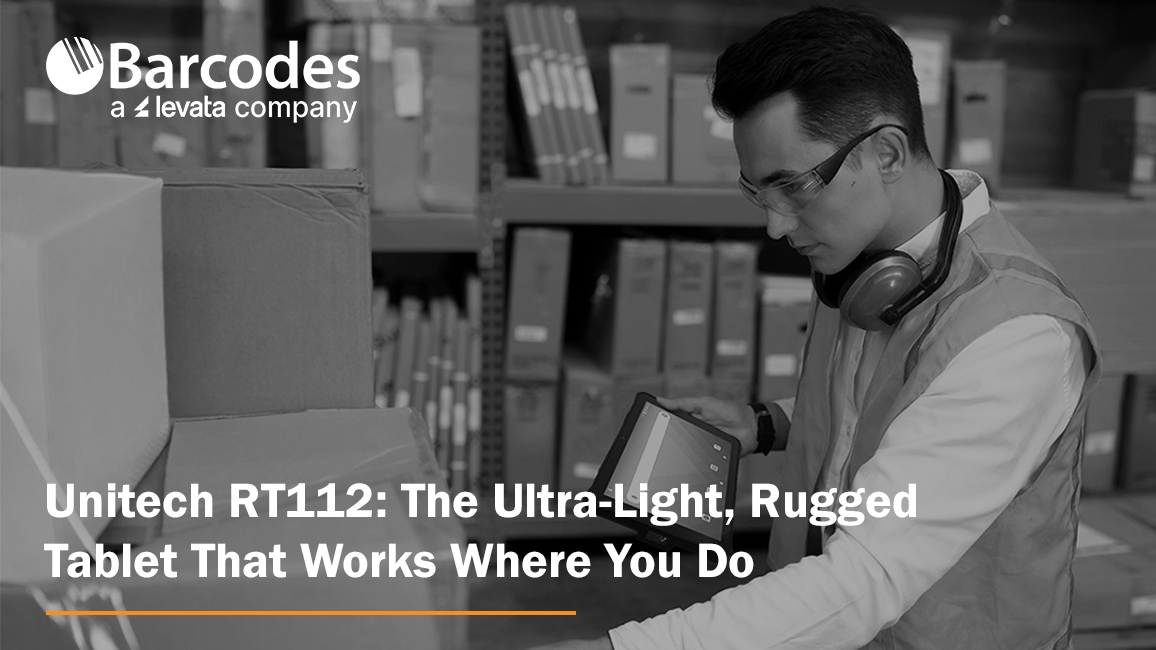
When it comes to powering critical workflows in retail, logistics, manufacturing, or field service, having a reliable, tough, and user-friendly tablet is a must. The Unitech RT112 Rugged Tablet series—available in both Android and soon-to-be-released Windows versions—delivers precisely that. With its slim design, industrial-grade durability, long-lasting battery, and enterprise-ready features, the RT112 keeps your teams connected, productive, and protected, wherever the job takes them.
Mobility Devices: Transforming Business Workflows
Mobility is more than a convenience — it’s a competitive edge. Equipping your workforce with rugged mobile devices like tablets ensures that critical information, scanning, and task management happen where the work actually gets done — on the warehouse floor, at the checkout counter, in the field, or on the road.
Organizations across industries are rapidly embracing mobility solutions to replace fixed workstations and paper-based processes. This shift unlocks real-time data access, faster decision-making, and improved accuracy, all of which boost productivity and reduce costly errors. Enter the Unitech RT112 Rugged Tablet. Combining best-in-class durability, an ultra-slim lightweight design, powerful performance, and reliable 5G and Wi-Fi 6E connectivity, the RT112 empowers teams to work smarter, move freely, and stay connected.
Ultra-Lightweight Yet Rugged for Demanding Environments
One of the standout features of the Unitech RT112 is its exceptional balance between portability and durability. Weighing just 1.5 pounds with a slim 0.5 inch profile, it’s easy for workers to carry all day without fatigue—whether moving inventory on a warehouse floor, managing checkouts at a busy retail counter, or conducting maintenance inspections outdoors.
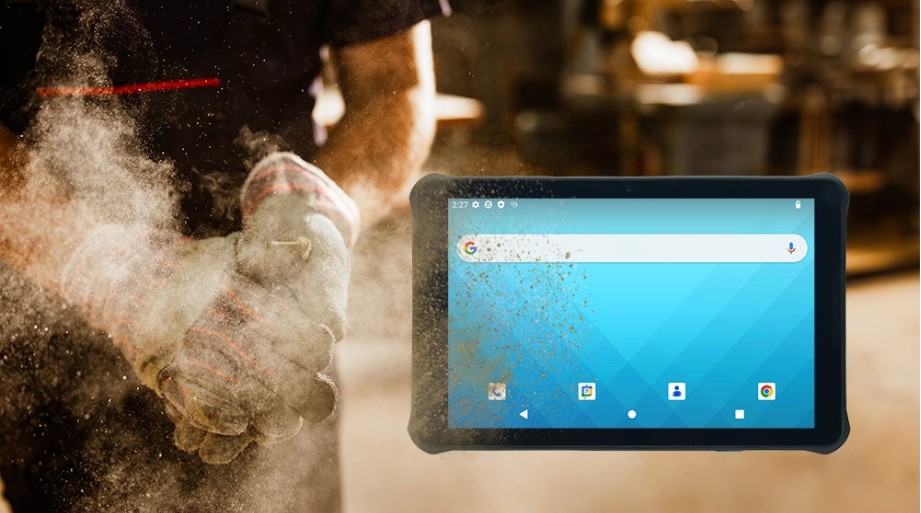
Despite its lightweight design, the RT112 doesn’t compromise on toughness. It’s IP67 certified, protecting it from dust and immersion in water, and can withstand drops of up to nearly 5 feet onto concrete. With compliance to the rigorous MIL-STD-810H standard, you can trust the RT112 to perform reliably even in harsh industrial conditions.
High Performance Meets Seamless Connectivity
Fast, reliable connectivity is critical for any modern operation, and the RT112 delivers. It supports 5G and Wi-Fi 6E, providing lightning-fast downloads, low latency, and robust connections, even in dense environments like warehouses and retail stores.
The Android 13 OS is Google Mobile Services (GMS) and Android Enterprise Recommended (AER) certified, ensuring smooth operation, high security, and simple remote management.
For businesses that rely on Windows-based software, the RT112 Windows variant (launching this September) will offer seamless integration with familiar enterprise tools like ERP, WMS, and POS systems, streamlining your IT infrastructure without compromise.
All-Day Battery Life and Worker-Friendly Features
Downtime is the enemy of productivity. That’s why the RT112 comes with a high-capacity 8800mAh removable battery, capable of powering the tablet for up to 24 hours on a single charge.
The 10.1-inch full HD display is protected by durable Gorilla® Glass and offers 450 nits brightness for clear visibility indoors and outdoors. It supports glove and wet-touch operation, making it easy for workers to use in cold storage, rainy weather, or while wearing protective gloves.
Built-In Barcode Scanning for Smarter Inventory and Asset Management
The RT112 features an integrated high-performance 2D barcode scanner that reliably reads even damaged or poorly lit barcodes. Whether tracking parts on a production line, scanning packages for delivery, or managing stock at retail checkouts, this capability reduces errors and speeds up workflows.
Versatile Accessories for Flexible Deployments
The RT112 can be adapted to multiple work scenarios thanks to its range of accessories, including a rotatable hand strap, shoulder strap, screen protector, vehicle and office cradles, and a capacitive stylus pen. This flexibility makes it the perfect companion for mobile workers, forklift drivers, or in-vehicle computing.
Engineered for Your Industry
- Retail & Hospitality: Mobile POS, membership management, and instant price checks enhance customer experience and speed up service.
- Logistics & Warehouse Management: Rugged tablet for inventory tracking, forklift-mounted order picking, and in-vehicle route updates.
- Manufacturing & Industrial Automation: Supports production monitoring, material scanning, and real-time quality control on the factory floor.
- Field Service & Outdoor Operations: Durable for pipeline inspections, infrastructure maintenance, and reliable data capture in any weather.
Discover more about the Unitech RT112 Android today. Contact Barcodes, Inc. today for personalized help with solutions to your needs.
Meeting RFID Labeling Mandates: 5 Critical Factors to Consider When Selecting a Printer
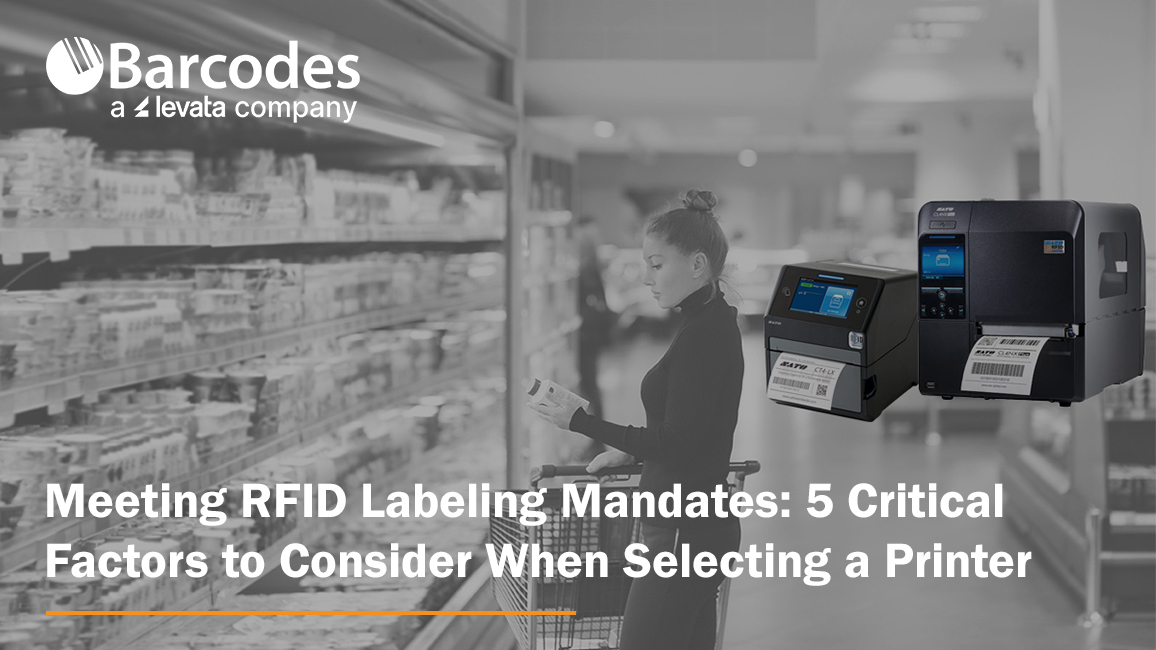
If you’ve recently received a mandate from a customer or partner requiring RFID tagging on product shipments, you’re not alone. Many major retailers are increasingly pushing their suppliers to adopt RFID labeling standards—often through the ARC program—to improve inventory accuracy and supply chain visibility. What is the ARC program? The ARC program, standardizes RFID tagging requirements across industries such as retail, aviation, and manufacturing. Failing to comply with ARC-certified tagging requirements can lead to costly chargebacks, rejected shipments, and a breakdown in supply chain trust—putting supplier relationships and business continuity at risk.
Using the right RFID tag is only part of the equation. Selecting the right RFID printer and software is just as critical. The printer not only applies data to the label—it encodes the RFID inlay with a digital identity.
You might ask, how do I select the right RFID printer? Here are five essential considerations to help you choose the right RFID printer for a successful RFID labeling protocol.
1. RFID Compatibility: UHF vs. HF
RFID tags typically fall into two categories: UHF (Ultra-High Frequency) and HF (High Frequency). Depending on the specifications or ARC certification requirements, your printer must support the correct standard.
- UHF: Offers longer read ranges (up to 10 feet), making it suitable for carton-level tagging, dock door scans, and high-speed conveyor systems.
- HF: Best for short-range reads (up to 3 feet), such as item-level tracking in retail or healthcare.
Pro Tip: Make sure the printer you select is compatible with the frequency range you need—and ideally, one that supports both HF and UHF if you serve multiple markets.
2. Flawless Encoding Capabilities
Encoding is not just about writing data to a tag—it’s about writing it accurately and reliably. Look for RFID printers that provide:
- On-screen menus for antenna position optimization
- The ability to store presets and settings, so you can print and encode multiple tag types from a single device
Pro Tip: Flawless encoding reduces the risk of errors that lead to unreadable tags or failed scans during transit or at receiving docks.
3. Speed and Label Precision
You may be required to print small-format RFID labels for individual items. The printer you select needs to be able to handle small label sizes with high accuracy—without slowing down your production line.
Pro Tip: Choose a model that balances speed with precision, ensuring it can keep up with your label volume while maintaining clarity in both print and encoded data.
4. Duty Cycle and Media Capacity
If you’re printing hundreds or thousands of RFID tags daily, a desktop model may not suffice. Industrial-grade printers with high-duty cycles are designed to handle continuous use and offer:
- Larger ribbon and label roll capacities
- Fewer supply changeovers
- Reduced downtime and greater efficiency
Pro Tip: A printer like the SATO CL4NX Plus RFID is specifically designed for heavy-duty environments with high-volume output.
5. Cloud-Based Printing & Data Management
Modern RFID printers should do more than print. Look for solutions that offer cloud-based software integration to:
- Allow multi-site printing from a centralized system
- Maintain a record of encoded EPCs
- Prevent duplication of serialized data
- Send real-time alerts for print errors or anomalies
Pro Tip: This centralized control is especially important for suppliers with distributed operations or those scaling RFID labeling across multiple facilities.
SATO’s RFID Printing Solutions: Purpose-Built for Performance and Compliance
SATO is a leader in RFID tag and label printing, offering advanced solutions that meet the growing demands of supply chain traceability, compliance, and item-level visibility. Let’s review two popular SATO RFID printers engineered to ensure reliable encoding, high-speed performance, and compatibility with industry standards.
SATO CL4NX Plus RFID – Industrial Strength, Maximum Flexibility
Designed for high-volume, high-duty cycle environments, the CL4NX Plus RFID printer delivers robust performance for demanding operations:
- Supports HF and NFC Standards: ISO 15693 compatibility for short-range applications
- UHF Encoding: EPC Class 1, 0+, and Gen 2 support for long-range tracking
- Dual Antenna Design: Enables bottom and top encoding for enhanced tag compatibility
- Printhead-Antenna Integration: Features a second antenna for short-pitch and top-side encoding, essential for printing on metal tags—ideal for asset tracking in industrial, IT, and healthcare applications where traditional tags fall short
SATO CT4-LX RFID – Compact Powerhouse for Desktop Use
For businesses needing desktop-size versatility without sacrificing RFID capability, the CT4-LX RFID printer is a compact yet powerful solution:
- HF and UHF Support: Complies with ISO/IEC 15693, ISO/IEC 14443 (HF), and ISO/IEC 18000-6C (UHF Gen 2) standards
- Dual Antenna System: Combines a front fixed-position antenna with a standard encoding antenna to support diverse media types and encoding positions
- User-Friendly Interface: Ideal for decentralized or smaller-scale operations needing consistent RFID tag output without industrial footprint
Whether you’re printing thousands of pallet labels a day or managing RFID tagging at the item level, SATO provides scalable, standards-compliant solutions that meet today’s RFID labeling requirements and future-proof your supply chain operations.
Final Thoughts
Compliance with an RFID labeling mandate doesn’t have to be overwhelming. By selecting the right RFID printer—one that’s compatible with your tags, delivers precise and fast encoding, and integrates with cloud-based management software—you can streamline compliance and unlock additional value in your supply chain.
Contact Barcodes Inc. today to learn more about robust RFID printers like the SATO CL4NX Plus RFID and CT4-LX RFID that will help you build an efficient RFID tagging program.
Barcodes Inc. Parent Company, Levata, Becomes First Honeywell Global Partner
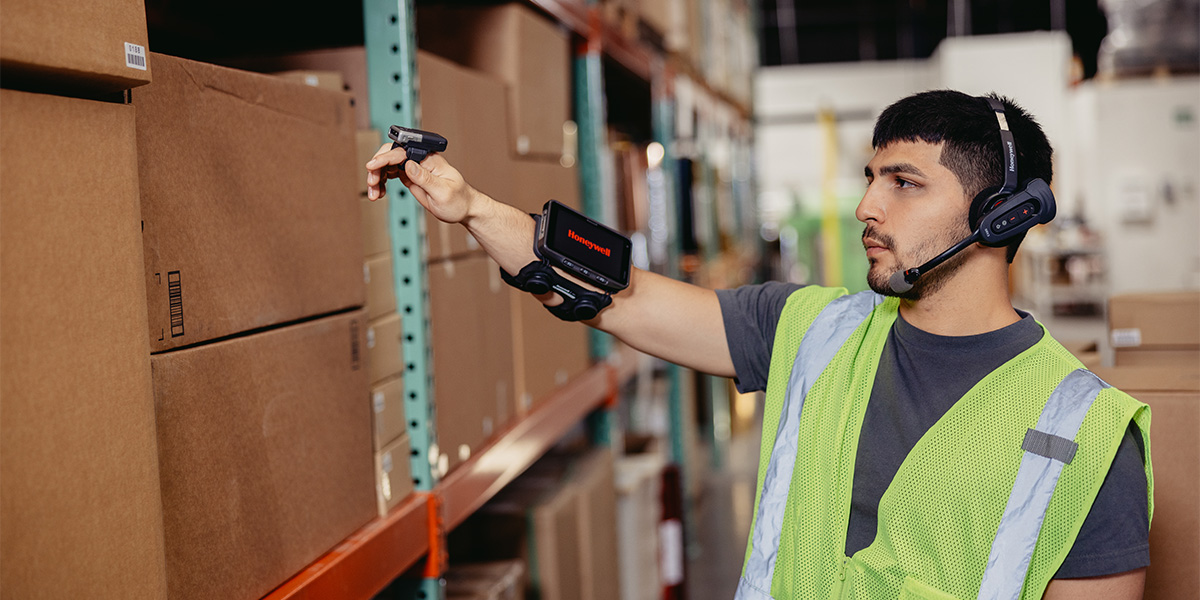
Levata, parent company to Barcodes, Inc., is proud to announce that we have been named Honeywell’s first and only Global Tier Partner—a prestigious designation that marks a major step forward in our mission to support customers with consistency, reliability, and excellence across the globe.
This elevated partner status positions Levata to deliver an even more seamless Honeywell experience for our customers across North America and EMEA (Europe, the Middle East, and Africa). Whether you’re a multinational organization with locations in multiple countries or a regional operation with global aspirations, this partnership ensures you can count on Levata for trusted expertise and streamlined access to Honeywell solutions—wherever your business operates.
What This Means for Levata Customers
As a Global Tier Partner, Levata is uniquely equipped to provide enhanced value and support across borders:
- Consistent Service Across Regions: Our new status aligns Levata with the highest level of Honeywell benefits, enabling more consistent service delivery for global customers.
- Global Visibility and Collaboration: We now have visibility to approved global opportunities through Honeywell’s partner portal, allowing us to support multi-region projects with improved speed, coordination, and transparency.
- Enhanced Brand Trust: As Honeywell’s sole Global Tier Partner, Levata will proudly carry the exclusive partner branding that reflects our shared commitment to innovation, integrity, and global reach.
- Expansive Product Portfolio: Levata’s entrance into the Honeywell Global Partnership unlocks access to Honeywell’s extensive product portfolio across multiple regions, enabling expanded solutions for customers worldwide.
Expanding Our Global Capabilities
Our deepened partnership with Honeywell strengthens our ability to offer tailored solutions that scale with your needs—whether you’re optimizing a warehouse in Germany, deploying mobile devices in the UAE, or upgrading your access control infrastructure in Canada.
At Levata, we believe that technology partnerships should simplify operations, not complicate them. Our new global alignment with Honeywell allows us to deliver the same reliable service, pricing consistency, and technical excellence—no matter where your business takes you.
About Levata
Levata is a trusted end-to-end technology solutions provider helping businesses enhance operational efficiency, secure their environments, and power performance with purpose-built hardware, software, and services. Now, with Honeywell Global Tier Partner status, we’re taking our ability to support customers worldwide to the next level.
Keep Business Rolling with Epson® OmniLink® TM-L100 Liner-Free Thermal Label Printers
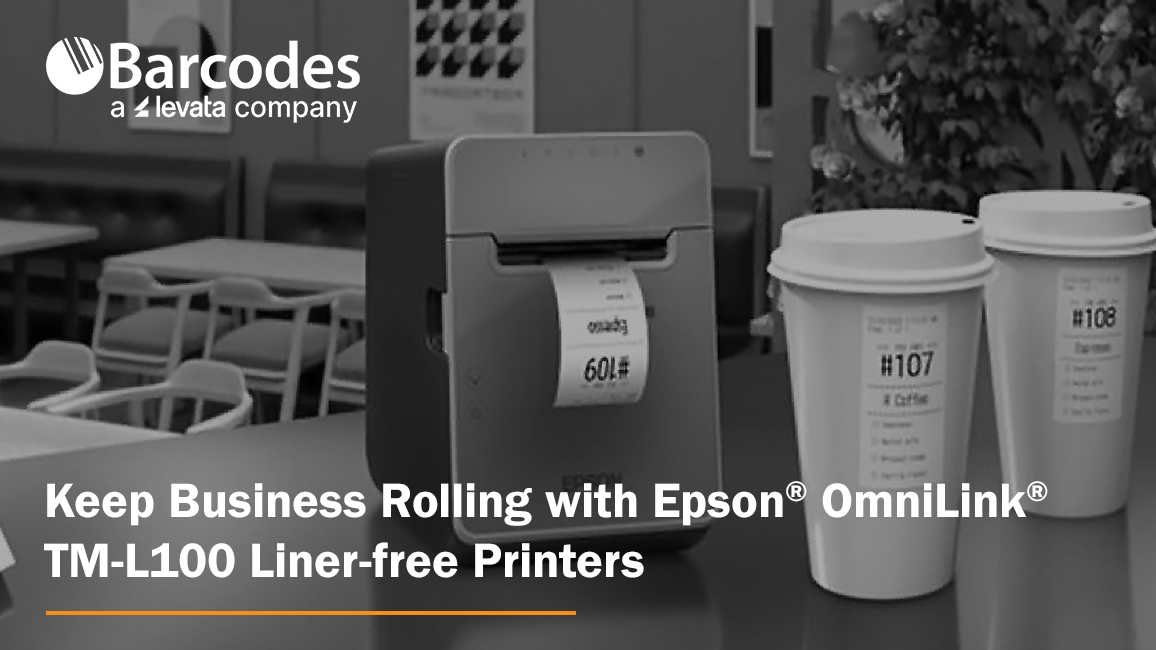
When it comes to label printing in high-paced environments, thermal label printers are the backbone of operational speed and accuracy. Whether you’re printing item labels for quick-serve restaurant orders, packaging labels for curbside pickup, or shipping labels in a retail warehouse, thermal printers streamline the process without the need for ink or toner. A versatile solution with extensive liner-free media support and flexible connectivity options is the Epson® OmniLink® TM-L100 Liner-Free Compatible Thermal Label Printer. With a long printhead and auto cutter life, plus a 1-year limited warranty, it offers reliability you can count on.
Why Thermal Label Printers?
Thermal label printers are an ideal choice for businesses that need fast, clean, and reliable printing in high-demand environments. Instead of using ink or ribbons, thermal printers use heat-sensitive media to produce labels, reducing maintenance and minimizing consumables.
Epson OmniLink TM-L100: Durability Meets Flexibility
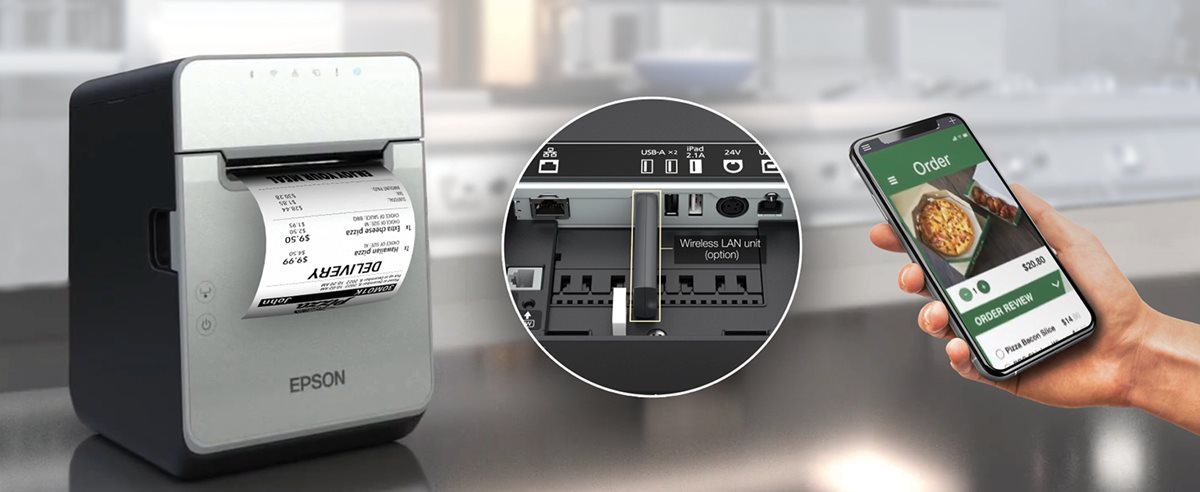
The Epson OmniLink TM-L100 Liner-Free Compatible Thermal Label Printer is one of the most adaptable liner-free thermal label printers yet, offering advanced connectivity, paper-saving features, and high-adhesive media support that makes it suitable for nearly any business environment. Engineered for use with a wide range of devices in virtually any industry—such as hospitality, retail and more—the Epson OmniLink TM-L100 Liner-free Printer can also be simultaneously shared with legacy POS terminals, tablet and mobile devices with multiple interfaces with the ability to print from cloud servers.
Key Features of the OmniLink TM-L100 Liner-free Printer
1. Extensive Liner-Free Media Support
Not all label printers handle liner-free labels well, especially those with high adhesive strength. The OmniLink TM-L100 Liner-free Printer is engineered for this exact purpose. It handles Epson-tested media that performs flawlessly in environments where labels are frequently applied to items like cups, containers, or bags.
2. Flexible Connectivity for Virtually Any Setup
This printer comes with built-in USB and Ethernet plus options for Serial port, wireless and Bluetooth. USB Network Tethering provides network connectivity from the printer to a tablet.
3. Smart Online Ordering Integration
Through Server Direct Print, the TM-L100 can retrieve print jobs directly from a web server—no POS software required. This is perfect for online ordering environments in QSRs, retail stores, and remote kiosks.
4. Paper-Saving Technology
Built-in white space reduction and character height adjustments can cut media usage by up to 47%, helping businesses lower costs and reduce environmental impact.
5. Reliability You Can Count On
The TM-L100 is built for continuous operation with a long-lasting auto cutter and printhead life. A label-taken sensor prevents overlapping labels by ensuring one label is printed at a time—even when multiple jobs are queued.
Use Cases Where the OmniLInk TM-L100 Liner-free Printer Excels
- Hospitality: Cup labeling, food item tagging, and order tracking in quick-service restaurants (QSRs). Benefit: improve order accuracy and speed even at the busiest times.
- Retail: Price tags, shelf labels, and shipping labels for eCommerce and BOPIS (Buy Online, Pick Up In Store). Benefit: enable seamless in-store pickup and delivery with fast, high-adhesive item labeling.
- Healthcare: Patient ID bands, prescription labels, and specimen tracking. Benefit: Create clean, reliable labels for patient tracking and medication management.
- Logistics and Delivery: Route labeling, package tracking, and proof-of-delivery labeling. Benefit: fast, reliable label printing on the go, helping drivers stay organized and ensuring packages are accurately tracked from origin to destination.
Final Thoughts
The Epson OmniLink TM-L100 Liner-free Printer is a future-ready label printer built for today’s demanding, mobile-first retail and hospitality environments. With its blend of durability, connectivity, and media efficiency, it’s one of the smartest investments you can make to improve labeling workflows. To start enhancing your operations with the TM-L100, contact Barcodes, Inc. today.
Critical Components of a Total Warehouse Solution

In today’s fast-moving, high-demand supply chain world, warehouses are evolving into complex, data-driven ecosystems. The traditional patchwork of disconnected systems and vendors just doesn’t cut it anymore. The most effective way forward? A Total Warehouse Solution approach.
What Is a Total Warehouse Solution?
A Total Warehouse Solution integrates all key technologies and services under a single, strategic framework. Instead of managing multiple vendors for wireless design, barcode scanners, RFID systems, access control, and device support, you work with one provider that delivers everything you need to modernize and scale your facility.
Why It Matters
The pressure on warehouses has never been greater. From next-day delivery expectations to labor shortages and tighter margins, operations leaders need real-time visibility, automation, and device reliability to stay competitive.
A Total Warehouse Solution simplifies operations and eliminates the gaps caused by fragmented systems. It’s how you streamline workflows, connect your infrastructure, and scale performance.
What should I look for in a Total Solution?
Here’s a quick breakdown of the technologies and services typically included:
Infrastructure & Wireless Networking
- Wi-Fi and private cellular coverage throughout the warehouse
- Low-voltage cabling, routers, switches, and UPS systems
- Rack labeling, digital signage, and smart lockers for device storage
Material Handling
- Conveyor-mounted machine vision systems
- Print-and-apply labelers and scan tunnels
- Material handling AMRs
Mobility & Data Capture Hardware
- Rugged mobile computers and tablets
- Handheld barcode scanners and wearable devices
- Vehicle-mounted computers for forklifts
- Powered carts for mobile workstations
- RFID handhelds, fixed readers, and dock door portals
- Industrial and mobile label printers
- Preprinted and color-coded warehouse labels
- Onsite signage and labeling installation
- ID card printers
- Self-service kiosks for visitor/employee check-in
- Smart lockers and device charging cabinets
- Security cameras and badge-based access systems
Support & Lifecycle Management
- Project management and installation
- Device staging, kitting, and software configuration
- Ongoing support, spare pool programs, and RMA services
The Customer Impact
A well-executed total solution delivers more than just upgraded tech—it transforms warehouse performance. You can:
- Reduce manual errors and improve inventory accuracy
- Optimize labor with wearable and voice-pick technologies
- Speed up receiving, picking, packing, and returns
- Improve asset tracking and theft prevention
- Scale seamlessly as business needs grow
Solutions like these allow you to keep pace with customer expectations while maintaining efficiency and profitability.
Final Thoughts
A Total Warehouse Solution isn’t just about checking boxes on a technology list—it’s about creating an integrated, intelligent operation that’s ready for what’s next. Whether you’re building a new facility, expanding your footprint, or modernizing existing infrastructure, contact Barcodes Inc. to learn how we can help you design, deploy, and support a complete system that works as hard as your team does.
Reimagining Retail: CheckMate Mobile POS Stations Drive Sales and Customer Service
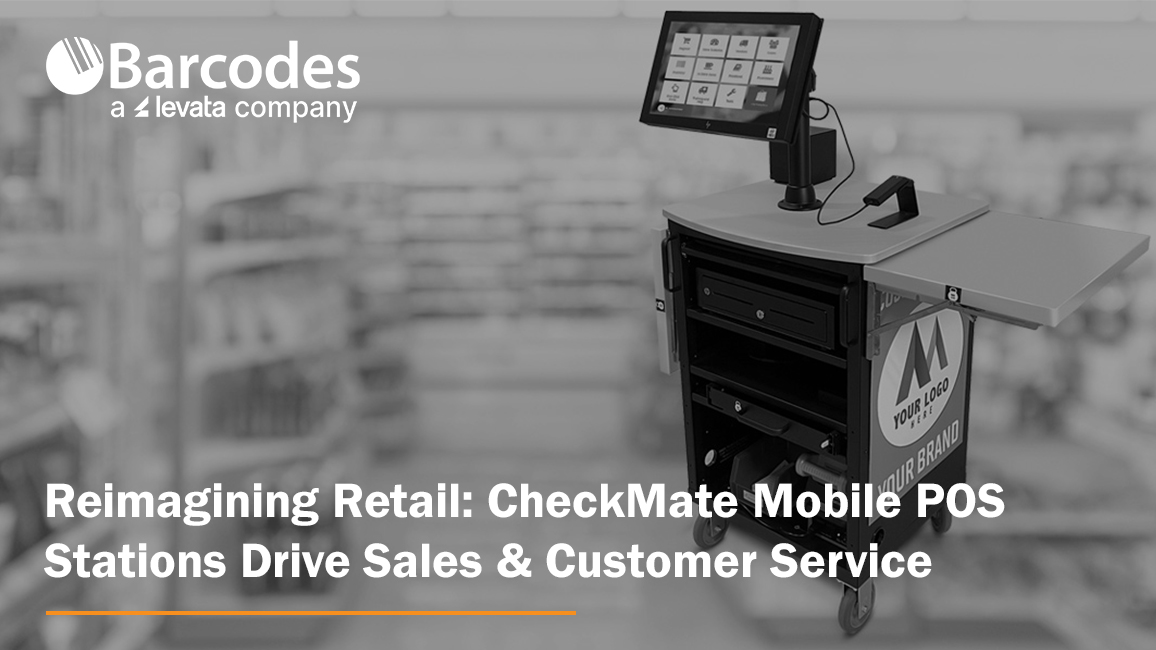
With store space at a premium and customer expectation higher than ever, mobile point-of-sale stations offer a smart, cost-effective way to optimize retail operations and enhance the in-store experience.
Mobile POS carts, such as the CheckMate 1000 Mobile POS Station from Newcastle Systems, give retailers the freedom to meet customers where they are—literally. These mobile stations bring full POS capabilities onto the shop floor, empowering retailers to rethink how, when, and where they process transactions. POS stations by location, count, seasonality, and more to maximize checkout speed and convenience, while eliminating wasted space and lost sales.
Why Mobile POS Matters for Retail
Speed Up Checkout, Reduce Walkaways. Nothing kills a sale faster than a long line. During peak shopping periods, mobile POS carts act as rapid-response checkout stations. Whether positioned near high-traffic areas or deployed as line-busting tools, they help reduce waiting times, prevent abandoned purchases, and improve overall service speed.
Scale Without Construction. Traditional fixed POS terminals require significant investment—construction, permits, electrical work, and downtime. Mobile POS carts like the CheckMate 1000, by contrast, can be deployed instantly. This makes them ideal for seasonal surges or pop-up retail without the overhead of a permanent installation. No need to train your team if you’re using the same hardware as your current fixed registers. Less complexity, less stress—for everyone.
Use Your Space Smarter. Every square foot of retail floor space is valuable. Rather than expanding fixed registers that lock you into one layout, mobile POS stations can be stored when not in use—freeing up room for merchandise or displays. During the holidays or clearance events, they can be quickly rolled out to accommodate increased demand.
Bring Checkout to the Customer. Mobile POS carts can transform underused areas—like fitting rooms, garden centers, or outdoor displays—into instant checkout points. This makes it easier for customers to complete their purchases right where decisions are made, especially for large or awkward items.
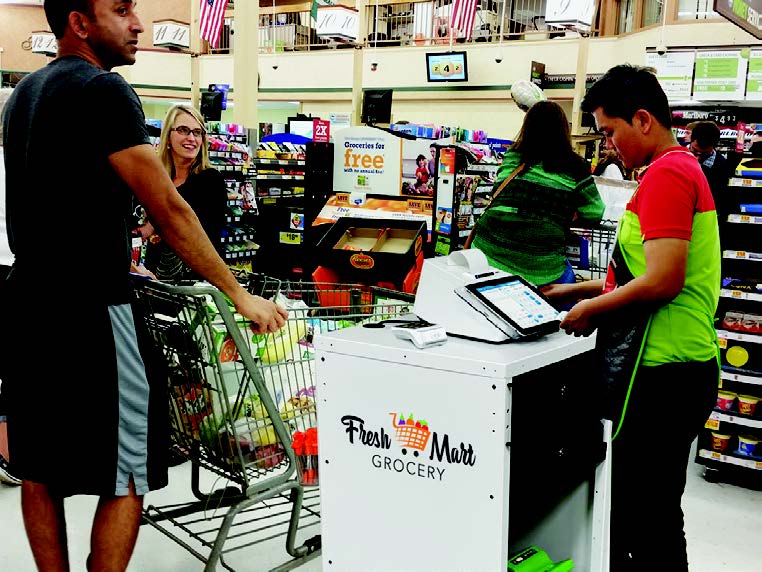
The CheckMate 1000: A Mobile POS Station Build for Retail
The CheckMate 1000 is the epic sidekick retail has needed! Check out how the CheckMate 1000 is in a class of its own.
- Customizable to fit your brand. Plenty of real estate to add company branding and make it yours.
- Never-quit swappable power: The most advanced systems to support printers, tablets, scanners, and cash drawers—cash or cashless
- Purpose-built and designed to last. Compact, lightweight, sustainable, and loaded with features like drawers, winged shelves, and storage galore!
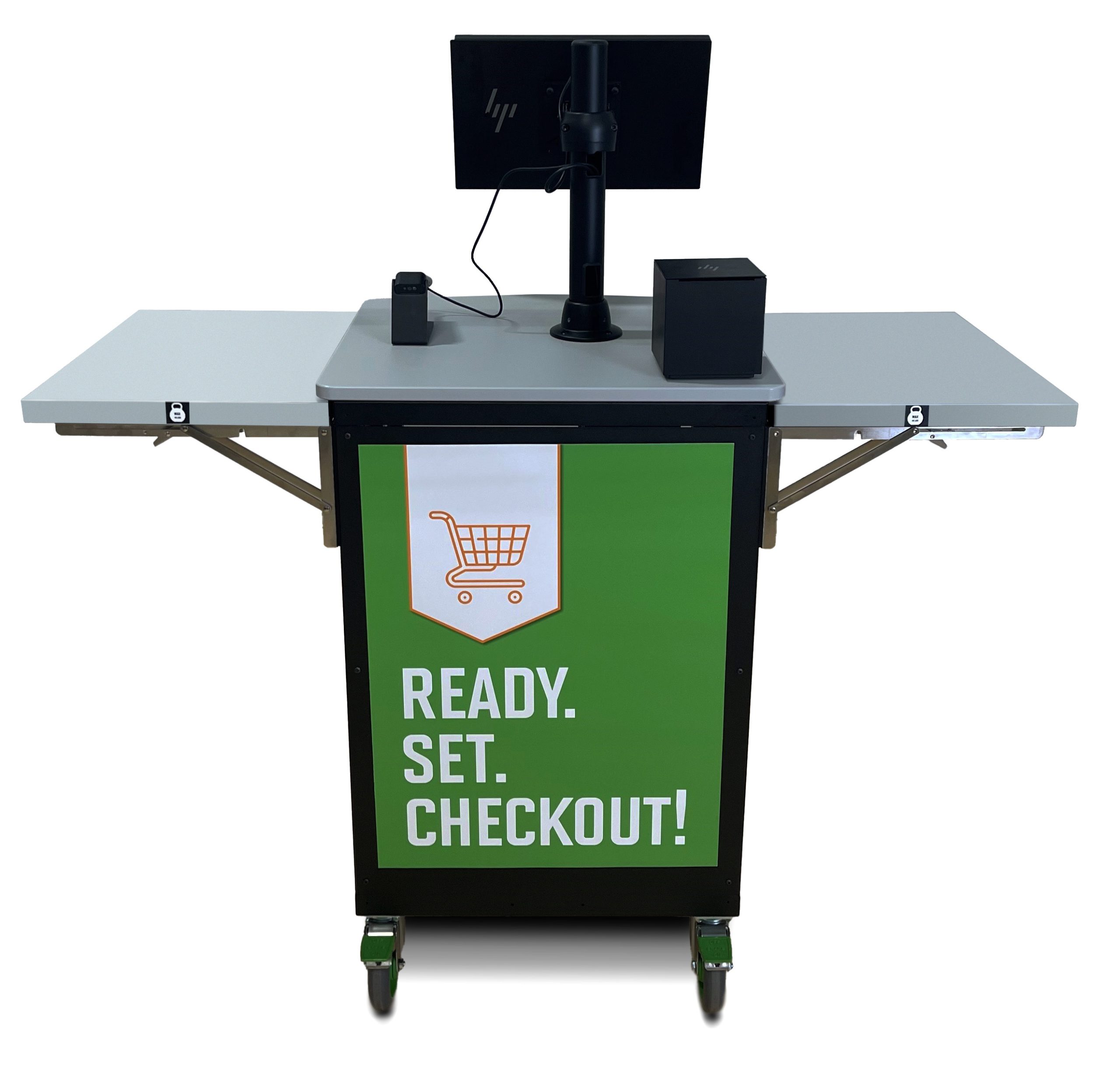
The CheckMake 1000 POS Mobile Station offers a true all-in-one retail utility. Beyond checkout sales, use your POS mobile station to complete:
- Inventory counts and cycle checks
- Returns and exchanges
- Loyalty signups and promotions
- Mobile markdowns and restocking
This versatility allows retailers to do more with less—keeping associates productive, operations agile, and customers satisfied.
Final Thought
Mobile POS solutions like the CheckMate 1000 are helping retailers unlock new ways to serve customers and streamline operations—without the cost, complexity, or inflexibility of traditional registers. Whether you’re aiming to reduce lost sales, adapt to peak periods, or simply offer a better in-store experience, ask Barcodes Inc. how we can help you get mobile POS carts rolling in your retail environment.
Why Industrial Barcode Label Printers Are Essential
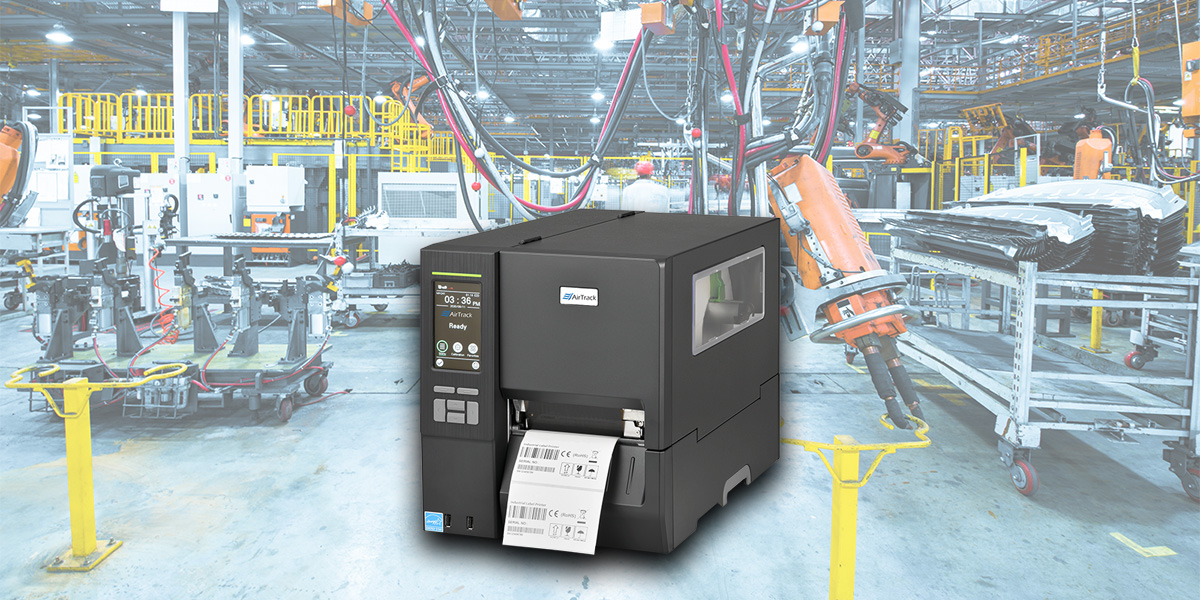
In today’s fast-paced, data-driven world, efficient labeling is critical for organizations across numerous industries. Industrial barcode label printers provide the performance, durability, and reliability that high-demand environments require. Whether you’re managing a sprawling warehouse, overseeing a bustling production floor, or coordinating complex logistics operations, an industrial-grade printer can keep your business moving.
Among the trusted brands in this space, AirTrack printers—available on Barcodesinc.com—are earning a reputation for delivering performance and value. Let’s explore the environments that benefit from industrial barcode label printers and why AirTrack is a smart choice.
Who Needs Industrial Barcode Label Printers?
Industrial barcode printers are built for high-volume, high-speed label printing in demanding conditions. Here’s where they shine:
1. Warehousing and Distribution
In warehousing, accurate labeling is vital for inventory control, picking efficiency, and shipping accuracy. Industrial barcode printers help:
- Print durable shipping and inventory labels.
- Handle large label batches with speed and precision.
- Integrate with warehouse management systems (WMS).
AirTrack printers, such as the AirTrack IP-1, are rugged enough for 24/7 warehouse operations. They feature fast print speeds and support for a wide range of media types—perfect for dynamic fulfillment needs.
2. Manufacturing and Production
From parts tracking to quality assurance, manufacturing environments rely on industrial labels to streamline workflows. Use cases include:
- Work-in-progress (WIP) labeling.
- Asset tracking and part identification.
- Compliance labeling with durable, heat- or chemical-resistant labels.
AirTrack models like the AirTrack IP-2 offer industrial-strength performance with the flexibility to print labels of various sizes, making them ideal for automotive, electronics, or food manufacturing plants.
3. Transportation and Logistics
Fast-moving supply chains demand reliable labeling to avoid costly delays. In logistics, industrial printers are used for:
- Shipping labels with real-time tracking data.
- Pallet labels for freight handling.
- Compliance labels (e.g., GS1, UCC/EAN).
AirTrack printers support the barcoding standards required for transportation labeling and offer connectivity options for seamless integration into shipping platforms.
4. Healthcare and Pharmaceuticals
In healthcare, label integrity can be a matter of patient safety. Industrial printers are used to:
- Print prescription and specimen labels.
- Ensure legibility and adhesive reliability in refrigerated conditions.
- Comply with industry regulations like FDA and HIPAA.
AirTrack offers high-resolution printing and long-term durability—ideal for pharmacy and lab environments where precision is critical.
5. Retail and Inventory Management
Retail businesses use barcode labels for shelf tags, product labeling, and backroom inventory. With AirTrack, retailers can:
- Print high-quality, scannable labels.
- Keep up with seasonal inventory changes.
- Easily integrate with existing POS and inventory systems.
Why Choose AirTrack from Barcodes, Inc.?
AirTrack printers are a smart investment for businesses that need industrial-strength label printing without the premium price tag. Benefits include:
- Rugged Reliability: Built for tough environments with metal frames and long-duty cycles.
- High-Speed Printing: Fast throughput helps avoid bottlenecks in production or fulfillment.
- Flexible Media Support: Handles various label sizes, materials, and types (thermal transfer and direct thermal).
- Easy Integration: Supports multiple connectivity options (USB, serial, Ethernet) for quick deployment into your existing infrastructure.
- Affordable: AirTrack offers a cost-effective alternative to other industrial printer brands without sacrificing quality.
When you buy from Barcodes, Inc., you also benefit from:
- Expert customer support.
- Competitive pricing.
- Fast shipping and easy reordering options.
Final Thoughts
From the warehouse floor to the retail backroom, industrial barcode printers are foundational tools for keeping operations running smoothly. If you’re looking for a durable, high-performing printer that offers excellent value, AirTrack industrial printers from Barcodes, Inc. is a name worth considering.
Invest in efficiency, accuracy, and durability—because your labels deserve industrial-strength reliability. Contact us today to learn more!
How Shorr Packaging Transformed Delivery Operations with Digital Routing and Proof of Delivery

The Challenge: Inefficiency and Lack of Visibility
Shorr Packaging, a leading distributor of packaging solutions, faced significant logistical hurdles in managing its deliveries across the U.S. With thousands of shipments departing from seven facilities, the company struggled with:
- Manual delivery routing – Every truck’s route was planned by hand, consuming valuable time.
- No real-time visibility – Once trucks were on the road, there was no way to track their status or progress.
- Lack of proof of delivery – Customer service had no quick way to verify completed deliveries, leading to inefficiencies.
Each facility managed logistics differently—some relied on spreadsheets, others on paper, and some just “figured it out” daily. On average, two hours per day were wasted manually planning routes.
The Solution: Going Digital
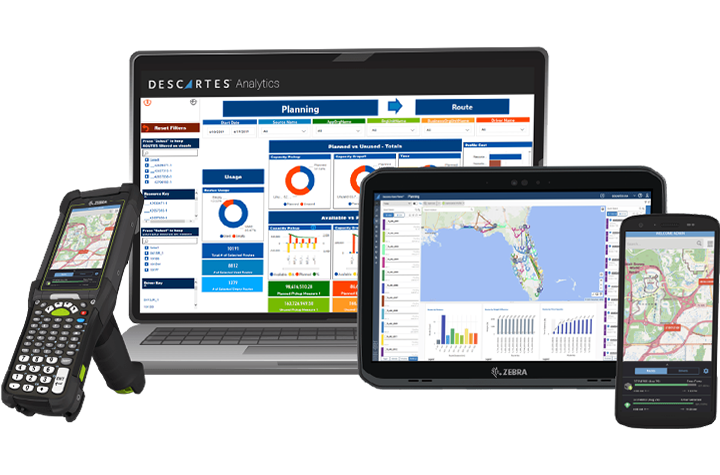
Recognizing the need for an overhaul, Shorr’s logistics leaders partnered with Levata, parent company of Barcodes, Inc., and Descartes to implement a fully digital routing and delivery management solution.
- Automated Routing – Descartes’ advanced software replaced manual planning, optimizing routes in real time.
- Full Visibility – Every truck, driver, and delivery became trackable in a single solution.
- Proof of Delivery – Zebra mobile devices allowed drivers to capture photos, signatures, and real-time updates.
To ensure seamless execution, Levata also helped integrate a smart cellular management solution. This ensured Shorr’s delivery team stayed connected across different locations without service interruptions.
The Results: A Game Changer for Efficiency
The impact of digital transformation was immediate and powerful:
- 87% reduction in routing time – What used to take two hours per day now takes just 10-15 minutes.
- Fewer routes, fewer miles – Deliveries that previously required 12 drivers now take only six or seven.
- Faster customer service – Real-time proof of delivery eliminated back-and-forth calls.
As Nick Matuck, Senior Director of Global Logistics, put it:
“We went from zero to 100% visibility overnight. Productivity increased, costs went down, and our teams now have real-time insight into our entire delivery network.”
Seamless Adoption & Driver-Friendly Tech
While digital transitions can sometimes be challenging, Shorr’s rollout was smooth. The Zebra handheld devices made the system easy for drivers to use, and the step-by-step training ensured everyone adapted quickly.
“I’ve only received positive feedback,” said Ashley Astley, Corporate Logistics Manager. “Drivers love how simple it is, and customer service is thrilled with the proof of delivery feature.”
Final Thoughts: Digital Tools, Real-World Impact
By adopting digital routing and proof of delivery technology, Shorr significantly improved its logistics operations—reducing costs, increasing efficiency, and enhancing the customer experience.
For businesses aiming to optimize delivery management, Shorr’s success story highlights how the right technology can drive meaningful operational improvements.
Contact us to learn more.
Hybrid Automation: The Human-Centered Revolution Reshaping Modern Warehouses
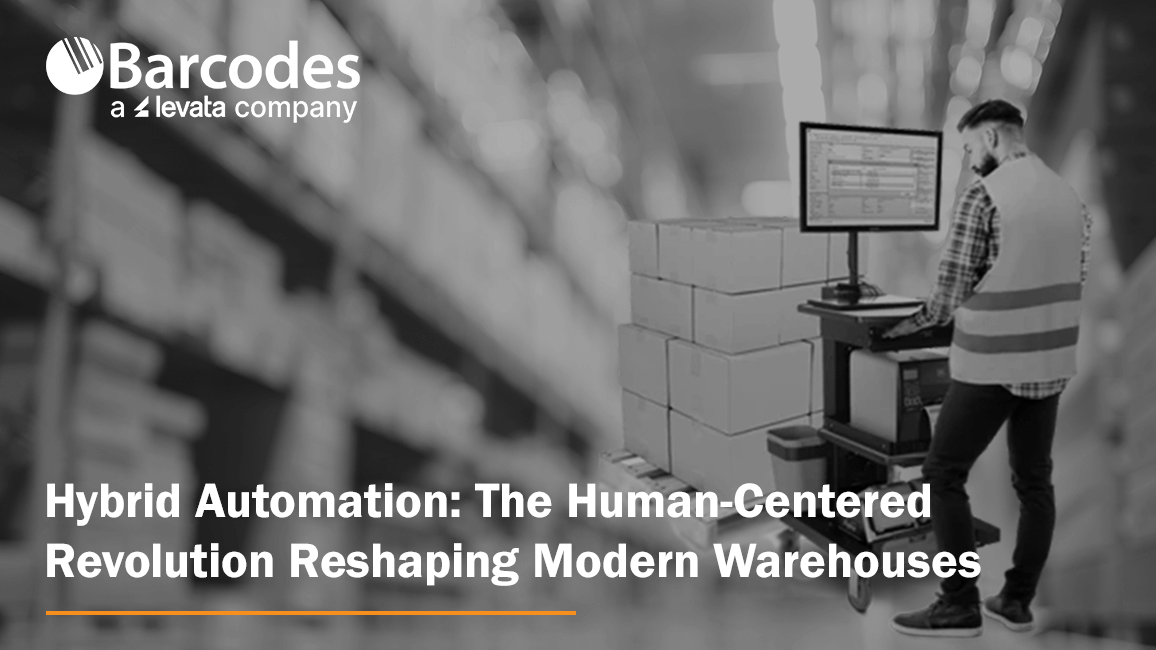
In the past decade, automation has transformed the way warehouses operate. From conveyor systems to robotic picking arms, automation technologies have brought new levels of efficiency to supply chains. But as impressive as fully automated systems can be, the most successful warehouses today aren’t eliminating the human worker—they’re empowering them.
Welcome to the era of hybrid automation—where smart technology and skilled people work side by side to boost productivity, agility, and morale from day one. Read on to learn how technology leaders like Newcastle Systems enhance warehouse operations by engineering solutions that exponentiate real worker potential.
What Is Hybrid Automation?
Hybrid automation combines automation tools and systems with human labor, allowing each to do what they do best. The technology side excels at speed and accuracy, while people bring flexibility, critical thinking, and problem-solving skills that technology can’t replicate.
This model isn’t just a compromise between man and machine—it’s a powerful synergy. According to Newcastle Systems’ 2023 Industry Report on Automation in Warehousing, “Warehouses that leverage automation to support—not replace—their workforce see higher productivity gains and improved employee satisfaction.”
Why It’s Not About Replacing People
While it’s tempting to chase the dream of a fully automated, human-free warehouse, the reality is more nuanced. Technology can’t replicate the adaptability, judgment, and decision-making abilities of a well-trained team. In fact, 81% of warehouse operators surveyed by Newcastle Systems agreed that keeping the human element in operations is crucial to maintaining flexibility and customer satisfaction.
Rather than viewing automation as a replacement for workers, leading operations are now using it to enhance human potential.
Mobile Powered Workstations: A Smarter Path to Productivity
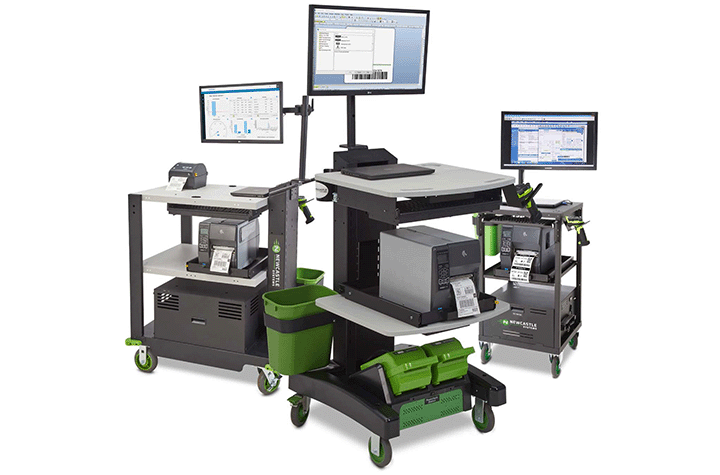
A perfect example of hybrid automation in action is the use of Newcastle Systems’ mobile powered workstations. These units allow workers to bring power and computing directly to the point of task, eliminating the need to walk back and forth to a fixed workstation.
The results? Doubling productivity—without doubling the cost.
Unlike complex robotic systems that require heavy infrastructure, lengthy implementation, and big budgets, mobile powered carts are affordable, flexible, and scalable. They instantly boost efficiency by reducing wasted movement and downtime, and they support employees instead of replacing them.
As the Newcastle report highlights, “Technologies that enhance workers’ effectiveness are more readily adopted and create less friction within the workforce.”
Empowered Workers Are Happier Workers
Hybrid automation doesn’t just improve operations—it also improves job satisfaction. By removing tedious tasks and minimizing unnecessary travel, tools like mobile workstations help workers feel more in control and more valued.
The Newcastle study found that employees using powered carts reported higher job confidence and satisfaction. Workers using the Newcastle Mobile Workstations felt empowered with tools that make their jobs easier—not harder—making them more likely to stay engaged and less likely to leave their current employer.
The Bottom Line: Humans + Automation = Better Warehouses
The future of warehousing isn’t one where robots take over—it’s one where people are equipped to do their best work with the help of smart automation.
Mobile powered workstations are a standout example of hybrid automation done right: low cost, easy to implement, and impactful from day one. They deliver the best of both worlds by boosting productivity while keeping the human touch that warehouses still need to thrive.
If you’re looking for a way to modernize your operations without sacrificing flexibility or your workforce’s well-being, hybrid automation is the answer—and Newcastle Systems is leading the way.
Explore the full report: How Automation Is Transforming the Modern Warehouse – Newcastle Systems Industry Report
Contact Barcodes Inc. today to learn more about mobile workstations and other warehouse automation solutions for your operations.