


The Human Element of Warehouse Automation: Why Innovation Must Start with Workers
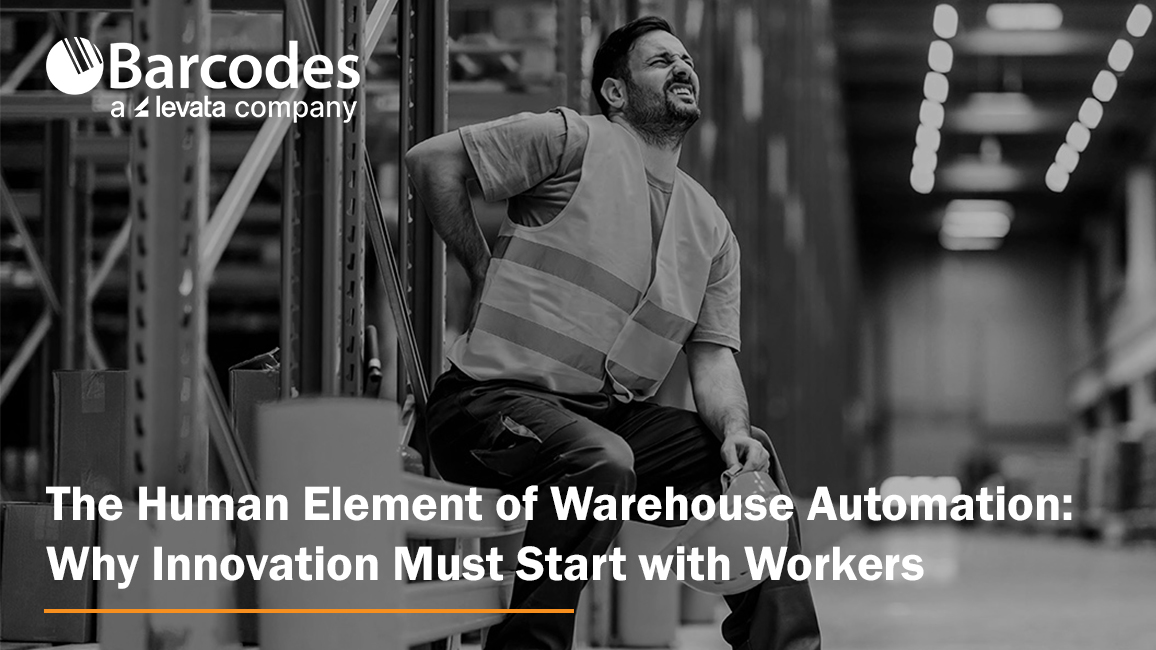
The warehousing industry continues to evolve at a rapid pace, driven by rising customer expectations, supply chain complexity, and the steady march toward automation. By 2027, more than a quarter of warehouses are expected to be automated, signaling a major shift in how goods are stored, picked, and shipped. But while warehouse automation promises efficiency gains, it also introduces new challenges, especially when it comes to workforce stability, safety, and satisfaction.
One of the biggest risks companies face today isn’t a lack of technology, but overlooking the people who make that technology work.
Recent industry data highlights a growing disconnect. While automation is accelerating, workforce turnover in manufacturing and warehousing remains high, hovering around 40%. At the same time, millions of jobs are projected to be impacted by automation. This creates a tension that many organizations are still learning to navigate. How do you embrace innovation without alienating the workforce?
The answer lies in re-centering operations around the human element.
Safety and Ergonomics as Business Imperatives
Warehouse safety has always been critical, but it is now taking on greater strategic importance. Workplace injuries cost employers billions each year, many stemming from repetitive motion, poor ergonomics, and overexertion. These are not isolated incidents. They are systemic issues tied to how work is structured on the floor.
Simple but intentional improvements can make a measurable difference. Ongoing safety training, clear signage, and proactive hazard detection help reduce accidents before they occur. Scheduled micro breaks and better workflow design can prevent fatigue-related errors and injuries.
But perhaps the most impactful changes come from ergonomic investments.
Ergonomic tools are designed to work with employees, not against them. Whether it is reducing unnecessary bending, minimizing heavy lifting, or improving posture, these solutions directly address the physical demands of warehouse work. Companies that prioritize ergonomics often see strong returns, not just in reduced injury costs, but in higher productivity and employee retention.
Small Changes, Big Impact
It is easy to focus on large scale automation projects, but many operational inefficiencies come from smaller, everyday tasks.
Take walking time, for example. Warehouse employees can spend miles each day moving between workstations, scanners, and inventory locations. Over time, this contributes to fatigue, lost productivity, and increased risk of injury.
Similarly, repetitive processes like picking and scanning can introduce inefficiencies and errors. Even a few seconds lost per task can add up to significant time over the course of a shift. Technologies like voice picking and wearable scanners have proven effective in reducing errors and improving speed by freeing up workers’ hands and attention.
Anti fatigue flooring is another example of a relatively simple upgrade with meaningful benefits. Studies show that proper matting can improve circulation and reduce strain on joints, helping workers stay comfortable and productive throughout long shifts.
Individually, these improvements may seem incremental. Collectively, they reshape the daily experience of warehouse employees.
Rethinking Automation: Augment Workers, Don’t Replace Them
As automation becomes more prevalent, forward-thinking organizations are shifting their approach. Instead of viewing technology as a replacement for labor, they are using it to enhance human capability.
This is where the concept of the human element of automation becomes critical.
Rather than removing workers from the equation, the goal is to empower them. This means eliminating inefficiencies, reducing physical strain, and enabling them to focus on higher value tasks. When done right, this approach improves operational performance and strengthens employee engagement and satisfaction.
In a labor market where attracting and retaining talent is increasingly difficult, that becomes a clear competitive advantage.
Bringing the Work to the Worker
One of the most effective ways to bridge the gap between automation and ergonomics is by rethinking where and how work happens.
Instead of requiring workers to constantly move between fixed stations, leading organizations are bringing technology directly to the point of task.
This is where mobile-powered workstations stand out.
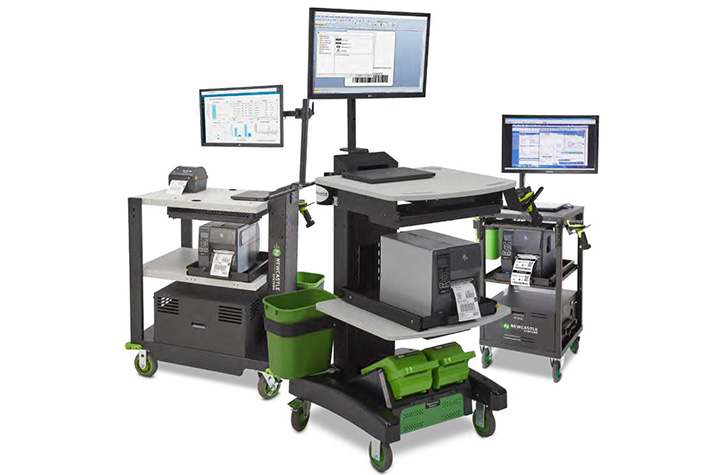
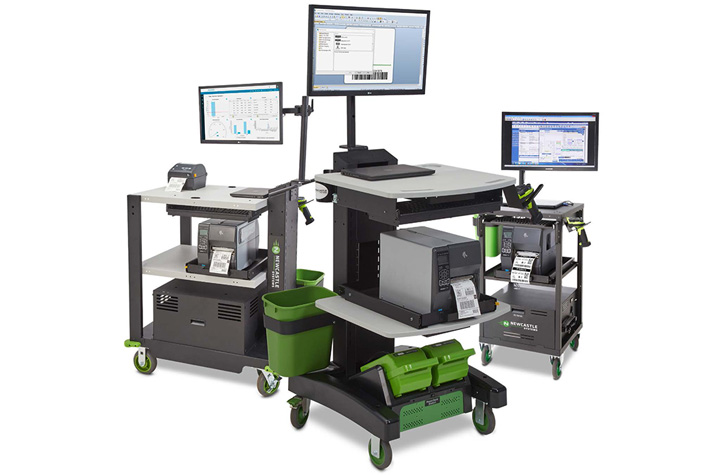
A leading expert in warehouse automation purpose-built for workers, Newcastle Systems’ mobile-powered workstations are designed to eliminate unnecessary movement and streamline workflows. By integrating computing, scanning, and printing capabilities into a single mobile solution, these workstations allow employees to complete tasks on the spot, reducing excessive walking and saving valuable time.
Just as importantly, they address key ergonomic challenges. By minimizing the need for lifting and offering adjustable height work surfaces, these solutions help reduce physical strain and support a healthier posture throughout the workday.
The result is a more efficient, safer, and more employee friendly environment.
The Future of Warehousing Is Human Centered
The next phase of warehouse innovation will not be defined by automation alone. It will be shaped by how well organizations balance technology with human needs.
Companies that invest in their workforce through safety, ergonomics, and thoughtful technology integration will be better positioned to adapt, compete, and grow.
Because in the end, the most advanced warehouse is not just automated. It is designed around the people who keep it running.
To learn how to incorporate essential workflow automation solutions in your warehouse operations, contact Barcodes, Inc. today.
Create, Manage, and Print Labels from Anywhere—No IT Required
Labeling has long been one of the most time-consuming and error-prone parts of the supply chain. Traditional, on-premise labeling processes create constant friction for operations—slowing teams down and utilizing valuable IT team bandwidth. Without centralized control, companies struggle with inaccurate labels, compliance risks, manual data entry errors, and limited visibility into who printed what. The painful truth: traditional label management is a major barrier to efficiency, accuracy, and growth.
BarTender offers multiple deployment paths to solve these issues. BarTender Software delivers secure, enterprise-grade, always-on printing for organizations that want complete control over their labeling environment. BarTender Cloud, on the other hand, provides maximum flexibility, allowing teams to access the latest labeling capabilities from anywhere without adding IT infrastructure or resources. With this always-on solution, you gain the ability to design, manage, and print labels anywhere—without the need for constant IT support.
Traditional Label Management: The Most Frustrating Pain Points
- Small Changes Require Big Effort – label templates that live on local machines create bottlenecks for even the slightest change to data fields or product info. Commonly, every need involves an IT service ticket.
- Version Chaos Across Sites – with no centralized version control, several templates may exist, leading to compliance issues or mislabeling.
- No Single Source of Truth – when label data isn’t synced, manual entry introduces errors, inconsistencies, and duplicate efforts.
- Low Scalability, High Cost of Maintenance – multi-site deployments are time consuming and often lack standardization. Servers, backups, security patches, and upgrades require constant upkeep.
- Limited User Access and Control – only users physically on the network—or using VPN—can access templates. From a security lens, it is harder to enforce role-based access, and sensitive data stored locally increases risk.
BarTender: Value Benefits of Cloud-Based Labeling Software
Deploy Labels Faster—with Less Effort
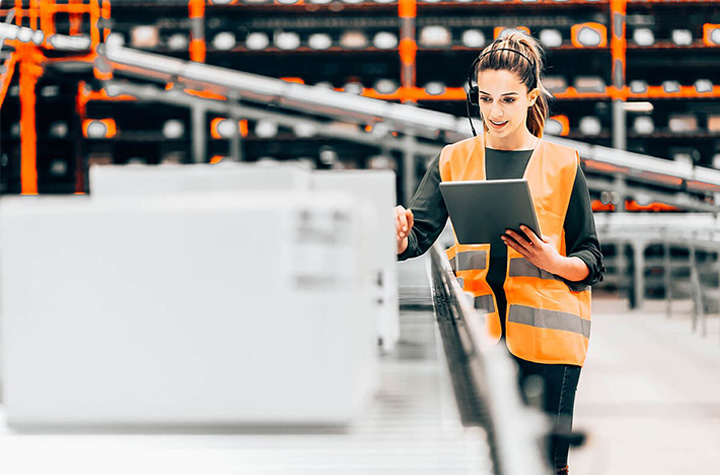
Cloud-based labeling from BarTender centralizes and standardizes your entire labeling environment, allowing you to deploy accurate, compliant labels in minutes instead of days. With reduced reliance on IT, fewer labeling errors, and lower programming costs, teams can respond instantly to product changes, regulatory updates, or production scale-ups—accelerating time-to-market and simplifying rollouts across sites and suppliers.
Smarter, More Consistent Label Design
With BarTender Cloud’s intuitive design tools and intelligent templates, you’ll eliminate the need for specialized skills or custom coding. Labels auto-populate with the right data from connected sources, reducing the number of templates you need to manage while minimizing manual errors. A single, centralized library ensures every team and location uses the same approved design for improved quality, consistency, and operational throughput.
Print Anywhere, on Any Device
Cloud-based printing lets users print from any browser, workstation, or mobile device without installing drivers or configuring hardware. BarTender’s automatic printer discovery and support for thousands of printer models make it easy to print labels at the point of work—whether on a production line, warehouse floor, or retail environment.
Embedded Compliance and Full Transparency
When it comes to compliance standards, BarTender Cloud has you covered. Leverage built-in support for GS1, RFID, UDI, GHS, FDA, and other global standards to ensure your labels always meet regulatory requirements. Pre-built, compliant templates and automated data handling help eliminate errors and simplify complex programs like Transparency labeling for major retailers. Every printed label becomes part of a complete digital audit trail, enhancing authenticity, traceability, and accuracy across your supply chain.
Easy Automation and Seamless Integration
Cloud-based labeling by BarTender directly connect to your ERP, WMS, MES, or cloud databases with simple wizards and pre-built connectors—no custom development required. Automated triggers streamline repetitive tasks like updating fields, sending notifications, and initiating print jobs.
The Smarter Way to Manage Labeling
BarTender software is a trusted brand known for revolutionizing labeling workflows. Now, its cloud-based solution brings flexibility, speed and scale of deployment, and user control to unmatched levels. By removing the need for on-premises servers and custom coding, businesses can standardize labeling operations across every site, supplier, and partner—achieving consistent results, fewer errors, and a more agile supply chain.
Learn More About BarTender Cloud ›
5 Reasons to Put Your Industrial Barcode Printer on a Newcastle Mobile Powered Cart
In warehouses, manufacturing plants, and distribution centers, efficiency directly impacts the bottom line. Here, mobility isn’t just a convenience, it’s a necessity.
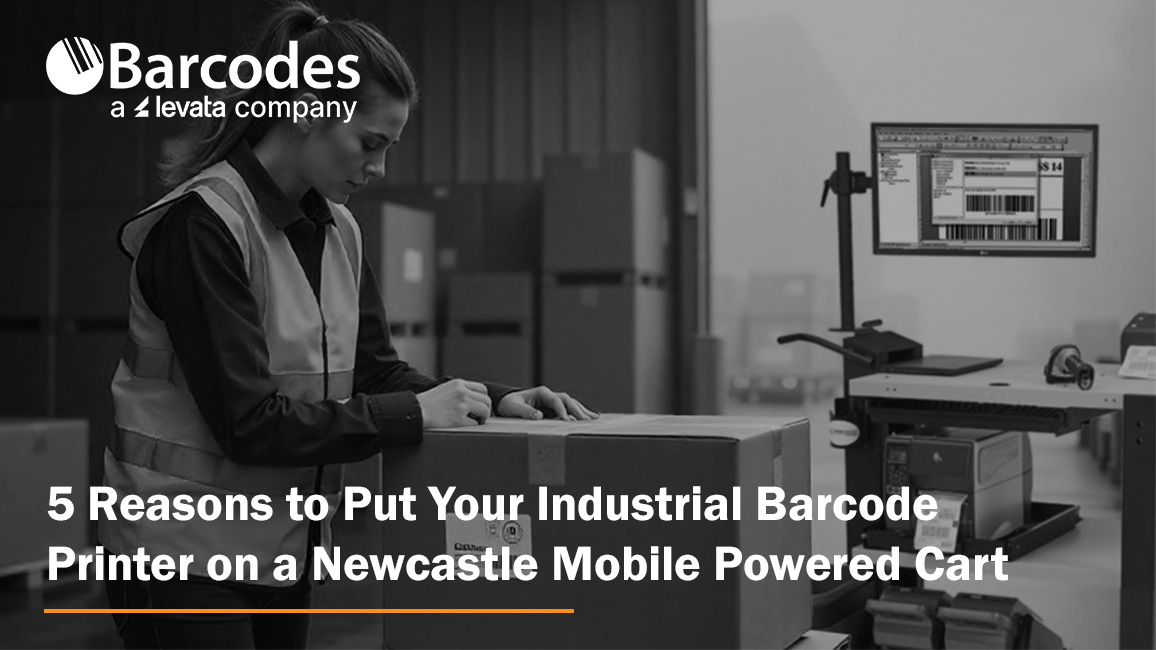
Barcode printing remains a cornerstone of warehouse and production operations—but the way most facilities handle it hasn’t changed in decades. Traditional fixed workstations are an antiquated model riddled with inefficiencies. Workers spend valuable time traveling back and forth between their work areas and centralized printing stations, leading to significant productivity losses and chances for errors that compound throughout the day. Not to mention the bottlenecks created if multiple workers need to access the same fixed equipment—deadlines slip, and frustration builds.
Meanwhile, labor is scarce, accuracy expectations are rising, and operations leaders are being asked to do more with less. That’s where Newcastle Mobile Powered Carts come in.
The fastest path to productivity on your warehouse or production floor
By placing your industrial barcode printer on a powered mobile workstation, you bring labeling directly to the point of work. When workers can print labels, tags, and barcodes exactly where they’re needed—whether at a receiving dock, on a production line, or in a storage aisle—they maintain continuous workflow momentum. The result: fewer steps, faster throughput, higher accuracy, and measurable ROI—without adding headcount or changing your existing systems. Let’s review the top five benefits of mobilizing your industrial label printer on a Newcastle Mobile Powered Cart.
1. Powered Mobility for Effortless Movement
Static printing stations require workers to walk back and forth between tasks and printers—often logging miles each shift just to label pallets or products. With a Newcastle Mobile Powered Cart, they take the printer with them. Printing happens exactly where the work is happening, reducing walking by up to 50% and keeping your team focused on moving product, not moving their feet.
Why it matters:
- Free up thousands of labor hours each year
- Reduce fatigue and foot-traffic congestion
- Speed up workflows without altering existing systems
2. Improve Label Accuracy at the Source
When labels are printed away from the point of application, mistakes happen—wrong SKU, wrong pallet, or mislabeled shipments. With mobile printing, workers print and apply labels in real time, directly where verification occurs. This not only reduces human error but also strengthens data integrity across your WMS and ERP systems.
Key outcomes:
- Fewer labeling errors and compliance issues
- Better scan accuracy and data confidence
- Less rework, fewer returns, and smoother audits
3. Accelerate Core Warehouse Workflows
From receiving and put away to picking, packing, and shipping, mobile barcode printing helps every process move faster and more accurately. The Newcastle design allows businesses to configure carts with exactly the equipment and accessories needed for specific workflows, from label printers and scanners to computer terminals and supplies storage.
Immediate gains:
- Cut dock-to-stock times by up to 50%
- Increase picks per hour and order accuracy
- Improve on-time shipments and throughput
4. Boost Labor Efficiency—Without Adding Headcount
Doing more with the same workforce is one of the biggest challenges in today’s operations. Mobile workstations empower teams to accomplish more per shift without expanding payroll or adding overtime.
Why Newcastle helps you scale smarter:
- Lower labor cost per task
- Redeploy employees to higher-value work
- Avoid disruption and expense from installing new fixed stations
5. Deploy Fast and Scale Easily
Unlike major system overhauls, deploying mobile powered carts is simple, fast, and flexible. Newcastle carts arrive preassembled and ready to roll—literally. Just add your printer, connect your devices, and start printing at the point of work. As your operation grows, you can easily add carts by shift, department, or facility.
Built to deliver:
- Full-day onboard power for printers and peripherals
- Industrial durability for demanding environments
- Configurations to fit your existing tech stack
Mobile Powered Carts: Application Use by Industry
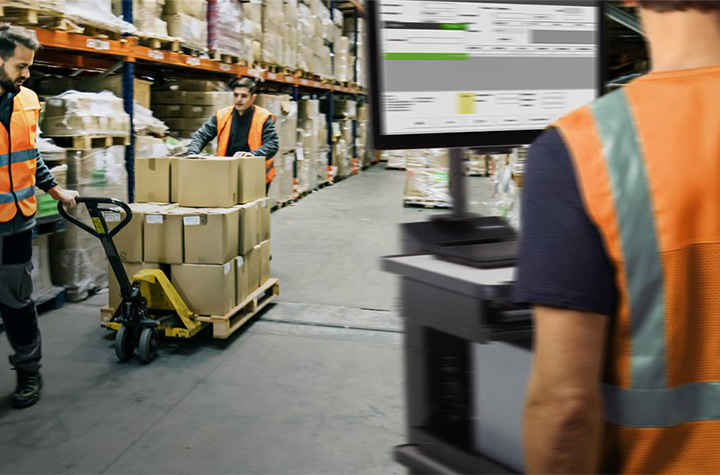
Warehousing and Distribution Centers: Mobile label printing enables workers to label shipments at receiving docks, print shipping labels while picking orders, and handle returns on the spot—eliminating constant trips to fixed stations and accelerating inventory accuracy.
Manufacturing and Assembly Operations: Production teams can print component labels, batch tracking tags, and quality control documentation directly at workstations, supporting lean manufacturing while ensuring compliance and preventing defective products from advancing through the line.
Retail and E-Commerce Fulfillment: Mobile carts allow staff to print shelf labels as they unpack shipments, generate pickup labels for click-and-collect orders, and process returns immediately—speeding up fulfillment and keeping inventory accurate without leaving the work area.
Healthcare and Pharmaceutical Operations: Medical facilities can print patient-specific labels at preparation points, generate required serialization documentation for regulatory compliance, and label specimens where they’re collected—improving patient safety and reducing identification errors.
Food and Beverage Production: Mobile printing enables date codes and lot numbers to be printed at packaging lines, allergen warnings to be generated at receiving, and HACCP documentation to be produced at critical control points—all while maintaining sanitation standards and reducing cold storage entry/exit cycles.
Unlock Faster, Smarter Labeling Now
The integration of industrial barcode label printers on Newcastle Mobile Powered Carts represents more than just an equipment upgrade—it’s a strategic investment in operational excellence. By eliminating inefficient workflows, reducing errors, improving worker satisfaction, and enabling rapid adaptation to changing demands, these solutions deliver measurable returns that impact the bottom line. Join leading warehouses, production facilities, and logistics providers by adopting mobile printing as a path towards continuous improvement.
The Advanced Data Capture Technology You Need to Future-Proof Your Operations
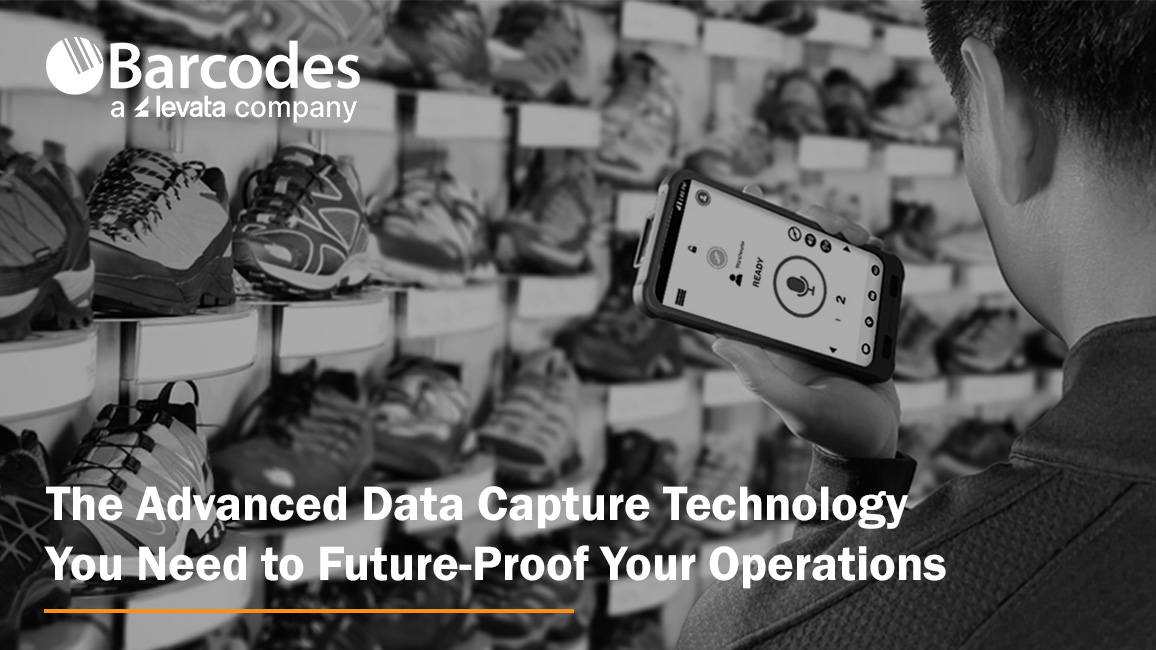
In hectic logistics and operations environments, every second counts. Whether managing assets, tracking shipments, or communicating between teams spread across multiple sites, efficiency and data accuracy reign supreme. It starts with connected mobility on the warehouse floor, with smart scanning devices digitizing time-consuming but essential tasks. Spoiler alert: not all data capture solutions are future-ready for unique customizations that leverage AI to keep your operations competitive.
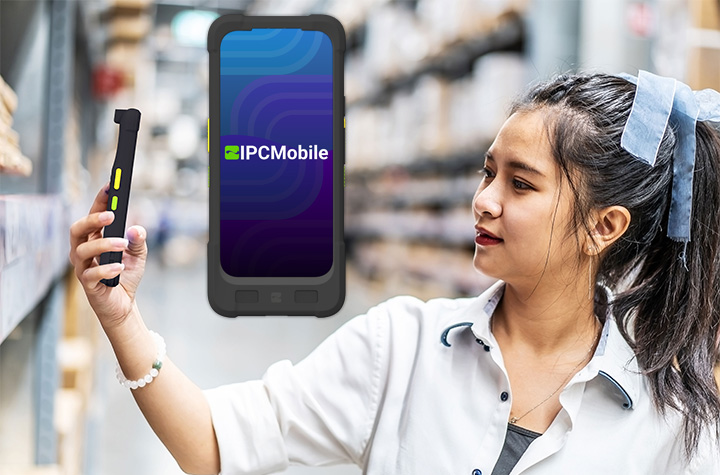
Introducing the Linea Pro G S1 from IPCMobile, developed in partnership with Google Pixel for Business. This next-generation data capture solution is a cut above from the inside out. The LPG S1 keeps operations moving 24/7 with AI-driven intelligence, seamless connectivity, and rugged construction that can withstand tough environments.
Linea Pro G S1: Smart, Accurate Data Capture
Every logistics and operating ecosystem involves unique data capture application use. Progressive technology providers like Linea prioritize flexibility with value-added features:
- Trigger key workflows instantly with programmable buttons—scan barcodes, validate forms, or access system data in a single tap.
- Boost productivity with Google Tensor processing and advanced AI that recognizes images, objects, speech, and handwriting for faster, more accurate tasks.
- Automate verification—inspect camera frames, validate VINs or TINs, capture forms, and confirm IDs without switching between apps.
- Simplify field operations with integrated NFC technology to read payment, access, and loyalty cards or update assets via NFC tags on-site.
- Reduce manual errors and data entry time across warehouses, logistics hubs, and multi-site operations with intelligent automation.
Use the LPG S1 to Streamline Inventory and Asset Management
Efficient processes are the key to smooth operations for logistics and warehousing teams. Here’s how the LPG S1 streamlines inventory and asset management:
- Enhance inventory management with AI-powered automation for counting, locating, and tracking items in real time.
- Instantly process replenishment orders and capture up-to-date stock levels for accurate inventory control.
- Update maintenance histories automatically through NFC-enabled tags for seamless asset management.
- Reduce paperwork and eliminate system discrepancies, freeing up valuable time for higher-priority tasks.
- Save resources by minimizing manual checks and errors, supporting more efficient and reliable operations.
LPG S1 Push-to-Talk Turns on Real-Time Communication
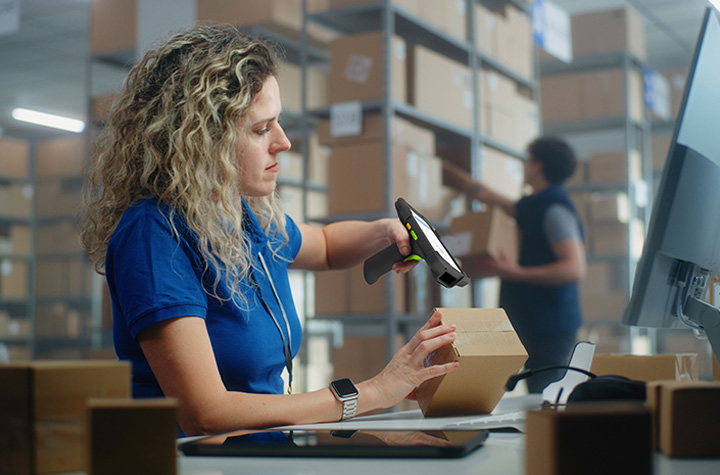
Instant communication can make the difference between a smooth operation and a costly delay. Let’s review the LPG Slim communication features most valued by customers.
- Integrated Push-to-Talk (PTT) compatibility with leading carriers like T-Mobile, AT&T, and Verizon for instant team-wide communication.
- One-touch connectivity between drivers, field technicians, and warehouse coordinators—keeping everyone in sync.
- Real-time updates and rapid response, ensuring teams can act immediately to unforeseen situations.
- Live operational insights that empower leaders to make faster, more accurate decisions based on current data, not outdated reports.
- Productivity and coordination across dispersed teams, strengthening communication from the field to the command center.
The LPG S1 is Built for Rugged Reliability
Some environments pose more risks than others; the LPG S1 keeps working in the most taxing situations. These are the top features that allow the LPG S1 to always endure:
- Hot-swappable smart battery design supports continuous operation across multiple shifts with zero downtime.
- Built to withstand harsh conditions with MIL-STD-810G certification and an IP67 protection rating against drops, dust, water, and extreme temperatures.
- Ensures uninterrupted performance in demanding environments like transportation, warehousing, and field services.
- Delivers long-term reliability that reduces maintenance costs and minimizes workflow disruptions.
- Boosts overall productivity and equipment uptime, keeping teams fully operational in any condition.
Smarter Enterprise Mobility, Without the Complexity
IPCMobile brings over 31 years of mobility expertise to the table, helping organizations modernize without adding complexity or long-term commitments. With no contracts, licenses, or development work required, businesses can deploy the LPG S1 and IPCMobile’s AIWedge App right out of the box. The AIWedge App acts as a zero-cost data toolkit, allowing instant integration with your existing applications and workflows.
The Future of Data Capture Is Here
The Linea Pro G S1 offers the intelligence and adaptability of a smartphone, and the durability and precision of a purpose-built enterprise data capture and computing device. Where real-time data insights and nonstop performance meet, the Linea Pro G S1 by IPCMobile keeps operations moving, anywhere.
Even the toughest and smartest devices can use a helping hand, and that’s where the experts at Barcodes, Inc. come in. Contact our experts to learn how we can support your team through the entire device lifecycle – from planning and procurement, to device configuration and ongoing maintenance support.
eBook: Transforming the Modern Warehouse with Total Technology Solutions
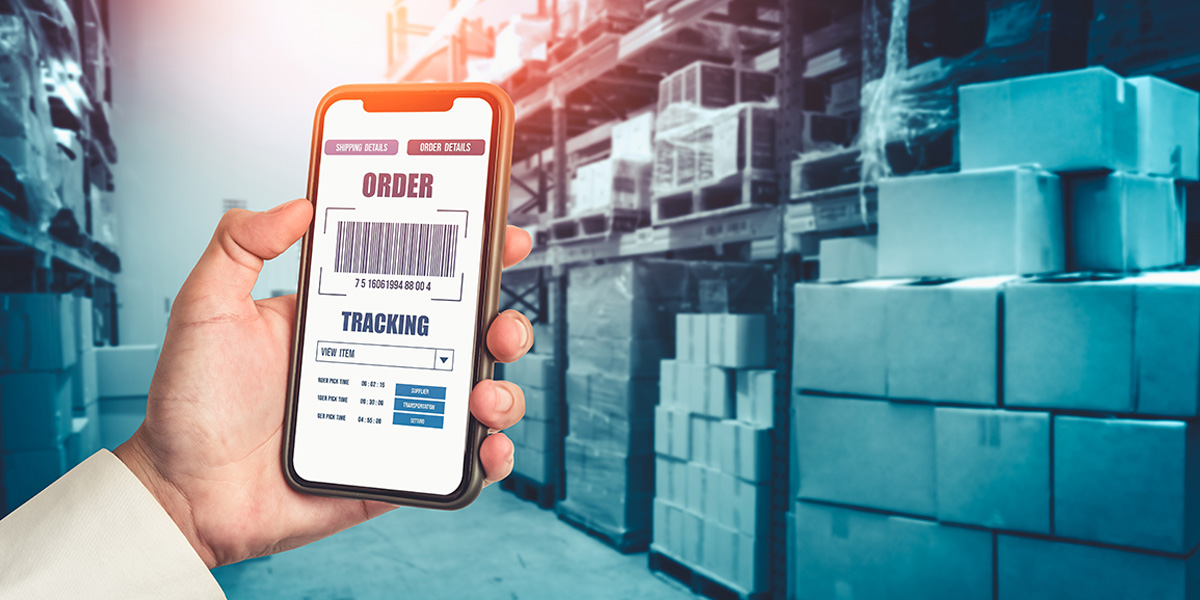
Warehouses today are fast-paced operational centers—moving goods, data, and processes at high speed. But as facilities expand, managing separate vendors, outdated systems, and unsupported devices often slows efficiency and creates unnecessary risk.
Where Gaps in Operations Hurt the Most
When critical technologies aren’t connected or supported, the ripple effects can impact every corner of the warehouse. As a Levata company, Barcodes, Inc. shares the guide, Total Warehouse Solutions: Transforming the Connected Warehouse, where we outline five common areas where gaps cause measurable setbacks:
- Wireless Connectivity: Weak WLAN coverage leads to downtime, scanning delays, and poor inventory accuracy.
- Technology Alignment: Disconnected systems and legacy IT raise costs and expose vulnerabilities.
- Mobile Devices: Unsupported or aging hardware frustrates workers, reduces throughput, and introduces errors.
- Labeling & RFID: Compliance failures result in rejected shipments, chargebacks, and lost visibility.
- Training & Support: Without proper onboarding and continuous tech support, downtime and mistakes multiply.
Building a Unified Technology Ecosystem
Rather than piecing together solutions from multiple providers, a total warehouse approach delivers an integrated environment across:
- Infrastructure & Networking: Wi-Fi, private 5G, structured cabling, servers, UPS, and smart storage.
- Data Capture & Mobility: Rugged tablets, handhelds, barcode scanners, powered carts, vehicle-mounts, wearables.
- RFID & Labeling: Fixed and handheld readers, dock door portals, conveyor tunnels, tags, and industrial printers.
- Automation & Handling: Vision systems, dimensioning and weighing stations, yard management solutions.
- Safety & Security: Cameras, kiosks, access control, and worker-assist exosuits.
Why Total Warehouse Solutions Matter
Disparate technologies create inefficiencies. A comprehensive warehouse platform brings:
- Simplified planning and rollout
- Seamless device and software integration
- Infrastructure built to scale
- A single point of contact for support
- Clear productivity and cost savings
The Value of a Full-Service Partnership
True optimization comes not just from equipment, but from services that support it across the lifecycle:
- Strategic IT Alignment to match technology with business transformation goals
- Managed Device Services for monitoring, maintenance, and secure operations
- Field Expertise from 600+ service professionals handling installations, repairs, and training
- Flexible Financing to balance operational needs with budget requirements
With Levata, you’re not just purchasing technology—you’re gaining a partner with deep warehousing expertise and the services to keep your operation future-ready.
Download the Full Guide
This article highlights insights from Levata’s Total Warehouse Solutions Guide. Discover how to unify your technology ecosystem and prepare your warehouse for tomorrow.
How to Best Prepare Your Retail and Warehouse Operations for the Holidays with Mobile Technology
The holiday season is the most critical time of year for retailers and eCommerce businesses. Sales opportunities are high—but so are the challenges. From increased demand to labor shortages and supply chain factors, unprepared operations risk lost sales, frustrated customers, and costly inefficiencies.
This year, success will hinge on more than just stocking up and hiring temporary staff. Innovative technologies that mobilize your workers can make the difference between struggling to keep up and thriving through the busiest shopping period. Two game-changing solutions—mobile POS stations for the store and mobile powered carts for the warehouse—are helping forward-thinking businesses prepare now.
Transforming the Retail Floor with Mobile POS stations
Long checkout lines remain one of the biggest causes of lost sales and customer frustration during the holidays. Customers are quick to abandon purchases if the wait feels too long. Traditional fixed registers limit how quickly retailers can scale capacity and decrease congestion in checkout areas.
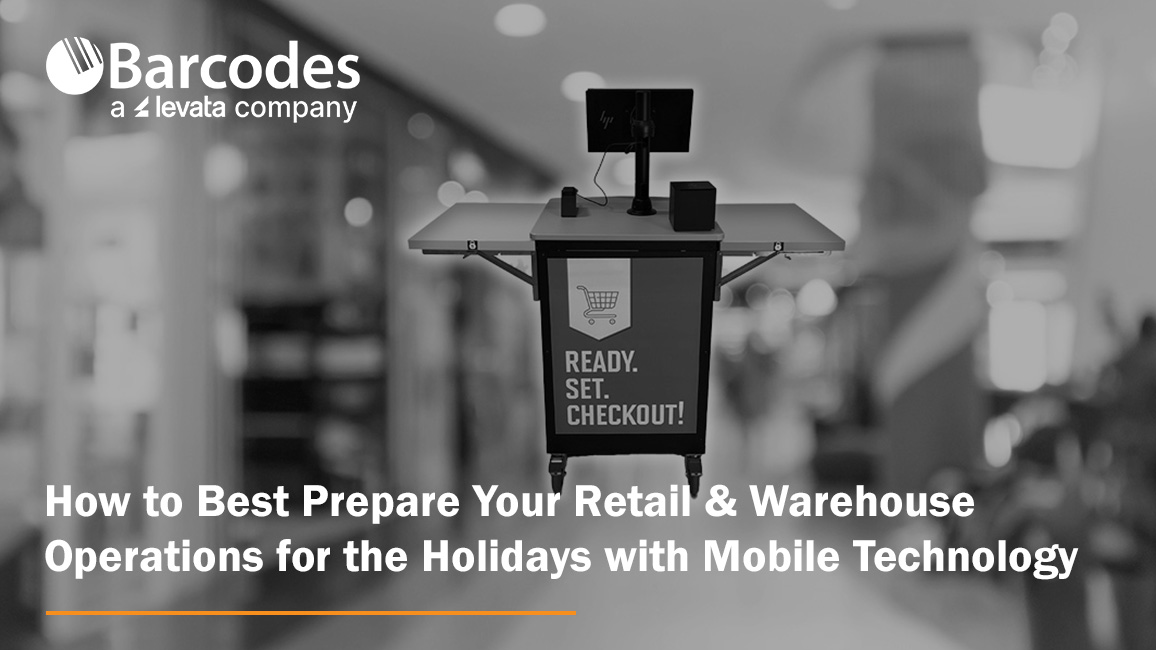
What’s an effective solution to solve retail checkout bottlenecks? The Newcastle CheckMate 1000 Mobile POS Station is a compact, flexible mobile retail checkout cart built for seasonal surges. The CheckMate 1000 allows retailers to optimize the checkout experience. Instead of being tied to static registers, managers can deploy mobile POS units where and when they’re needed most in stores.
- Line-busting power: Place units near entrances, fitting rooms, or popular sections to keep lines moving and reduce customer frustration.
- On-demand capacity: Add POS stations during peak shopping days, then reclaim the space afterward without costly buildouts.
- Never-quit swappable power: Each unit supports printers, cash drawers, tablets, card terminals, and more—running all day with hot-swappable batteries.
- Customizable branding: With plenty of space for logos and design elements, units reinforce brand identity while serving customers quickly.
The result: faster service, higher conversion rates, and less reliance on floor space expansion. For store operations leaders, the ROI is undeniable—prevent walkouts and maximize sales during the most critical weeks of the year!
Unlocking Warehouse Productivity with Mobile Powered Carts
Retail readiness doesn’t stop at the front of the store. Warehouses and distribution centers face their own challenges during the holiday surge: higher order volumes, tighter deadlines, and limited staffing. Every wasted step on the warehouse floor adds up to lost time, reduced productivity, and potential for errors.
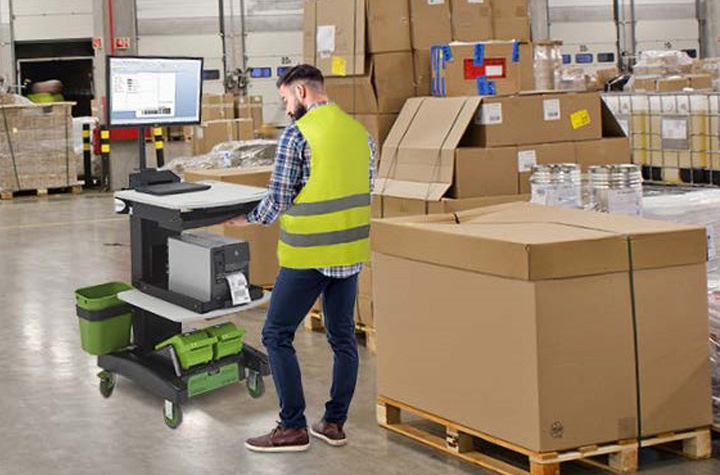
Newcastle Mobile Powered Equipment Carts are transforming workflows in the warehouse. Mobile powered carts connect power, computing, and scanning—and put it on wheels to go where workers go—eliminating repeated trips to fixed stations.
- 2x worker productivity: Each associate can complete more tasks without additional headcount.
- 92% fewer errors: Workers can scan, print, and apply labels right at the dock, warehouse aisle, or storage location.
- Fast ROI: Many companies achieve payback in as little as 6–10 months.
- Ergonomic, worker-friendly design: Adjustable height and mobile work surfaces reduce fatigue while improving accuracy.
- Real-time visibility: Integrated tech ensures instant updates to inventory systems and more reliable order fulfillment.
For warehouses already feeling the strain of labor shortages, these carts deliver efficiency gains that would otherwise require hiring and training more staff—a difficult achievement in today’s tight labor market.
More Tips to Strengthen Holiday Operations
While new technology is a powerful advantage, businesses still need to prepare for the holiday retail season holistically. A few key strategies include:
- Forecast smarter: Use predictive analytics to anticipate demand based on more than just last year’s numbers. Consumer behavior is shifting rapidly.
- Staff strategically: Begin planning for seasonal hires now, even if you don’t bring them on until closer to the holidays.
- Diversify carrier partners: Don’t rely on a single provider; logistics bottlenecks can derail delivery promises.
- Communicate openly with customers: Set expectations around shipping cutoffs and share how you’re preparing for the holiday rush.
Ready Now, Prepared for Later
The holiday rush will always bring challenges—but retailers and eCommerce businesses now have better tools to stay ahead. By embracing flexible mobile POS stations on the retail floor and powered carts in the warehouse, businesses can reduce friction, increase throughput, and turn seasonal chaos into sustained growth.
Businesses that invest early will not only be ready for this year’s holiday surge—they’ll also be building more resilient, efficient operations for the long term.
Contact us to start getting prepared now with powered mobile carts and other technology solutions that will elevate your retail and warehousing operations.
Mobility at the Core: Smarter Mobile Printing for Modern Operations
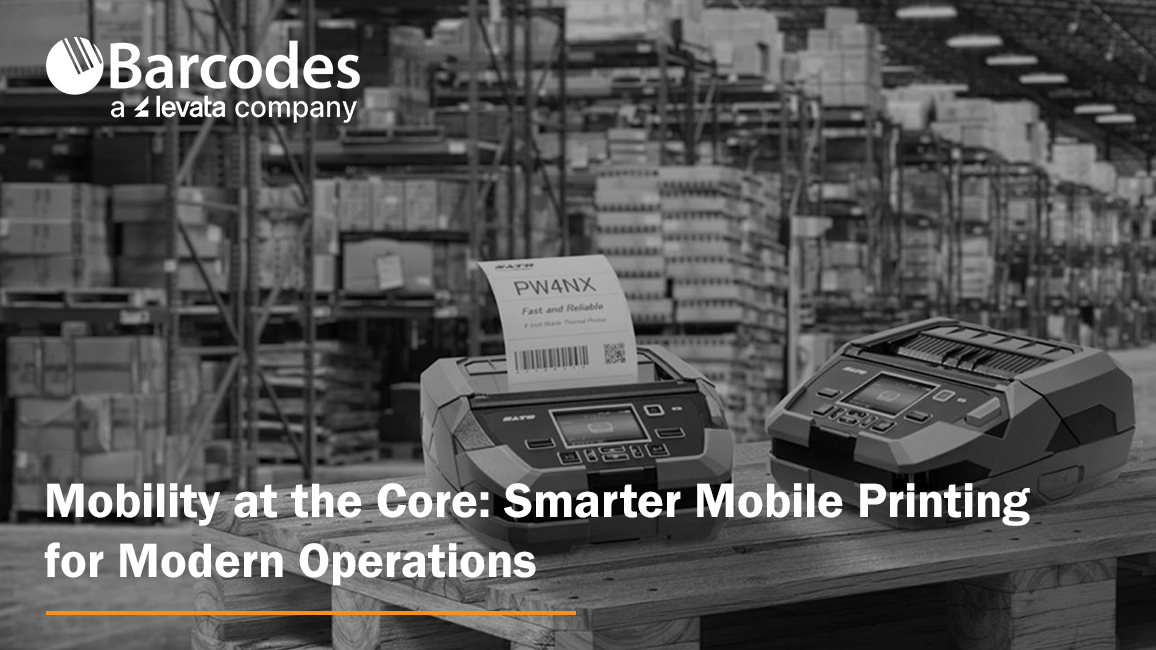
Mobility in the business environment has emerged as a critical capability for any operation. Larger working areas, growing e-commerce volumes, and pressure for faster, more accurate service are pushing companies to rethink how everyday processes are executed. Mobile printers are a proven solution for efficient workflow transformation. With speedy, on-the-go label and receipt printing directly to the point of activity, teams are empowered with improved accuracy, efficiency, and adaptability—without compromising quality.
Mobile printers are compact, durable, and flexible enough to support diverse operations like price marking, inventory labeling, specimen tracking, and route accounting. No matter the industry, workers need the ability to print labels, receipts, and records where the work is happening—not at a stationary printer hundreds of feet away.
How Mobile Printers Can be Used by Industry
- Retail — Price markdowns, shelf-edge labeling, and receipt printing.
- Supply chain & logistics — Inventory management, cross-docking, picking, put-away, and shipping inspections.
- Healthcare & labs — Specimen tracking, sample labeling, and patient wristbands.
- Field services & route accounting — On-site labeling, inspection tags, mobile receipts, and proof-of-delivery slips.
- Manufacturing & utility sectors — Raw material tracking, quality checks, and production line labeling.
The New Demands on Mobile Printing
Operations leaders are looking for more than just portability. They want tools that are:
- Easy to use and manage. Devices should install quickly, integrate with existing systems, and be intuitive for staff.
- Durable and reliable. Busy environments are tough on equipment. Printers must withstand drops, dust, and vibration without compromising performance.
- Connected and flexible. With support for multiple devices, operating systems, and applications, printers need to adapt as business processes evolve.
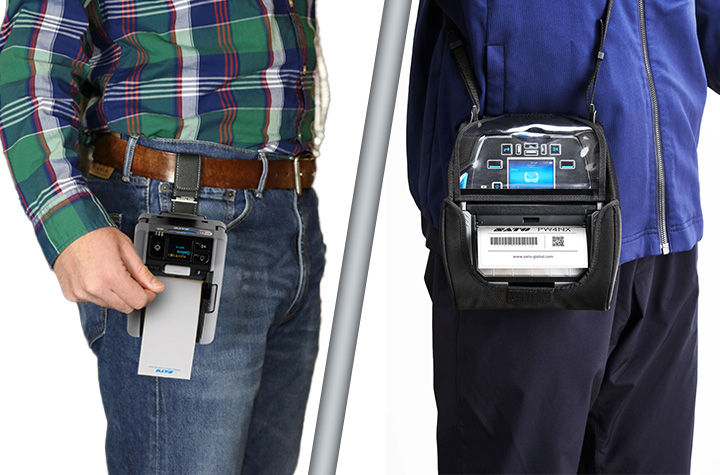
Two solutions with features that meet both portability and functional demands are the SATO PW2NX and SATO PW4NX mobile printers—both engineered to bring simplicity, performance, and rugged mobility to the frontline.
SATO PW2NX: Compact Power in a 2-Inch Printer
Small in size but big on capability, the SATO PW2NX is designed for workers on the go. Weighing under a pound, it’s lightweight enough to carry all day, yet rugged enough to withstand drops up to 8.2 feet. Its polycarbonate body and impact-absorbing elastomer edges give it the durability required in fast-paced environments.
But portability doesn’t mean compromise. The PW2NX delivers:
- Full 2.16″ print width with high-speed output up to 6 ips.
- Smart battery management that powers full-shift operation for up to 16 hours.
- Robust connectivity with Bluetooth, USB, WLAN, and NFC for seamless pairing with mobile devices.
- Application Enabled Printing (AEP) support, enabling smart, customizable apps for enterprise workflows.
- SATO Online Services (SOS) for remote IoT-based monitoring and maintenance, reducing downtime.
- Ideal for retail, healthcare, and logistics environments needing fast, precise labeling such as price markdowns, shelf labels, specimen tracking, and receipt printing.
- Linerless labels reduce waste and supporting sustainability goals.
Quick Product Review of the SATO PW2NX: The PW2NX is ultra-compact, lightweight, and perfect for quick, on-the-go tasks where portability is paramount.
SATO PW4NX: Rugged Performance for 4-Inch Printing
For organizations that need a larger format without sacrificing mobility, the SATO PW4NX 4-inch mobile label printer is engineered for speed, durability, and efficiency.
Key strengths include:
- Consistent 6 ips print speeds, reducing print time by more than 30% compared to typical mobile devices.
- Durable design, built to survive 7-foot drops and rated IP54 for dust and water resistance.
- Vibration resistance, making it reliable even when mounted on forklifts.
- User-friendly upkeep, with easy-to-replace printheads and platen rollers, cutting maintenance downtime and cost.
- Smart connectivity, supporting Apple iOS, Android, and Windows with Bluetooth 5.0, Wi-Fi, and advanced AEP features for standalone printing.
- Remote management via SOS and SOTI for predictive maintenance and centralized device control.
- Ideal for warehousing, logistics, manufacturing, and retail, supporting operations like inventory/raw materials management, cross-docking, receiving/shipping inspections, picking/put-away, cycle counts, and order fulfillment.
Quick Product Review of the SATO PW4NX: delivers a larger format and higher speed, designed for heavy-duty applications where uptime and throughput matter most.
The Bottom Line: Mobility Moves Business Forward
As workflows continue to evolve, the ability to print anytime, anywhere is redefining how enterprises approach efficiency, accuracy, and cost savings. SATO’s mobile printers give organizations the tools they need to stay agile in an increasingly mobile world. The SATO PW2NX lends that power to lighter, more compact workflows labeling, while the PW4NX delivers desktop-grade speed, ruggedness, and connectivity.
Contact Barcodes Inc. today to learn more about how mobile printers can boost your team’s productivity on the floor.
eBook: The Risks of an Underperforming Wireless Network in Warehousing Environments

Why Your Warehouse’s Wireless Network Might Be the Weak Link
Modern warehouses and distribution centers rely on connected devices, automation, and real-time data—but none of it works without a strong wireless foundation. If your current network is aging or underperforming, it could be dragging down your entire operation.
Slow connections, dropped signals, and poor coverage aren’t just technical annoyances—they translate into costly delays, errors, and employee frustration. As more systems rely on constant connectivity, having a robust wireless network is no longer optional.
The Critical Role of Wireless Connectivity in Warehousing
Your wireless infrastructure links everything together—from handheld scanners and tablets to cloud-based WMS platforms and IoT devices. It allows your teams to move freely, access real-time data, and maintain efficiency across every shift. In high-interference environments like warehouses, your network needs to be specifically designed to overcome physical and operational challenges.
What’s at Stake When Your Network Falls Short?
- Efficiency Loss: Lagging devices or constant reconnecting wastes valuable time across shifts.
- Data Issues: Spotty connectivity can result in duplicate scans, missed reads, and order fulfillment errors.
- Safety Risks: Voice-over-Wi-Fi systems support safety protocols—until the signal drops.
- Employee Turnover: Tech that doesn’t work leads to frustrated workers and higher attrition rates.
Upgrade Your Network, Unlock New Possibilities
Emerging technologies like Wi-Fi 6/6E/7, cloud-managed networks, and private 5G are designed for high-demand environments like yours. A modern wireless network supports more devices, enables faster response times, and scales easily with your business.
Levata designs and delivers warehouse-grade wireless solutions tailored to your space. From heatmapping and access point placement to complete network installs and private 5G rollouts, we help you build a network that drives long-term performance.
Want the Full Breakdown?
Learn how a reliable wireless network can transform productivity, reduce downtime, and prepare your warehouse or distribution center for the future. Download our free eBook: The Critical Role of Wireless Networking in Warehousing & Distribution.
What You’ll Learn:
- The real risks of poor wireless performance vs. the benefits of a high-performing network
- The rapidly evolving trends in enterprise wireless networking
- Critical hardware considerations for warehouse-grade wireless
- Why network lifecycle management and certified field experts matter
- When to consider a private 5G cellular alternative
- The strategic advantage of working with an end-to-end partner
Unitech RT112: The Ultra-Light, Rugged Tablet That Works Where You Do

When it comes to powering critical workflows in retail, logistics, manufacturing, or field service, having a reliable, tough, and user-friendly tablet is a must. The Unitech RT112 Rugged Tablet series—available in both Android and soon-to-be-released Windows versions—delivers precisely that. With its slim design, industrial-grade durability, long-lasting battery, and enterprise-ready features, the RT112 keeps your teams connected, productive, and protected, wherever the job takes them.
Mobility Devices: Transforming Business Workflows
Mobility is more than a convenience — it’s a competitive edge. Equipping your workforce with rugged mobile devices like tablets ensures that critical information, scanning, and task management happen where the work actually gets done — on the warehouse floor, at the checkout counter, in the field, or on the road.
Organizations across industries are rapidly embracing mobility solutions to replace fixed workstations and paper-based processes. This shift unlocks real-time data access, faster decision-making, and improved accuracy, all of which boost productivity and reduce costly errors. Enter the Unitech RT112 Rugged Tablet. Combining best-in-class durability, an ultra-slim lightweight design, powerful performance, and reliable 5G and Wi-Fi 6E connectivity, the RT112 empowers teams to work smarter, move freely, and stay connected.
Ultra-Lightweight Yet Rugged for Demanding Environments
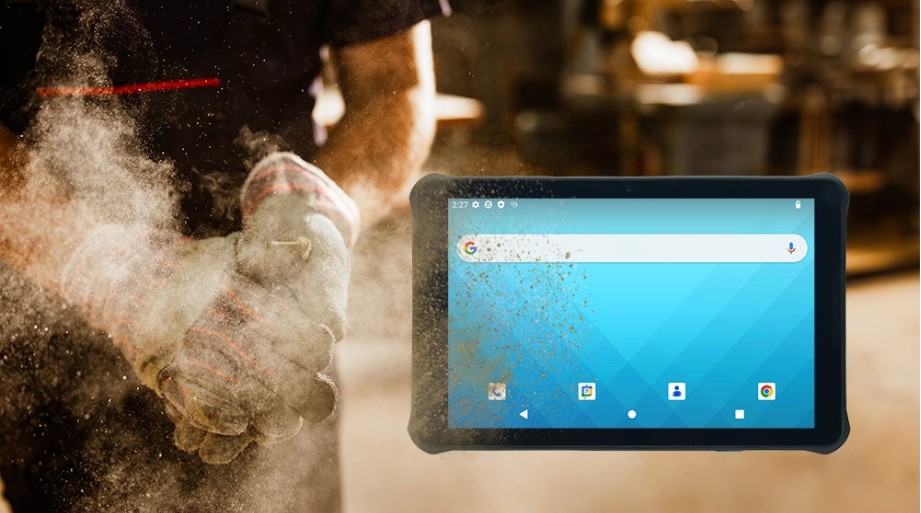
One of the standout features of the Unitech RT112 is its exceptional balance between portability and durability. Weighing just 1.5 pounds with a slim 0.5 inch profile, it’s easy for workers to carry all day without fatigue—whether moving inventory on a warehouse floor, managing checkouts at a busy retail counter, or conducting maintenance inspections outdoors.
Despite its lightweight design, the RT112 doesn’t compromise on toughness. It’s IP67 certified, protecting it from dust and immersion in water, and can withstand drops of up to nearly 5 feet onto concrete. With compliance to the rigorous MIL-STD-810H standard, you can trust the RT112 to perform reliably even in harsh industrial conditions.
High Performance Meets Seamless Connectivity
Fast, reliable connectivity is critical for any modern operation, and the RT112 delivers. It supports 5G and Wi-Fi 6E, providing lightning-fast downloads, low latency, and robust connections, even in dense environments like warehouses and retail stores.
The Android 13 OS is Google Mobile Services (GMS) and Android Enterprise Recommended (AER) certified, ensuring smooth operation, high security, and simple remote management.
For businesses that rely on Windows-based software, the RT112 Windows variant (launching this September) will offer seamless integration with familiar enterprise tools like ERP, WMS, and POS systems, streamlining your IT infrastructure without compromise.
All-Day Battery Life and Worker-Friendly Features
Downtime is the enemy of productivity. That’s why the RT112 comes with a high-capacity 8800mAh removable battery, capable of powering the tablet for up to 24 hours on a single charge.
The 10.1-inch full HD display is protected by durable Gorilla® Glass and offers 450 nits brightness for clear visibility indoors and outdoors. It supports glove and wet-touch operation, making it easy for workers to use in cold storage, rainy weather, or while wearing protective gloves.
Built-In Barcode Scanning for Smarter Inventory and Asset Management
The RT112 features an integrated high-performance 2D barcode scanner that reliably reads even damaged or poorly lit barcodes. Whether tracking parts on a production line, scanning packages for delivery, or managing stock at retail checkouts, this capability reduces errors and speeds up workflows.
Versatile Accessories for Flexible Deployments
The RT112 can be adapted to multiple work scenarios thanks to its range of accessories, including a rotatable hand strap, shoulder strap, screen protector, vehicle and office cradles, and a capacitive stylus pen. This flexibility makes it the perfect companion for mobile workers, forklift drivers, or in-vehicle computing.
Engineered for Your Industry
- Retail & Hospitality: Mobile POS, membership management, and instant price checks enhance customer experience and speed up service.
- Logistics & Warehouse Management: Rugged tablet for inventory tracking, forklift-mounted order picking, and in-vehicle route updates.
- Manufacturing & Industrial Automation: Supports production monitoring, material scanning, and real-time quality control on the factory floor.
- Field Service & Outdoor Operations: Durable for pipeline inspections, infrastructure maintenance, and reliable data capture in any weather.
Discover more about the Unitech RT112 Android today. Contact Barcodes, Inc. today for personalized help with solutions to your needs.
Critical Components of a Total Warehouse Solution

In today’s fast-moving, high-demand supply chain world, warehouses are evolving into complex, data-driven ecosystems. The traditional patchwork of disconnected systems and vendors just doesn’t cut it anymore. The most effective way forward? A Total Warehouse Solution approach.
What Is a Total Warehouse Solution?
A Total Warehouse Solution integrates all key technologies and services under a single, strategic framework. Instead of managing multiple vendors for wireless design, barcode scanners, RFID systems, access control, and device support, you work with one provider that delivers everything you need to modernize and scale your facility.
Why It Matters
The pressure on warehouses has never been greater. From next-day delivery expectations to labor shortages and tighter margins, operations leaders need real-time visibility, automation, and device reliability to stay competitive.
A Total Warehouse Solution simplifies operations and eliminates the gaps caused by fragmented systems. It’s how you streamline workflows, connect your infrastructure, and scale performance.
What should I look for in a Total Solution?
Here’s a quick breakdown of the technologies and services typically included:
Infrastructure & Wireless Networking
- Wi-Fi and private cellular coverage throughout the warehouse
- Low-voltage cabling, routers, switches, and UPS systems
- Rack labeling, digital signage, and smart lockers for device storage
Material Handling
- Conveyor-mounted machine vision systems
- Print-and-apply labelers and scan tunnels
- Material handling AMRs
Mobility & Data Capture Hardware
- Rugged mobile computers and tablets
- Handheld barcode scanners and wearable devices
- Vehicle-mounted computers for forklifts
- Powered carts for mobile workstations
- RFID handhelds, fixed readers, and dock door portals
- Industrial and mobile label printers
- Preprinted and color-coded warehouse labels
- Onsite signage and labeling installation
- ID card printers
- Self-service kiosks for visitor/employee check-in
- Smart lockers and device charging cabinets
- Security cameras and badge-based access systems
Support & Lifecycle Management
- Project management and installation
- Device staging, kitting, and software configuration
- Ongoing support, spare pool programs, and RMA services
The Customer Impact
A well-executed total solution delivers more than just upgraded tech—it transforms warehouse performance. You can:
- Reduce manual errors and improve inventory accuracy
- Optimize labor with wearable and voice-pick technologies
- Speed up receiving, picking, packing, and returns
- Improve asset tracking and theft prevention
- Scale seamlessly as business needs grow
Solutions like these allow you to keep pace with customer expectations while maintaining efficiency and profitability.
Final Thoughts
A Total Warehouse Solution isn’t just about checking boxes on a technology list—it’s about creating an integrated, intelligent operation that’s ready for what’s next. Whether you’re building a new facility, expanding your footprint, or modernizing existing infrastructure, contact Barcodes Inc. to learn how we can help you design, deploy, and support a complete system that works as hard as your team does.