


Iceland Post improves deliveries with Zebra
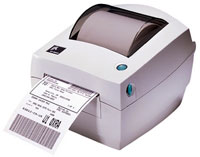 The Project
Previously Iceland Post had to manage a significant part of its post and parcel management manually. One of the main goals of the project was to make this process more efficient, while at the same time increase tracking abilities of deliveries, something that previously could only be done with registered mail. To become more customer-focused, the organization required a solution that automated certain work processes.
“Iceland Post had a solution which required manual stamping for postage and was only able to track registered mail. To become more proactive towards its customer needs, Iceland Post chose to strengthen its position on the market with the help of Zebra’s printing technology,†said Clive Fearn, Vertical Marketing Manager, Zebra Technologies Europe.
The organization’s previous solution made it hard for staff to do their job quickly and efficiently. The printers used for the ‘Post Assistant’ broke down regularly and only had a life expectancy of about two years.
The Solution
The Zebra applications chosen can be divided into three areas; sorting and distribution applications, applications in the post offices, and business post applications. Sorting and distribution applications include solutions for labeling of postbags, sorting trays, routing labels for local deliveries and shipping labels for parcels. Continue reading »
Automated System Keeps Inventory Accurate and Updated
 Challenge:
A leading Grand Rapids, Michigan-based manufacturer of household cleaning machinery relied on a seven-person staff of full-time employees to manually enter hand-written inventory data. Every part placed into the warehouse and every finished product sent to the shipping dock was recorded on a transfer ticket and later entered into the company’s antiquated warehouse management system. In the hustle of this fast-paced consumer goods manufacturing environment, errors were common and the employees were spending more time entering data than moving product. The system was so inefficient and inaccurate, the company was forced to use three full-time dedicated counters to ensure that inventory levels were sufficient to meet production schedules.
To make the situation worse, the company did not record the locations of parts and finished products, causing pickers to waste time searching for goods in the warehouse.
“One person, the forklift driver, stocked supplies and finished goods within the warehouse,†said a manufacturing systems analyst. “If he was off for a day or on vacation, the entire system suffered because there was no physical or electronic record indicating where he put the stock.â€
Solution:
To synchronize the warehousing operations with the rest of the manufacturing operations, the company implemented a home-grown wireless network that incorporated a supply chain management solution with a data capture system. The system relies on bar coded labels and tags, printed on
Zebra® printers, to track the movement of goods into and out of the warehouse.
Portable Betting System is Winning Ticket
 Challenge:
Autotote, the nation’s leading supplier of pari-mutuel wagering systems to horse track, dog track, and off-track betting parlors, wanted to find a way to bring the betting window to its customers.
Solution:
A “walkabout†system was developed as an add-on to the existing teller network. Information sent from a handheld is read by the Tote network and sent back to the handheld.
Bar Code Labels Provide Inventory Accuracy Improvement To Cosmetics Manufacturer
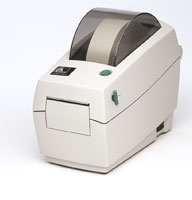 Challenge:
Bergen Brunswig, based in Orange, California, is the third-largest wholesale distributor of pharmaceutical and medical supplies in the United States. The distributor needed shipping software that could fit the needs of its new direct-to-consumer fulfillment service to various on-line drug stores, run on the company’s AS/400, and be easily integrated with its primary distribution system, ASW by IBS. The company also needed to integrate electronic scales and bar code printers to allow for package labeling and tracking.
Solution:
Bergen Brunswig met its Internet Fulfillment Center’s shipping system requirements through Pfastship-2000 software, produced and installed by Pfastship Worldwide Logistics Inc., an IBM Business Partner. The software integrates seamlessly with the IBS system, electronic scales, and thermal, on-demand barcode printers from Zebra Technologies.
A Straight Line Through Everything: Worldwide System Integration With Data Collection
 Challenge:
After a Michigan-based automotive plastics manufacturing company grew by more than 300 percent in just three years, the manufacturer suddenly found itself saddled with 23 different locations, each with different systems, hardware, and processes.
“It couldn’t go on,†said a company product manager. “Developing reports was a nightmare. Identifying efficient manufacturing facilities from inefficient ones was nearly impossible. There were times when one of our factories was buried with work while others were sitting well under capacity.â€
Solution:
To bring all of its locations onto a single system, the company implemented a robust enterprise resource planning (ERP) system that could manage production on a companywide basis. Then they integrated a data capture system—anchored by Zebra® printers—to manage the flow of data in and out of the system.
Aerospace Parts Supplier Flies Through Order Processing and Shipments with Bar Codes
Challenge:
This 25 year-old Florida-based specialty metals supplier needed a better way to respond to requests for urgent shipments from airline customers without compromising accuracy.
Solution:
The company implemented a bar code labeling system to mark shipments appropriately for their customers’ receipt. “We used to hand-write all the destination information on the materials, which was very time consuming,†says the MIS director. “Now, with bar coding, we quickly print labels as needed and are able to locate all shipments at all times. This is a necessity when we have an AOG status (airplane on the ground), which needs parts immediately.â€
Products:
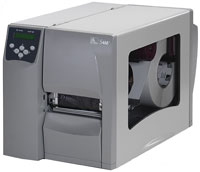
Zebra® S Series™ industrial printer and specialty labels. An industrial printer from Zebra generates labels from eight computer terminals linked to UNIX-based PICK software on the company’s Data General mainframe. Sales people within the office take the orders and assign an order number within the system. Operators within the warehouse pull up the orders on the terminals and decide what materials need to be picked from inventory and how they should be bundled. Long tables, with Interleaved 2 of 5 bar codes marked at every inch, allow the workers to measure the aerospace-grade metal and tally the amount needed for the order.
Regional Hardware Chain Links Stores with Zebra Printers
Challenge:
A family-owned chain of 156 small town hardware stores in the Northeast was looking for a way to streamline operations at the outlets while making it easy to get information on daily activity back to headquarters. They selected a software product offered by one of Zebra’s solutions partners.
Application:
A software house specializing in the management of data and business processes for retailers had all the features a retail hardware company needed. It also had one feature this customer didn’t realize it needed: Zebra desktop printers. Over the years, the software company had seen the efficiencies created by pairing their system with a dedicated output device for the shelf labels, shelf talkers, and flags the customers would create.
Solution:
Instead of trying to customize their offering for the almost limitless number of retail hardware environments they might encounter, the software company forged partnerships with the manufacturers of best-of-breed hardware platforms from PCs to network systems, to servers. The desktop barcode printers they chose for all their installations are from Zebra. Teaming up with Zebra meant this software company only had to be distracted from their code one time. As soon as the Zebra printing language was integrated with the partner’s system, the desktop printer was “plug & play†wherever the software was installed.
Result:
By choosing a single vendor for barcode printers, the software developer simplified their own programming. A dedicated interface between the partner’s proprietary software and Zebra Desktop printers allows a seamless installation in the customer’s 156 small hardware stores. At the same time, it eliminates the need for unbundled buying decisions that would have consumed both time and money for the end user.
Volkswagen Dramatically Improves Process Monitoring with Barcodes

Â
Shanghai-Volkswagen wanted to be able to control the production process of every single car via a barcode label attached to each vehicle. To ease work and prevent delays in their production process, Volkswagen searched for a reliable verification system to match their existing scanner control system.
Axis network cameras were installed as part of that system. The camera monitors any errors and sends the image of the scanner to an Emergency Data Entry PC. To ensure that all components of the security system work properly, a flexible camera management software system was also integrated.
Now, employees save time by not having to physically go to cars to reread their barcodes. Volkswagen’s just-in-time production process was considerably improved. The visual verification system is tailor-made for the existing technical configuration, and increases the value of the network at Volkswagen.
Coca-Cola Testing RFID on Coke Machines

Coca-Cola has begun beta-testing an RFID-enabled drink dispenser that the company claims will transform the soft drink dispensing industry, by providing more than 100 drink options from a single machine. The machine, known as Freestyle, utilizes RFID technology to identify 30 or more cartridges, determine the quantity of flavoring inside each, and transmit data back to Coca-Cola indicating which drinks are being consumed, and when.
“We consider Freestyle nothing short of a revolution in the fountain dispenser business,” says Ray Crockett, Coca-Cola’s director of communications. The system not only offers consumers a vast choice of Coca-Cola beverages, he notes—from sodas to flavored waters—it also provides the company with real-time insight into what is happening in restaurants across the United States.
Continue Reading: http://www.rfidjournal.com/article/articleview/4967
Dallas Cowboys Stadium Goes High-Tech
![dallas_stadium[1]](https://www.barcodesinc.com/news/wp-content/uploads/2009/05/dallas_stadium1.jpg) When the new Dallas Cowboys football stadium opens in June, it may not only be the largest sports stadium in the world, but also the one with the most technological innovations.
When the new Dallas Cowboys football stadium opens in June, it may not only be the largest sports stadium in the world, but also the one with the most technological innovations.
Three million square feet is a lot of stadium, and 1.1 billion dollars is a lot of money, but part of what will make this new stadium shine is the technology that has been built into it. Jerry Jones, the owner of the team, is high on technology. Pete Walsh, head of technology for the Cowboys, says “I was given a blank sheet of paper and told to go create the future.â€
Walsh took that directive literally and has created a tech marvel in the heart of Texas. When fans attend a game at the new stadium, they will be able to e-mail photos to friends, find lost children, cash in wireless coupons and watch customized content on the thousands of televisions, according to a Dallas News story. That’s a far cry from the limited technology that was available at the Cowboy’s previous, 37-year-old facility.
Walsh says, “Texas Stadium doesn’t have a whole lot of technology in it. Basically, you flip on the lights and roll out the football. In the new stadium, almost everything is tied to technology and to a computer.†Here are some of the innovations in the new stadium:
* The stadium will sport two 60 yard video monitors above the field.
* They will be among the 2800 monitors installed in the stadium, every one of which will have its own IP address.
* Stadium personnel can put any available video stream on any monitor at any time, via computer control.
* When complete, parents and stadium security will be able to track children via RFID.
* That same RFID system could help keep track of team property, and keep it from being removed from the stadium.
* Thirty antennae are spread throughout the stadium to insure good telephone and WiFi inside the facility.
Even if the team does not perform, the stadium will. Although most of us do not often think about it, there is a lot of technology packed into almost everything that is being built these days. There is no reason that stadiums should be any different. This new facility will give other team owners another way in which they need to keep up with the Jones’.