

Zebra BoingTech BT0600 RFID Inlay
 Full specifications (PDF)

Price Match Guarantee
Found a better price? We'll match it within 60 days of your purchase.




Rolls per Case
- 3 (1)
Zebra BoingTech BT0600 RFID Inlay Options
-
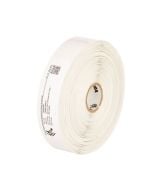
Zebra 3014578 RFID Wristband
RFID Wristband, Zebra Boingtech BT0600 Inlay RFID, RFID, Wristband, Polypropylene, 25 x 279mm, BT600 / UCODE 8, Direct Thermal, Z-Band Direct, Coated, Permanent Adhesive Tape, 25mm CoreItem on backorder — chat for lead time$517.28 -
Zebra 3014578-R Wristbands
Wristbands, Zebra, Zebra Z-Band Direct, Specialty, 1" x 11" (25.4mm x 279.4mm), Direct Thermal, Permanent Adhesive, Perforated, BT0600 Inlay, 1" Core, 5" OD. 175 Labels/Roll, Priced Per Roll. Compatible With ZD621R/ZD500R.Item on backorder — chat for lead time
Frequently Asked Questions
What chip does the Zebra BoingTech BT0600 RFID Inlay use?
The Zebra BoingTech BT0600 uses an NXP UCODE 8 chip, which is the smallest inlay option for item-level applications. This chip features 128-bit EPC memory, 96-bit TID (with 48-bit unique identifier), read sensitivity of -23dBm, and write sensitivity of -18dBm, and complies with EPC Gen2v2 standards.
What read range can I expect from the BoingTech BT0600 inlay?
The BoingTech BT0600 offers theoretical read ranges up to 10 meters in free space under FCC frequencies (902-928 MHz). Read ranges vary by surface material—for example, cardboard achieves 7m, while glass achieves 2m under FCC frequencies. Note that read range drops to 11% of maximum when the inlay is perpendicular (90° and 270°) to the reading antenna.
What industries and applications is the BoingTech BT0600 designed for?
The BoingTech BT0600 is designed specifically for item-level tracking applications in retail, healthcare, and transportation and logistics sectors. It is a general-purpose inlay that meets Auburn University RFID Lab ARC quality performance categories A, B, C, D, G, M, and Q.
How does the BoingTech BT0600 perform on different materials?
Theoretical read ranges on various surfaces under FCC frequencies (902-928 MHz) include: air (10m), cardboard (7m), fiberglass (4m), glass (2m), PTFE (7m), polyacetyl (5m), PVC (6m), and rubber (2m). Actual performance depends on your specific application and environment, and testing is recommended before deployment.
Is the BoingTech BT0600 compatible with Zebra printers and readers?
Yes, all inlays certified by Zebra, including the BoingTech BT0600, have been pre-tested with Zebra printers and readers to ensure compatibility. For more information on Auburn's ARC specifications and the certification process, you can visit rfid.auburn.edu.
What memory specifications does the BoingTech BT0600 have?
The BoingTech BT0600 features 128-bit EPC memory for storing product identification data and a 96-bit TID (Tag ID) that is factory-locked with 48-bit unique identifier capability. The inlay does not include user memory, making it ideal for standardized item-level tracking applications.
Zebra BoingTech BT0600 RFID Inlay Model Overview
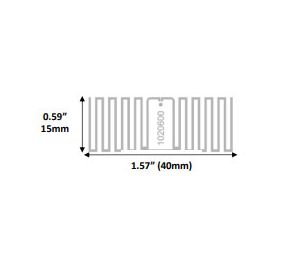
- Smallest inlay with NXP UCODE 8 for item level applications
- Offers good sensitivity with read ranges up to 10m in free space
- Meets Auburn University RFID Lab ARC quality performance categories A, B, C, D, G, M, Q
- Theoretical read ranges up to 10m on various surfaces
This inlay is designed for use in item level applications, and transportation and logistics sectors. For more information, visit www.zebra.com/supplies
Product Performance and Suitability:
The information contained in this document is to be used for guidance only and is not intended for use in setting specifications. All purchasers of Zebra products shall be solely responsible for independently determining if the product conforms to all requirements of their unique application.
DETAILS
• General Purpose inlay • Applications: Item tracking • Meets Auburn ARC Specs: A, Q
TECHNICAL INFORMATION
• Chip: NXP UCODE 8 o EPC memory: 128 bit o User memory: N/A o TID: 96 bit factory locked (48 bit unique) o Read Sensitivity: -23dBm o Write Sensitivity: -18dBm o EPC Gen2v2 • Good sensitivity chip with read ranges up to 10m in free space
RADIATION PATTERN*
THEORETICAL** READ RANGES ON VARIOUS SURFACES (m)
Material ETSI (865-868 MHz) FCC (902-928 MHz) Air 6 10 Cardboard 6 7 Fiberglass 3 4 Glass 3 2 PTFE 7 7 Polyacetyl 4 5 PVC 4 6 Rubber 3 2 * Read range drops to 11% of maximum when inlay is perpendicular (90º and 270º) to the reading antenna. **Theoretical read range data is meant to be directional. Actual performance will depend on your application and environment. Testing is recommended. All inlays certified by Zebra have been pre-tested with Zebra printers and readers. For more information on Auburn’s ARC specifications, testing, and the certification process, please go to rfid.auburn.edu.
SUGGESTED APPLICATIONS
• Item level tracking