

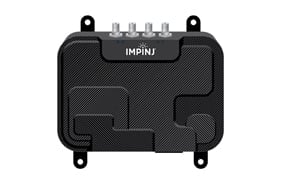
Impinj Impinj R700 RFID Reader
Empowers faster, more accurate reading and future-proofing of IoT solutions
 Full specifications (PDF)

Price Match Guarantee
Found a better price? We'll match it within 60 days of your purchase.


Subscribe & Save Eligible
- No (3)
Category
- Impinj RFID Reader (1)
- Network Antennas (1)
- RFID Reader Accessories (1)
- Spare Parts (1)
Impinj Impinj R700 RFID Reader Options
-
Impinj IPJ-A5100-000 Spare Parts
R700 WATER-RESISTANT CASE, REQUIRES PARTNER AUTHORIZATIONItem on backorder — chat for lead time$55.00 -
Impinj IPJ-A6010-000 Network Antennas
R700 8 PORT ANTENNA HUB, ALLOWS FOR CONNECTION OF UP TO 32 ANTENNAS FOR THE R700, REQUIRES PARTNER AUTHORIZATIONIn Stock$515.00 -
Impinj IPJ-R700-341-B RFID Reader
RFID Reader, Impinj, Impinj R700 RAIN RFID Fixed Reader, 4-Port, 64-Bit Processor, FCC/GX Region, Revision 2; Partner Authorization RequiredIn Stock$1,281.26 -
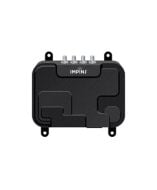
Impinj IPJ-R700-341 RFID Reader
Impinj R700 Reader, 4-Port, FCC and GX RegionsItem on backorder — chat for lead time$1,499.00
Frequently Asked Questions
What is the Impinj R700 RAIN RFID Reader?
The Impinj R700 is a four-port fixed RAIN RFID reader built for enterprise-grade deployments. It complies with the GS1 UHF Gen2v2 air interface standard, standardized by ISO/IEC as 18000-63, and reads up to 1,100 tags per second with a maximum receive sensitivity of -92 dBm at a 10⁻³ bit error rate.
Unlike a handheld reader, the R700 is mounted in a fixed position and connected to external antennas — four monostatic RP-TNC ports supporting up to 32 read zones. It ships in two regional variants: IPJ-R700-141 for FCC markets and IPJ-R700-241 for ETSI markets. Typical applications include loss prevention, pallet tracking, real-time inventory management, asset management, conveyor systems and supply chain visibility.
How does the Impinj R700 compare to the Speedway R420?
The R700 is a substantial hardware generation ahead. Its receive sensitivity is -92 dBm versus -84 dBm on the Speedway R420 — an 8 dB improvement that lets it read smaller tags and reach further. Processing moves from a 400 MHz single-core to a 1 GHz dual-core processor, RAM from 256 MB to 1,024 MB, and the custom application partition from 32 MB to 128 MB.
Connectivity improves as well: Gigabit Ethernet replaces 10/100, USB peripheral slots go from one to three, and the GPIO block is integrated rather than sold as an accessory. Both readers have four antenna ports, 32 maximum read zones and an 1,100 reads-per-second rate, and both support PoE and PoE+. Maximum transmit power rises slightly, from 32.5 dBm to 33.0 dBm.
How is the Impinj R700 powered, and does the power source affect performance?
The Impinj R700 is powered exclusively over Ethernet — either PoE (802.3af) or PoE+ (802.3at) — with no separate DC input. Where the reader is not connected to a PoE-capable switch, an Impinj midspan power injector (part IPJ-A2010) adds inline power to the network connection.
The power source does affect RF performance. On PoE, maximum transmit power is 30 dBm; on PoE+, it rises to 33 dBm. When connected to a device supporting Link Layer Discovery Protocol (LLDP), the R700 checks whether PoE+ is available and configures itself to use it automatically. If maximum read range matters, verify the switch or injector delivers PoE+.
How do we develop applications for and integrate with the Impinj R700?
The Impinj R700 supports four development paths. A RESTful interface allows host-based applications in over 80 languages, connecting the reader to IoT applications the same way as other IoT devices. The Octane SDK covers host-based .NET and Java development, and the LLRP Toolkit covers .NET, Java, C and C++.
For on-reader applications, the Embedded Toolkit supports C and C++ running in a 128 MB custom application partition, so tag-processing algorithms can execute at the edge rather than sending raw reads upstream. Gigabit Ethernet keeps latency low and prevents data bottlenecks. Firmware is Impinj R700 LLRP with Impinj extensions, and the network stack supports IPv4 and IPv6 with SSH, HTTP, HTTPS, NTP, DHCP, SFTP and mDNS services.
What security features does the Impinj R700 provide?
The Impinj R700 runs a secure, field-upgradable Linux operating system on a 5.1 kernel. It uses an encrypted software image and a secure software boot with chain-of-trust, which prevents unauthorized software from executing on the reader — a common requirement in enterprise and retail deployments where readers sit on the corporate network.
It supports 802.1x port security for network access control, HTTPS and SSH for encrypted management, and event logs with syslog forwarding for centralized monitoring. Firmware upgrades are web-based and can be performed remotely, so a distributed fleet can be patched without site visits.
Where can the Impinj R700 be installed, and what are its environmental limits?
The Impinj R700 has a ruggedized, shock-resistant die-cast aluminum enclosure weighing 2.12 lb. (0.96 kg), rated to United States Military Standard MIL-STD-810G for shock and vibration. Its operating temperature range is -4° F to 122° F (-20° C to 50° C) at 5–95% non-condensing humidity.
Note the sealing rating is IP50 — protected against dust, but with no rating for water ingress. The reader itself should be installed indoors or in a protected enclosure, even though Impinj offers outdoor-rated antennas such as the Times-7 Slim Outdoor and Compact Outdoor models for the read zone itself. Mounting is via VESA 100 x 100 on the enclosure bottom or two removable brackets compatible with the Impinj Speedway mounting system. Under FCC rules, professional installation is required.
Impinj Impinj R700 RFID Reader Model Overview
Key features:
- Enterprise-grade reliability and security with field-upgradable capabilities
- Integrated standardized connections for easy attachment to peripherals
- Gigabit Ethernet connectivity for fast data transmission
- Wide operational temperature range from -20°C to 50°C
- High sensitivity of -92 dBm for reading smaller tags
Specifications:
- Physical Dimensions: 8.4 in. x 7.4 in. x 1.2 in. (with mounting brackets)
- Power Supply: PoE (802.3af), PoE+ (802.3at)
- Air Interface Protocol: EPC global UHF Gen2 v2 / ISO 18000-63 RFID
- Frequency Range: FCC: 902-928 MHz; ETSI: 865-868 MHz, 915-921 MHz
- Transmit Power: Up to 33 dBm (PoE+) / 30 dBm (PoE)
- Receive Sensitivity: -92 dBm max
- Processor: Dual-Core 1 GHz
- Memory: 1 GB Flash, 1 GB RAM
- Network Connectivity: 10/100/1000 BASE-T Ethernet
- General Purpose I/O: 3 out, 2 in (optically isolated)