
AirTrack BCI200100BIPL-PINK-2D-10 Barcode Label
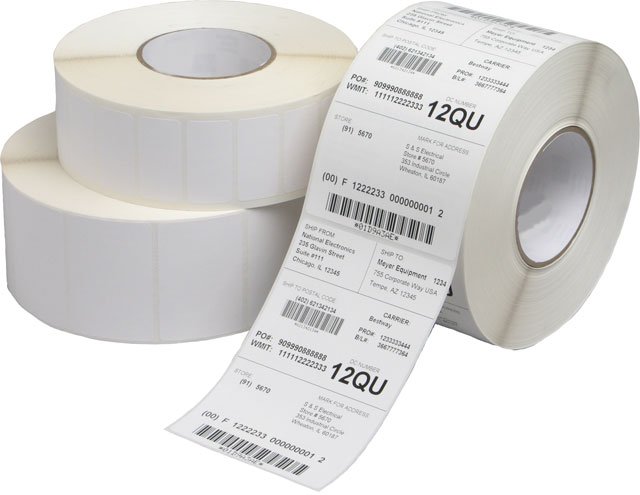





AirTrack® Premier Barcode Label Model Overview
We produce both Direct thermal and Thermal transfer labels in various sizes, materials, and applications. We strive to offer the highest quality product at a superior price.
AirTrack Premier Labels offer you:
- Exceptional Choice
- Increased Flexibility
- Quality Craftsmanship
- Superior Price
- A Brand You Can Trust
Frequently Asked Questions
What is the difference between the ZT610 and the ZT620?
Print width and speed are the main differences. The Zebra ZT610 prints up to 4.09 in. (104 mm) wide at up to 14 ips (356 mm/sec), while the ZT620 prints up to 6.6 in. (168 mm) wide at up to 12 ips (305 mm/sec). Resolution options are 203 dpi standard and 300 dpi optional on both models, with 600 dpi available on the ZT610 only.
Media handling differs accordingly: the ZT610 accepts media from 1.00 in. (25.4 mm) to 4.5 in. (114 mm) in tear/cutter mode, the ZT620 from 2.00 in. (51 mm) to 7.0 in. (178 mm). The ZT620 is also wider and heavier at 13.44 in. (341.45 mm) and 57.4 lbs (26 kg), versus 10.56 in. (268.2 mm) and 50 lbs (22.7 kg) for the ZT610. Choose the ZT620 for wide labels such as pallet and shipping placards, and the ZT610 for standard 4-inch label work or when 600 dpi is required.
Can an existing ZT610 or ZT620 be upgraded to RFID in the field?
Yes. The Zebra ZT600 Series RFID encoder is user-upgradeable in the field and available on both the 4-inch ZT610 and 6-inch ZT620 models. Zebra states the field upgrade takes about five minutes, so a printer purchased without RFID can be converted as tracking requirements evolve rather than replaced.
This makes the ZT600 Series a hedge against uncertain RFID timelines: deploy the printers now for barcode label work, then add encoding when a customer mandate or internal item-level tracking program arrives.
Which RFID tags and protocols does the ZT600 Series support?
The Zebra ZT600 Series supports tags compatible with UHF EPC Gen 2 V2, ISO/IEC 18000-63 and RAIN RFID protocols. It supports industry-standard, multi-vendor chip-based serialization and block permalocking of user memory compatible with ATA Spec 2000, and includes RFID job-monitoring tools for tracking encoding performance.
Adaptive Encoding Technology automatically selects the optimum encode settings for the media loaded, which removes the need for complex inlay placement guides and simplifies RFID calibration. Zebra's RFID technology is certified on six continents, supporting multinational supply chain deployments.
How does the ZT600 Series reduce RFID media costs?
The Zebra ZT600 Series can encode inlays spaced at a pitch of 0.6 in. (16 mm) or narrower on most RFID inlays — tighter than competing printer/encoders accommodate. Because the inlays sit closer together, label converters use less material per roll, which lowers the cost per label.
Tighter spacing also means more labels per roll, so operators change media rolls less often and printer throughput increases. On high-volume item-level tagging programs, the media saving typically outweighs the hardware cost difference.
What connectivity and management options does the ZT600 Series offer?
Standard connectivity on the Zebra ZT600 Series includes USB 2.0 high-speed, RS-232 Serial, Gigabit Ethernet, USB Host and Bluetooth 4.0. Optional additions include parallel, 802.11ac wireless, an applicator port, IPv6 (via an external dongle on the parallel port) and BTLE. Two open communication slots accept internal cards for future protocols or failover connections.
Zebra Link-OS provides real-time visibility and control of printers on-site or remotely, with cloud-accessible apps for setup, management and troubleshooting. Web View allows browser-based control via ZPL II, and printers with ZebraNet print servers send email alerts to minimize downtime. Firmware supports ZPL and ZPL II, XML-enabled printing and the optional ZBI 2.0 programming language for stand-alone applications.
What is the Zebra ZT600 Series RFID Industrial Printer/Encoder?
The Zebra ZT600 Series is a line of industrial thermal printers that both print and encode RFID labels in a single pass. The series comprises two models — the 4-inch ZT610 and the 6-inch ZT620 — each built on an all-metal frame with a bi-fold metal media cover, side-loading supplies path and a thin film printhead with E3 Element Energy Equalizer for print quality.
Both models support thermal transfer and direct thermal printing and are designed for manufacturing and transportation and logistics environments where dust, debris, moisture and temperature extremes would disable a lighter printer. RFID encoding is delivered by an integrated encoder that can be ordered from the factory or installed later in the field.
Can the Zebra ZT620R RFID printer be upgraded with RFID encoding capabilities in the field?
Yes, the ZT620R features a field-upgradeable RFID encoder that can be installed in just five minutes without factory service. This allows you to add RFID encoding capabilities to your existing printer when your business needs evolve, making it a future-proof investment that grows with your operation.
How long does the Zebra MB1000 beacon battery last?
The Zebra MB1000 features a fixed CR2032 220mAh coin cell battery with an operational life of up to 5 years. This extended battery longevity is achieved through Bluetooth Low Energy technology and ultra-low RF transmit powers, making it ideal for long-term asset tracking deployments in warehouses and industrial environments.
How long does the Zebra UWB Tag battery last?
At a 1 Hz blink rate, the Zebra UWB Tag can continuously track an asset for over 7 years on a single 3V coin cell battery. Battery life varies based on the programmed transmission rate—higher blink rates will reduce battery longevity. We offer these tags with configurable blink rates to match your operational needs.
What is the real-time location accuracy of Zebra UWB Tags?
Zebra UWB Tags deliver real-time location accuracy better than 30 cm (1 foot) line of sight. This exceptional accuracy is achieved through extremely short-duration UWB pulse transmissions, which also allow thousands of tags to be simultaneously located. Contact us today to discuss accuracy requirements for your specific application.
What print speeds and resolution does the Zebra ZT620R deliver?
The ZT620R delivers fast print speeds of up to 14 inches per second with thermal transfer and direct thermal printing capabilities. It features a thin film printhead with E3™ Element Energy™ Equalizer technology to ensure superior print quality across a wide range of applications.
What devices and platforms does the MB1000 integrate with?
The MB1000 seamlessly integrates with commercial Android and iOS devices, and is compatible with Zebra MotionWorks solutions. It also supports third-party solutions and can be customized through Zebra's SDK for flexible deployment across various industries including warehouses, factories, and hospitals.
Are Zebra UWB Tags compliant with international standards?
Yes, Zebra UWB Tags are compliant with the International UWB Standard IEEE 802.15.4f and ISO-24730-61. The tags can be configured to operate in either native Zebra format or ISO/IEEE format, and our UWB Sensors are also ISO/IEEE compliant. This standards-based approach protects your infrastructure investment and ensures compatibility with other compliant tags available from us.
How does the ZT620R help reduce RFID media costs?
The ZT620R can accommodate RFID inlay spacing (pitch) as close as 0.6"/16 mm or narrower, which is smaller than many competing encoders can handle. By spacing inlays closer together, label converters use less material per label, reducing your cost per label, requiring fewer media roll changes, and enabling faster throughput.
What are the three operating modes of the Zebra MB1000?
The MB1000 features three beacon modes: Battery Save mode for extended battery life, iBeacon mode for standard proximity-based applications, and MPact mode for Zebra-specific implementations. These modes allow you to optimize performance based on your specific asset tracking and location solution requirements.
What is the RF range of Zebra UWB Tags?
Zebra UWB Tags have a long RF range of up to 200 meters (650 feet). The tags emit short ultra-wideband pulses that are detected by Zebra's UWB Sensors, which connect to the UWB Hub to determine real-time location. Visit barcodesinc.com to learn more about our complete UWB ecosystem.
What connectivity options are available on the Zebra ZT620R?
The ZT620R comes standard with Serial, USB 2.0, Gigabit Ethernet, USB Host, and Bluetooth 4.0 connectivity. Optional connectivity includes Parallel, 802.11a/c Wi-Fi, Applicator Port, IPv6, and BTLE capabilities, plus two open media slots for non-standard connectivity options and future protocol provisioning.
Is the MB1000 suitable for harsh industrial environments?
Yes, the MB1000 is constructed with ruggedized materials that withstand common industrial cleaning agents and operates reliably in standard industrial temperature ranges of 32°F to 104°F (0°C to 40°C). Its durable design and compact form factor (1.46" x 1.06" x 0.44") make it well-suited for deployment in complex warehouse and factory settings.
Can Zebra UWB Tags be used in harsh or wet environments?
Yes, Zebra UWB Tags are IP67 rated, making them fully dust and waterproof for both indoor and outdoor use. The tags are also UL 913 certified for Class 1 Division 1, Groups A-D, T4 environments. Available from us in two form factors—a circular tag for assets and a low-profile badge tag for personnel.
How does the ZT620R perform in harsh industrial environments?
The ZT620R features a durable all-metal frame and bi-fold metal media cover designed to withstand extreme temperatures, dust, debris, moisture, and other challenging conditions. Its robust construction virtually eliminates operational downtime due to printer failure, making it ideal for demanding manufacturing, transportation, and logistics environments.
What wireless technology and security does the MB1000 use?
The MB1000 utilizes Bluetooth 4.1 (Bluetooth Low Energy) technology for efficient, low-power proximity-based location solutions. It includes 128-bit AES encryption for secure communications, protecting your asset tracking data while maintaining the low power consumption needed for extended battery life.
How are Zebra UWB Tags configured and programmed?
Zebra UWB Tags are easily configured using the Zebra UWB Wand, a small wireless transmitter that allows you to turn tags on/off and set transmission rates across a wide range of blink rates from 0.01 Hz to 200 Hz. The UWB Wand can configure up to 100 tags at once within its low-frequency range. Contact us today for setup support and training.
What management and monitoring capabilities does the ZT620R offer?
The ZT620R includes Zebra's Link-OS software platform, which provides real-time visibility and control of your printing systems both on-site and remotely through cloud-accessible applications. The printer features a highly visible color display that turns red during error states for quick status recognition, plus onboard sensors, diagnostics, and help resources to manage issues independently.
Can the MB1000 be configured remotely after deployment?
Yes, the MB1000 supports over-the-air updates and configuration options through Zebra's SDK, allowing you to adjust settings and optimize beacon performance without physical access to the devices. This capability makes it easy to manage large deployments and adapt to changing operational needs in your warehouse or facility.
