What are the key specifications of the Ubiquiti NBE-M5-300(US)?
The NBE-M5-300(US) features a 22 dBi gain antenna with 5150–5875 MHz operating frequency (US bands), an Atheros MIPS 74Kc 560 MHz processor, 64 MB DDR2 memory, and a single 10/100 Ethernet port. It consumes a maximum of 6W power via 24V PoE and supports channel sizes from 5 to 40 MHz with dual linear polarization.
What mounting options are available for the NBE-M5-300(US)?
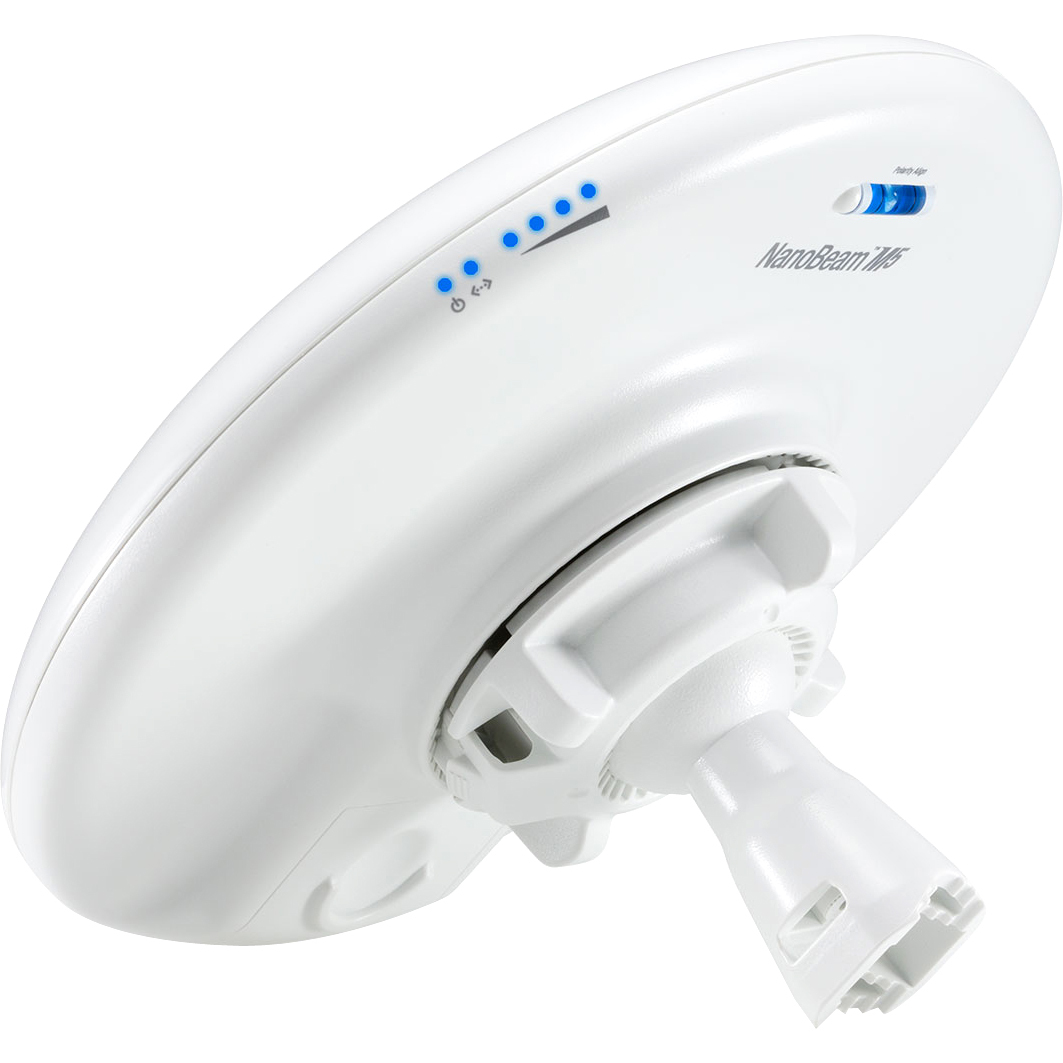
The NBE-M5-300(US) features an innovative pole-mount design with a kit included for easy installation. The compact all-in-one design allows flexible mounting in a variety of configurations to suit your deployment needs.
Is the NBE-M5-300(US) suitable for outdoor environments?
Yes, the NBE-M5-300(US) is designed for outdoor use with a UV-stabilized plastic enclosure, operating temperature range of -40 to 70°C, and operating humidity of 5 to 95% non-condensing. It survives wind speeds up to 120 km/h (75 mph) and has undergone rigorous environmental testing including salt fog, vibration, temperature shock, UV, and wind-driven rain tests.
What wireless frequencies does the NBE-M5-300(US) support?
The NBE-M5-300(US) operates in the 5 GHz band with US-specific frequency support across U-NII-1 (5150–5250 MHz), U-NII-2A (5250–5350 MHz), U-NII-2C (5470–5725 MHz), and U-NII-3 (5725–5850 MHz) bands. It supports flexible channel sizes of 5, 8, 10, 20, 30, and 40 MHz.
What is the power consumption and PoE requirement for the NBE-M5-300(US)?
The NBE-M5-300(US) requires 24V, 0.5A PoE (Power over Ethernet) and has a maximum power consumption of 6W, making it efficient for remote deployments where power management is critical.
What protection does the NBE-M5-300(US) have against electrical interference?
The NBE-M5-300(US) includes comprehensive ESD/EMP protection rated at ±24 kV for both air and contact discharge, ensuring reliable operation in electrically challenging environments. It also holds FCC, IC, and CE wireless approvals and is RoHS compliant.
The Ubiquiti Networks NBE-M5-300(US) Point to Multipoint Wireless is also known as
UBI-NBEM5300US
Ubiquiti Networks NBE-M5-300(US) Point to Multipoint Wireless