
Symbol 25-108022-02R Accessory
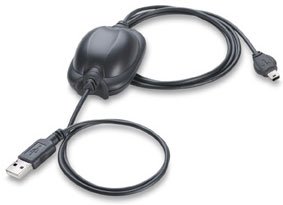




Zebra MC67 Accessory Model Overview
Frequently Asked Questions
What is the read accuracy rate of the SLS D-Series RFID Dock Door?
The SLS D-Series maintains a 99.99% scan rate accuracy while preventing cross-readings between reading sites. This high accuracy is achieved through Wave® Antenna technology that tunes the portal according to your surrounding environment, ensuring reliable tag detection at both pallet and item levels.
Does the SLS D-Series require additional power cables or servers?
No. The SLS D-Series is designed to run on Power-over-Ethernet (PoE) with no additional power cables required at chokepoints. It's a plug-and-play, scalable solution that operates at minimal power and requires no additional servers for deployment.
Which RFID readers are compatible with the SLS D-Series?
The SLS D-Series is compatible with Impinj R420 and R700 readers, as well as Zebra FX9600 and FX7500 readers. This compatibility allows you to integrate the dock door solution with your existing RFID infrastructure from these leading manufacturers.
What are the operating temperature and frequency specifications for the SLS D-Series?
The SLS D-Series operates in a temperature range of -4°F to 140°F (-20°C to 60°C) and supports frequency ranges of 902-928 MHz for North America and 865-868 MHz for Europe, with a maximum EIRP of 36 dBm for FCC compliance. This wide operating range ensures reliable performance across diverse warehouse and dock environments.
What size options are available for the SLS D-Series RFID Dock Door?
We offer four D-Series models: the D-800 (96"x15"x4", 45lbs), D-500 (62"x15"x4", 30lbs), D-200 (24"x15"x4", 10lbs), and D-100 (61"x9"x2", 10lbs). Each model provides different coverage widths to accommodate various dock door configurations and installation requirements.
How does the SLS D-Series minimize cross-reads and improve read accuracy?
The SLS D-Series uses Wave® Antenna technology with integrated antennas that uniformly illuminate space and cover all three tag orientations, resulting in tightly controlled read zones. This unique capability minimizes cross-reads between reading sites while maintaining high accuracy in rugged industrial environments subject to heavy traffic and forklift operations.
