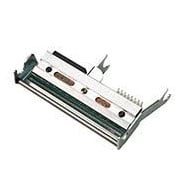
Compatibility:
SATO GY412 Label Printer



The HPE Aruba 670 Series features Wi-Fi 6E tri-radio technology with 2×2:2 MIMO across 2.4 GHz, 5 GHz, and 6 GHz bands, delivering up to 3.9 Gbps aggregate throughput. The 6 GHz band alone provides 2.4 Gbps on HE160 channels, while the 5 GHz band delivers 1.2 Gbps on HE80 channels, and the 2.4 GHz band provides 287 Mbps on HE40 channels. This tri-radio capability makes it ideal for high-density deployments requiring simultaneous video analytics, point-of-sale, and public safety communications.
The HPE Aruba 670 Series delivers Wi-Fi 6E tri-radio throughput with 3.9 Gbps aggregate capacity across concurrent 2.4 GHz, 5 GHz, and 6 GHz bands using 2×2:2 MIMO configuration. Specific throughput includes 2.4 Gbps on 6 GHz HE160, 1.2 Gbps on 5 GHz HE80, and 287 Mbps on 2.4 GHz HE40, making it ideal for high-density deployments requiring video analytics and point-of-sale applications. The access point draws a maximum of 45.5 W via PoE-PD (Class 6), ensuring efficient power consumption in outdoor environments.
The HPE Aruba 670 Series features a tri-radio Wi-Fi 6E design with three concurrent 2×2:2 MIMO radios operating on 2.4 GHz, 5 GHz, and 6 GHz bands, delivering up to 3.9 Gbps aggregate capacity. The 6 GHz band supports up to 2.4 Gbps on HE160 channels, the 5 GHz band delivers 1.2 Gbps on HE80 channels, and the 2.4 GHz band provides 287 Mbps on HE40 channels. This tri-radio architecture is ideal for high-density deployments requiring video analytics, point-of-sale systems, and public safety communications.
The AP-677 features tri-radio Wi-Fi 6E with concurrent operation across 2.4 GHz, 5 GHz, and 6 GHz bands using 2×2:2 MIMO configuration, delivering 3.9 Gbps aggregate throughput. The 6 GHz radio achieves 2.4 Gbps on HE160 channels, the 5 GHz radio provides 1.2 Gbps on HE80 channels, and the 2.4 GHz radio delivers 287 Mbps on HE40 channels. This tri-band architecture is ideal for high-density deployments requiring maximum capacity and low latency across multiple frequency bands.
The HPE Aruba 670 Series features Wi-Fi 6E tri-radio technology with concurrent operation on 2.4 GHz, 5 GHz, and 6 GHz bands using 2×2:2 MIMO configuration. This delivers up to 3.9 Gbps aggregate capacity, with 6 GHz HE160 providing 2.4 Gbps, 5 GHz HE80 delivering 1.2 Gbps, and 2.4 GHz HE40 contributing 287 Mbps—ideal for high-density deployments requiring video analytics and point-of-sale applications.
The HPE Aruba 670 Series delivers Wi-Fi 6E tri-radio throughput with 3.9 Gbps aggregate capacity across concurrent 2.4 GHz, 5 GHz, and 6 GHz bands using 2×2:2 MIMO configuration. Performance breaks down to 2.4 Gbps on 6 GHz HE160, 1.2 Gbps on 5 GHz HE80, and 287 Mbps on 2.4 GHz HE40, making it ideal for high-density deployments requiring video analytics and point-of-sale applications. We offer this model with maximum power draw of 45.5 W PoE-PD (Class 6) for efficient power management in outdoor environments.
The AP-675 features internal omnidirectional antennas for 360-degree coverage, while the AP-677 includes internal directional antennas for focused coverage in specific areas. Both models deliver the same Wi-Fi 6E tri-radio performance with 3.9 Gbps aggregate throughput across 2.4 GHz, 5 GHz, and 6 GHz bands. Choose the AP-675 for perimeter or open-area deployments and the AP-677 when you need targeted coverage toward specific zones.
The SATO R15748000 is a GY412 print head with 305 dpi (dots per inch) resolution, providing clear and precise barcode and label printing for warehouse and logistics applications. This resolution is ideal for standard barcode labels, shipping labels, and inventory tags where readability is critical.
The HPE Aruba 670 Series delivers Wi-Fi 6E tri-radio performance with 3.9 Gbps aggregate throughput across concurrent 2.4 GHz, 5 GHz, and 6 GHz bands using 2×2:2 MIMO technology. Individual radio performance includes 2.4 Gbps on 6 GHz HE160, 1.2 Gbps on 5 GHz HE80, and 287 Mbps on 2.4 GHz HE40, making it ideal for high-density deployments in video analytics, point-of-sale, and public safety communications.
The HPE Aruba 670 Series features Wi-Fi 6E tri-radio technology with three concurrent 2×2:2 MIMO radios operating on 2.4 GHz, 5 GHz, and 6 GHz bands, delivering up to 3.9 Gbps aggregate throughput. Individual radio performance includes 2.4 Gbps on 6 GHz HE160, 1.2 Gbps on 5 GHz HE80, and 287 Mbps on 2.4 GHz HE40, making it ideal for high-density deployments requiring video analytics and point-of-sale applications.
The HPE Aruba 670 Series delivers Wi-Fi 6E tri-radio performance with 3.9 Gbps aggregate capacity across three concurrent 2×2:2 MIMO radios operating on 2.4 GHz, 5 GHz, and 6 GHz bands. Throughput breakdown includes 2.4 Gbps on 6 GHz HE160, 1.2 Gbps on 5 GHz HE80, and 287 Mbps on 2.4 GHz HE40, making it ideal for demanding applications like video analytics, point-of-sale systems, and public safety communications.
We offer the Star SMD2 Max Series in two models: the SMD2-1317 (13.0" W x 16.3" L x 4.1" H) and the SMD2-1617 (15.9" W x 16.7" L x 4.4" H). Both are constructed from high-quality steel and designed to manage cash efficiently while maintaining a professional appearance in any retail environment.
Yes, the 670 Series is engineered for mission-critical outdoor deployments with IP66/67 ruggedized housing that withstands aggressive wash-down, salt-laden air, and temperatures ranging from –40 °C to +70 °C. The enclosure is rated for high-wind conditions and includes built-in surge protection and EMI shielding to ensure reliable operation in harsh environments. We offer these units for logistics, warehouse, and public safety applications where durability is essential.
Yes, the 670 Series is engineered for mission-critical outdoor deployments with IP66/67 ruggedized housing that withstands aggressive wash-down, salt-laden air, and extreme temperatures ranging from –40 °C to +70 °C. The corrosion-resistant enclosure is also rated for high-wind conditions, and HazLoc EX variants are available for Class 1 Div 2 and Zone 2 hazardous locations.
Yes, the 670 Series is engineered specifically for mission-critical outdoor deployments with IP66/67 ruggedized housing that withstands aggressive wash-down, salt-laden air, and extreme temperatures ranging from –40 °C to +70 °C. The corrosion-resistant enclosure is salt spray and high-wind rated, and we offer HazLoc EX variants for Class 1 Div 2 and Zone 2 installations where hazardous conditions require compliance. Built-in surge protection, EMI shielding, and thermal shutdown mechanisms provide additional reliability in demanding environments.
Yes, the 670 Series is engineered for mission-critical outdoor deployments with IP66/67 ruggedized housing that withstands aggressive wash-down, salt-laden air, and extreme temperatures from –40 °C to +70 °C. The corrosion-resistant enclosure is rated for high-wind conditions and includes built-in surge protection and EMI shielding. HazLoc EX variants are also available for Class 1 Div 2 and Zone 2 hazardous location installations.
Yes, the 670 Series is engineered for mission-critical outdoor deployments with an IP66/67 ruggedized, corrosion-resistant enclosure that withstands aggressive wash-down, salt-laden air, and extreme temperatures ranging from –40 °C to +70 °C. The access point is also high-wind rated and includes built-in surge protection, EMI shielding, and thermal shutdown mechanisms to ensure reliable operation in the harshest conditions. We offer this model for demanding outdoor installations where durability is critical.
Yes, the 670 Series is engineered for mission-critical outdoor deployments with an IP66/67 ruggedized housing that withstands aggressive wash-down, salt-laden air, and extreme temperatures ranging from –40 °C to +70 °C. The access point is salt spray and high-wind rated, with HazLoc EX variants available for Class 1 Div 2 and Zone 2 installations, plus built-in surge protection and EMI shielding for added durability.
Yes, the 670 Series is engineered for mission-critical outdoor deployments with an IP66/67 ruggedized housing that withstands aggressive wash-down, salt-laden air, and temperature extremes from –40 °C to +70 °C. The corrosion-resistant enclosure is also rated for high-wind conditions and includes built-in surge protection and EMI shielding for reliable operation in demanding environments.
Yes, the 670 Series is engineered for mission-critical outdoor deployments with IP66/67 ruggedized housing that withstands aggressive wash-down, salt-laden air, and temperature extremes from –40 °C to +70 °C. The corrosion-resistant enclosure is salt spray and high-wind rated, with built-in surge protection, EMI shielding, and thermal shutdown to ensure reliability in demanding conditions. We also offer HazLoc EX variants certified for Class 1 Div 2 and Zone 2 installations for hazardous environments.
Yes, the 670 Series is engineered for mission-critical outdoor deployments with an IP66/67 ruggedized housing that withstands aggressive wash-down, salt-laden air, and extreme temperatures ranging from –40 °C to +70 °C. The enclosure features a corrosion-resistant design, built-in surge protection, and EMI shielding, making it suitable for coastal, industrial, and high-wind environments. We offer this product with confidence for the most demanding outdoor installations.
Yes, the 670 Series is engineered for mission-critical outdoor deployments with IP66/67 ruggedized housing that withstands aggressive wash-down, salt-laden air, and extreme temperatures from –40 °C to +70 °C. The enclosure features corrosion-resistant construction, high-wind rating, and built-in surge protection and EMI shielding for reliable performance in the harshest conditions.
The Star SMD2 Max Series features a USB-driven interface with a bottom exit cable included for easy connection and status monitoring. This USB connectivity allows seamless integration with your existing point-of-sale system for reliable cash drawer operation.
The SATO R15748000 GY412 printhead is designed for SATO thermal transfer printers that use the GY412 printhead assembly. We recommend verifying your specific SATO printer model with our team to ensure compatibility before ordering. Contact us today at barcodesinc.com to confirm compatibility with your equipment.
The 670 Series features a 2.5 GbE PoE-PD multi-gig uplink for primary connectivity, complemented by a 1 GbE SFP uplink for redundancy or extended range deployments. Dual USB host ports (USB-C and USB-A) enable failover capabilities and edge compute integration, providing flexible deployment options for various network architectures. This multi-connectivity approach ensures reliable backhaul and supports advanced use cases in logistics and warehouse environments.
The 670 Series includes high-power Bluetooth 5 and IEEE 802.15.4/Zigbee radios to create a consolidated IoT backbone for large-scale deployments. Additionally, a built-in GNSS L1 receiver enables precise location-aware services and auto-discovery mapping capabilities, allowing you to leverage location intelligence across your wireless infrastructure.
The 670 Series includes high-power Bluetooth 5 and IEEE 802.15.4/Zigbee radios that create a consolidated IoT backbone for large-scale device deployments. A built-in GNSS L1 receiver enables precise location-aware services and auto-discovery mapping, allowing you to leverage location intelligence across your wireless infrastructure.
The 670 Series includes onboard high-power Bluetooth 5 and IEEE 802.15.4/Zigbee radios that create a consolidated IoT backbone for large-scale deployments. Additionally, the access point features a built-in GNSS L1 receiver for precise location-aware services and auto-discovery mapping capabilities. These integrated IoT radios eliminate the need for separate IoT infrastructure, simplifying network architecture.
The 670 Series features onboard high-power Bluetooth 5 and IEEE 802.15.4/Zigbee radios that create a consolidated IoT backbone for large-scale deployments, eliminating the need for separate IoT infrastructure. A built-in GNSS L1 receiver enables precise location-aware services and auto-discovery mapping, which is particularly valuable for public safety communications and asset tracking in outdoor environments. These integrated radios reduce deployment complexity and operational costs compared to standalone IoT gateways.
The AP-677 includes high-power Bluetooth 5 and IEEE 802.15.4/Zigbee radios that create a consolidated IoT backbone for large-scale deployments. Additionally, the access point features a built-in GNSS L1 receiver for precise location-aware services and auto-discovery mapping. These integrated radios eliminate the need for separate IoT gateways in many deployments.
The 670 Series includes high-power Bluetooth 5 and IEEE 802.15.4/Zigbee radios that create a consolidated IoT backbone for large-scale device deployments. Additionally, a built-in GNSS L1 receiver enables precise location-aware services, auto-discovery, and mapping capabilities without requiring external positioning infrastructure. These integrated radios simplify IoT deployments by reducing the need for separate wireless systems.
The Star SMD2 Max Series is equipped with Kensington lock compatibility and includes two keys for enhanced security. Additionally, the drawer supports four lock functions: locked-closed, online (opens electronically), manual open, and locked-open, giving you flexible control over cash access.
The 670 Series includes high-power Bluetooth 5 and IEEE 802.15.4/Zigbee radios for large-scale IoT deployments, plus a built-in GNSS L1 receiver that enables precise location-aware services and auto-discovery mapping capabilities. These consolidated IoT radios eliminate the need for separate infrastructure, simplifying network architecture.
The 670 Series includes onboard high-power Bluetooth 5 and IEEE 802.15.4/Zigbee radios that create a consolidated IoT backbone for large-scale deployments, plus a built-in GNSS L1 receiver for precise location-aware services and auto-discovery mapping. These integrated radios eliminate the need for separate IoT infrastructure in outdoor wireless networks.
The 670 Series includes high-power Bluetooth 5 and IEEE 802.15.4/Zigbee radios that create a consolidated IoT backbone for large-scale device deployments. Additionally, it features an onboard GNSS L1 receiver for precise location-aware services and auto-discovery mapping. These capabilities make it ideal for video analytics, point-of-sale systems, and comprehensive IoT infrastructure without requiring separate access points.
Yes, the SATO R15748000 is a thermal transfer print head, making it suitable for printing on a wide range of label materials including synthetic labels, polyester, and coated papers. Thermal transfer printing offers superior durability and longevity compared to direct thermal, making it ideal for warehouse environments where labels must withstand handling and outdoor exposure.
The 670 Series provides flexible connectivity with a 2.5 GbE PoE-PD multi-gig uplink, a 1 GbE SFP uplink for fiber connectivity, and dual USB host ports (USB-C and USB-A) for failover or edge compute integration. Maximum power draw is 45.5 W PoE-PD (Class 6), allowing deployment from standard PoE infrastructure.
The 670 Series offers multiple uplink options including a 2.5 GbE PoE-PD primary uplink, a 1 GbE SFP secondary uplink, and dual USB host ports (USB-C and USB-A) for failover or edge compute integration. The device operates on PoE-PD Class 6 with a maximum power draw of 45.5 W, making it compatible with standard enterprise PoE infrastructure. Contact us today to discuss your specific connectivity requirements.
Printhead lifespan depends on usage volume, label materials, and maintenance practices, but thermal printheads typically require replacement after printing millions of labels. We recommend monitoring print quality and consulting SATO's maintenance guidelines to determine when replacement is needed. Our team can help you source replacement parts and schedule maintenance.
The 670 Series provides flexible connectivity with a 2.5 GbE PoE-PD multi-gig uplink for primary connections, a 1 GbE SFP uplink for fiber deployments, and dual USB host ports (USB-C and USB-A) that support failover or edge compute integration. This multi-uplink design ensures redundancy and accommodates diverse network topologies, whether you're connecting to existing PoE infrastructure or requiring fiber-based backhaul in remote locations. Contact us today to discuss uplink configurations that match your network architecture.
Yes, the 670 Series includes onboard high-power Bluetooth 5 and IEEE 802.15.4/Zigbee radios that create a consolidated IoT backbone for large-scale deployments. A built-in GNSS L1 receiver enables precise location-aware services and auto-discovery mapping capabilities, making it ideal for applications requiring asset tracking and IoT integration. These integrated radios eliminate the need for separate IoT infrastructure, simplifying network architecture.
The 670 Series supports multiple connectivity options including a 2.5 GbE PoE-PD uplink, 1 GbE SFP uplink, and dual USB-C/A host ports for failover or edge compute integration. Maximum power draw is 45.5 W PoE-PD (Class 6), making it compatible with standard enterprise PoE infrastructure while offering flexible deployment scenarios.
The 670 Series supports multiple connectivity and power options: a 2.5 GbE PoE-PD uplink with a maximum power draw of 45.5 W (Class 6), a 1 GbE SFP uplink for fiber connectivity, and dual USB-C/A host ports for failover or edge compute integration. This flexible connectivity design allows for redundant uplinks and supports various deployment scenarios in warehouse and logistics environments.
The access point draws a maximum of 45.5 W via PoE-PD (Class 6), and offers flexible uplink connectivity with a 2.5 GbE PoE-PD primary uplink and a 1 GbE SFP secondary uplink for redundancy. Dual USB host ports (USB-C and USB-A) enable failover or edge compute integration, providing multiple deployment options.
The AP-677 operates on Power-over-Ethernet Powered Device (PoE-PD) with a maximum power draw of 45.5 W at Class 6 specification, enabling deployment from a single PoE switch port. Connectivity options include a 2.5 GbE multi-gig PoE uplink for primary connection, a 1 GbE SFP uplink for failover, and dual USB-C/A host ports for edge compute integration or additional failover capabilities.
The HPE Aruba 670 Series provides flexible uplink connectivity with a 2.5 GbE PoE-PD port, a 1 GbE SFP uplink, and dual USB-C/A host ports for failover or edge compute integration. Maximum power consumption is 45.5 W via PoE-PD (Class 6), with built-in surge protection and thermal shutdown for reliable operation.
We offer customizable cash till options to meet different currency needs. The SMD2-1317 is available with 4 Bill / 4 Coin or 3 Bill / 5 Coin (Canada) configurations, while the SMD2-1617 offers 5 Bill / 5 Coin or 4 Bill / 5 Coin (Canada) options, making them versatile for any business environment.
The 670 Series draws a maximum of 45.5 W and is powered via PoE-PD (Class 6) through a 2.5 GbE multi-gig uplink. It also includes a 1 GbE SFP uplink for redundancy and dual USB host ports (USB-C and USB-A) for failover or edge compute integration. This flexible connectivity allows seamless integration into existing network infrastructure and supports high-availability deployments.
SATO thermal printheads are engineered for standard warehouse and industrial environments. For specific environmental specifications including temperature and humidity ranges, we recommend contacting our technical team, as operating conditions may vary based on your printer model and configuration.
Yes, HPE Aruba offers HazLoc EX variants of the 670 Series specifically designed for Class 1 Division 2 and Zone 2 hazardous installations. These variants maintain the same Wi-Fi 6E tri-radio performance and durability features while meeting regulatory requirements for explosive atmospheres. Contact us today if your deployment requires hazardous location certification.
The Star SMD2 Max Series is built to last with a rated reliability of up to 2,000,000 open cycles, making it suitable for high-volume retail environments. Its high-quality steel construction ensures durability and a professional appearance over extended use.
Yes, HPE offers HazLoc EX variants of the 670 Series that are certified for Class 1 Division 2 and Zone 2 hazardous location installations. These variants meet the same performance and durability standards as the standard models while complying with explosive atmosphere regulations. Contact us today to discuss HazLoc requirements for your specific deployment.
Yes, we offer HazLoc EX variants of the 670 Series that are certified for Class 1 Div 2 and Zone 2 installations, enabling deployment in hazardous locations such as refineries, chemical plants, and other regulated industrial environments. Contact us today to discuss HazLoc requirements for your specific application.
The 670 Series is optimized for video analytics, point-of-sale systems, public safety communications, and high-density client access scenarios requiring robust outdoor performance. The combination of tri-band Wi-Fi 6E throughput, integrated IoT radios, GNSS positioning, and extreme durability makes it suitable for smart city deployments, transportation hubs, retail environments, and critical infrastructure requiring reliable connectivity in challenging conditions.
Yes, the 670 Series is specifically designed for public safety communications, high-density client access, and video analytics applications. Its tri-radio Wi-Fi 6E architecture with 3.9 Gbps aggregate throughput, combined with ruggedized outdoor construction and optional HazLoc EX certifications, makes it suitable for mission-critical deployments in challenging environments.
Yes, HPE Aruba offers HazLoc EX variants of the 670 Series certified for Class 1 Division 2 and Zone 2 hazardous installations. These specialized models maintain the same tri-radio Wi-Fi 6E performance and durability features while meeting regulatory requirements for potentially explosive atmospheres. Contact us today to discuss HazLoc certification requirements for your specific deployment.
The 670 Series is available in multiple antenna variants including the AP-675 with internal omni-directional antennas for 360-degree coverage, the AP-677 with internal directional antennas for focused coverage, and the AP-674 with connectorized external antennas for maximum flexibility. Each variant is offered with regional regulatory certifications (ILF1, EGF1, RWF1, USF1) to ensure compliance with local requirements. Contact us today to determine which antenna configuration best suits your deployment needs.
The HPE Aruba 670 Series is available in multiple variants including the AP-674 with connectorized antennas for custom installations, the AP-675 with internal omni-directional antennas for 360-degree coverage, and the AP-677 with internal directional antennas for focused deployments. Pole, arm, and bracket mounting kits are available separately to accommodate various installation scenarios from utility poles to building structures. Visit barcodesinc.com to explore the complete 670 Series lineup and find the antenna configuration that best suits your coverage requirements.
Yes, HPE Aruba offers HazLoc EX variants of the 670 Series certified for Class 1 Division 2 and Zone 2 hazardous installations. These variants maintain the same Wi-Fi 6E tri-radio performance and durability while meeting the regulatory requirements for explosive atmosphere environments.
The 670 Series represents a significant upgrade with Wi-Fi 6E tri-radio support across 2.4, 5, and 6 GHz bands—delivering substantially higher throughput than previous generations. Combined with integrated Bluetooth 5, Zigbee, GNSS positioning, and extreme environmental durability (IP66/67), it consolidates multiple network functions into a single outdoor-rated platform ideal for public safety and high-density client access scenarios.
We offer the SATO R15748000 GY412 printhead as part of our comprehensive SATO parts and supplies inventory. Visit barcodesinc.com or contact us today to check availability, get pricing, and arrange fast shipping to your warehouse or facility.
We offer stand-out accessories for the Star SMD2 Max Series, including under-counter mounting brackets and locking till covers. These accessories provide flexible installation options and additional security for your cash management setup. Contact us today at 1-833-299-1662 to discuss which accessories best fit your retail operation.
The 670 Series supports flexible outdoor mounting via pole, arm, or bracket kits available separately from our team, allowing installation on various structures and infrastructure. The product includes a limited lifetime hardware warranty with advanced replaceable modules, ensuring long-term investment protection.
The 670 Series delivers 2.4 Gbps on the 6 GHz band (HE160), 1.2 Gbps on the 5 GHz band (HE80), and 287 Mbps on the 2.4 GHz band (HE40), for a combined aggregate capacity of 3.9 Gbps. This tri-radio architecture supports concurrent operation across all three bands, making it ideal for high-density client access and bandwidth-intensive applications like video analytics. Visit barcodesinc.com to explore deployment configurations that maximize throughput for your use case.
The 670 Series supports flexible mounting configurations including pole, arm, and bracket installations, with mounting hardware available separately to suit your specific deployment topology. The device includes a limited lifetime hardware warranty with advanced replaceable modules, protecting your investment while minimizing downtime through modular component replacement. Visit barcodesinc.com or contact us today to discuss warranty and support options for your deployment.
The HPE Aruba 670 Series comes with a limited lifetime hardware warranty that includes advanced replaceable modules for extended service life. Mounting options include pole, arm, and bracket kits, which are available separately to accommodate various outdoor installation scenarios. We offer complete mounting solutions to ensure proper deployment in your warehouse or logistics facility—visit barcodesinc.com to explore available accessories.
The 670 Series operates on Power-over-Ethernet (PoE) with a maximum power draw of 45.5 W, allowing single-cable deployment for simplified installation. Mounting flexibility is provided through pole, arm, and bracket kits available separately, enabling deployment on various outdoor structures in warehouses, logistics facilities, and public safety environments. The modular design with advanced replaceable components is backed by a limited lifetime hardware warranty, ensuring long-term value and serviceability.
The 670 Series represents a significant advancement with Wi-Fi 6E tri-radio capability delivering up to 3.9 Gbps aggregate throughput, compared to earlier Wi-Fi 6 models limited to dual-radio configurations on 2.4 and 5 GHz bands. The addition of 6 GHz spectrum provides substantially more capacity for high-density environments, while integrated Bluetooth 5, Zigbee, and GNSS capabilities consolidate multiple network functions into a single outdoor platform. We offer the 670 Series alongside legacy options to support phased network upgrades—contact us today to evaluate which generation aligns with your deployment timeline and performance requirements.
The HPE Aruba 670 Series supports flexible outdoor mounting via pole, arm, or bracket kits available separately, allowing you to customize installation for your site topology. The device includes a limited lifetime hardware warranty with advanced replaceable modules, ensuring long-term support and serviceability. Contact us today to discuss mounting solutions and warranty coverage options for your deployment.
The HPE Aruba 670 Series supports flexible outdoor mounting via pole, arm, or bracket kits that are available separately, allowing you to customize installations for various deployment scenarios. The access point comes with a limited lifetime hardware warranty that includes advanced replaceable modules, protecting your investment in outdoor wireless infrastructure.
Yes, we offer pole, arm, and bracket mounting kits separately to accommodate various outdoor deployment scenarios. Contact us today to discuss the right mounting solution for your specific installation requirements and to explore our full range of HPE Aruba 670 Series variants available from Barcodes Inc.
The 670 Series represents a significant advancement with Wi-Fi 6E tri-radio architecture delivering 3.9 Gbps aggregate capacity compared to earlier Wi-Fi 5 and Wi-Fi 6 models. The addition of integrated Bluetooth 5, Zigbee, and GNSS capabilities consolidates multiple connectivity layers into a single access point, reducing deployment complexity. The ruggedized IP66/67 design and extended temperature range (–40 °C to +70 °C) provide superior environmental resilience for mission-critical outdoor installations.