Application/Usage:
- Data Networking
- Optical Network



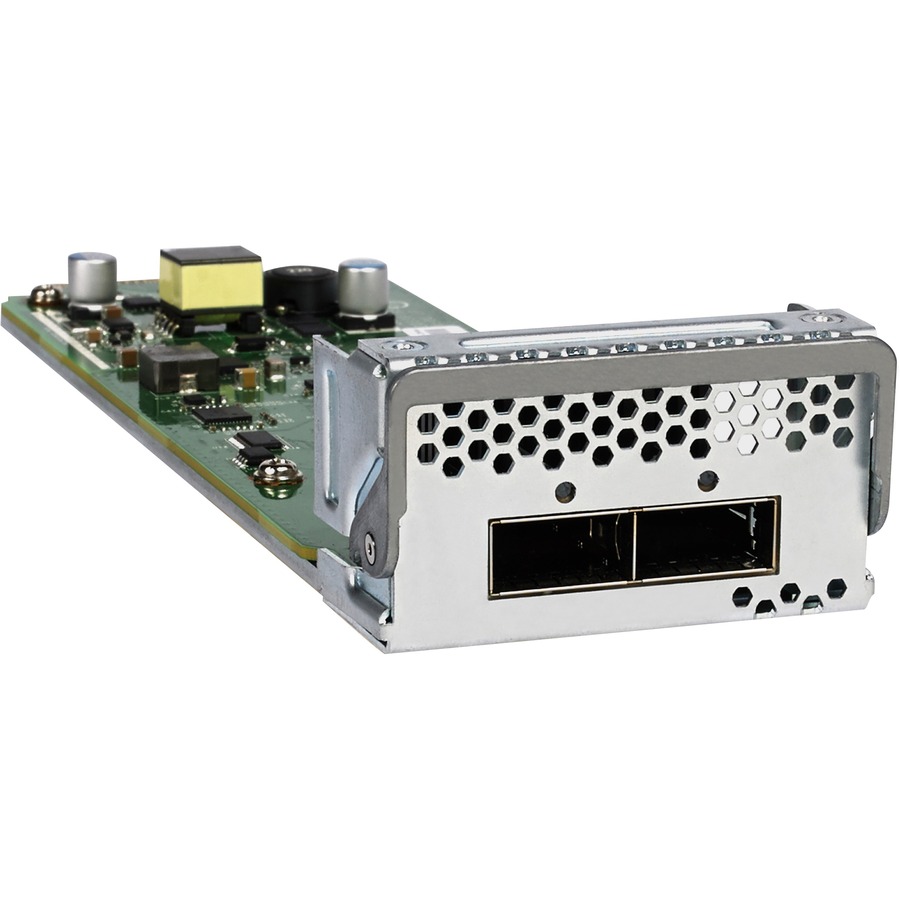
The NETGEAR APM402XL-10000S features 2 x QSFP+ ports, delivering 40 Gigabit Ethernet connectivity per port. This makes it ideal for high-speed data networking applications requiring 40GBase-X optical fiber connections. We offer this adapter card to support demanding network infrastructure needs.
Yes, the APM402XL-10000S is designed with 2 x expansion slots, allowing for flexible configuration and future upgrades within compatible NETGEAR systems. Contact us today to verify compatibility with your specific network equipment.
The NETGEAR APM402XL-10000S supports optical fiber networking via its dual QSFP+ ports, delivering 40 Gigabit Ethernet performance. This adapter is built for data networking environments requiring high-speed optical connectivity. Available from us for enterprise and data center applications.
The APM402XL-10000S is designed for data networking applications requiring high-speed, high-capacity connectivity. With dual 40GBase-X QSFP+ ports, it's suitable for warehouse networks, logistics infrastructure, and IT environments demanding robust optical fiber connections. Visit barcodesinc.com to explore how this adapter fits your network architecture.
The NETGEAR APM402XL-10000S includes 2 x QSFP+ ports, each supporting 40 Gigabit Ethernet speeds. This dual-port configuration provides redundancy and increased throughput for mission-critical data networking applications.
The NETGEAR APM402XL-10000S complies with the 40GBase-X standard, delivering reliable 40 Gigabit Ethernet performance over optical fiber. This standard ensures interoperability and consistent performance in modern data networking environments. Contact us today for integration support and technical guidance.