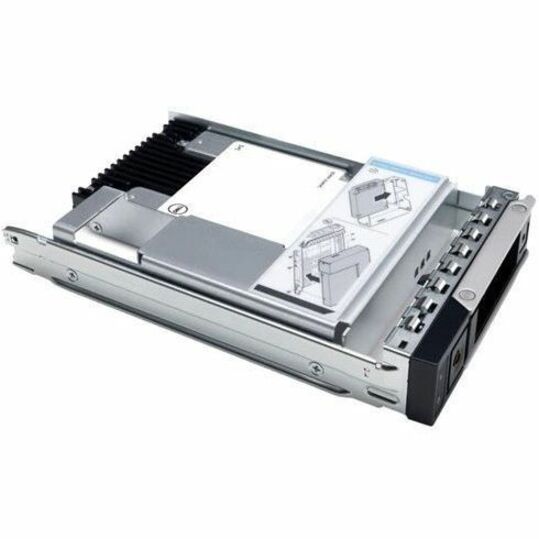


Storage Capacity:
7.68 TB
Disk Format:
512e



Increase the storage capacity of your Dell™ System with 7.68TB Solid State Drive from Dell. It boasts a storage capacity of up to 7.68TB, enabling users to store large amounts of data. This drive delivers enhanced data transfer speed of up to 24Gbps.
Benefits of SSD over spin drives:
Dell Servers:
The Dell 345-BFYM is a 7.68 TB rugged solid state drive with a 2.5" form factor designed for enterprise environments. It features 24Gb/s SAS connectivity, read-intensive optimization, and supports 1 DWPD (drive writes per day) with 512e format. This drive is compatible with servers, storage systems, and workstations. We offer this drive as part of our comprehensive AIDC and storage solutions portfolio.
Yes, the Dell 345-BFYM is engineered specifically for server and storage system deployments requiring reliable, read-intensive workloads. Its 24Gb/s SAS interface provides enterprise-grade performance and the 1 DWPD rating ensures durability in demanding data center applications. Contact us today to discuss whether this drive meets your specific server infrastructure requirements.
The Dell 345-BFYM is classified as a rugged solid state drive, meaning it's built to withstand demanding operational conditions in enterprise storage systems and workstations. Unlike traditional mechanical drives, SSDs have no moving parts, making them inherently more durable and resistant to physical shock and vibration. Available from us with full technical support to ensure optimal performance in your infrastructure.
The Dell 345-BFYM uses a 24Gb/s SAS (Serial Attached SCSI) interface, which is the standard for enterprise-grade storage systems, servers, and high-performance workstations. Before purchasing, verify that your system has available SAS slots or controllers supporting this interface. Visit barcodesinc.com or contact us today to confirm compatibility with your specific hardware configuration.
The 7.68 TB capacity of the Dell 345-BFYM provides substantial storage for enterprise environments while maintaining the speed and reliability advantages of solid-state technology. This capacity is ideal for organizations requiring high-performance storage without the footprint of multiple smaller drives. We offer this drive as part of our full range of enterprise storage solutions—contact us today for capacity and performance comparisons.
Read-intensive optimization means the Dell 345-BFYM is specifically tuned for workloads where data is accessed and read far more frequently than it is written, such as database queries, analytics, and content delivery. This optimization extends drive lifespan and improves cost-efficiency in read-heavy applications by allocating resources toward read performance rather than write endurance. Available from us for organizations with read-dominant storage requirements.