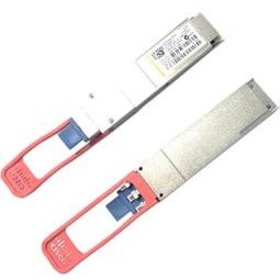
Application/Usage:
- Optical Network
- Data Networking



The Cisco QSFP-40G-LR4-S transceiver supports 40GBASE-LR4 connectivity with a maximum transmission distance of 10 kilometers over single-mode fiber. This makes it ideal for long-reach metropolitan area network (MAN) deployments where extended distance coverage is required without signal regeneration.
The Cisco QSFP-40G-LR4-S uses LC duplex connectors for optical fiber connections. LC connectors are industry-standard for high-density transceiver modules and provide reliable, low-loss connections in data center and campus network environments.
Yes, the Cisco QSFP-40G-LR4-S is a hot-swappable transceiver module, allowing you to install or replace it without powering down your network equipment. This design minimizes network downtime during maintenance and upgrades.
The Cisco QSFP-40G-LR4-S requires single-mode fiber (SMF) for optimal performance. Single-mode fiber supports the long-reach 10km transmission distance and is the standard for long-distance optical network deployments.
While the QSFP-40G-LR4-S is optimized for 10km long-reach deployments, it can technically operate over shorter distances. However, for short-distance connections under 300 meters, we recommend considering 40GBASE-SR4 modules, which are specifically designed for multi-mode fiber and shorter reach applications.
We offer Cisco transceiver modules and networking components through our comprehensive inventory at barcodesinc.com. Contact us today to check availability, pricing, and compatibility with your specific network infrastructure requirements.